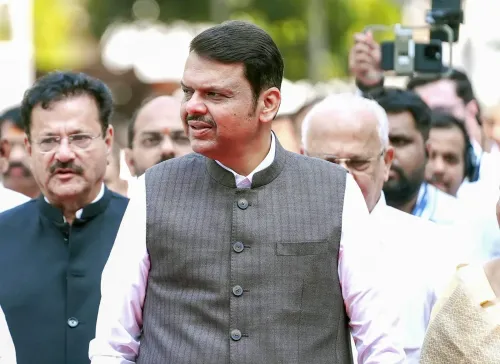
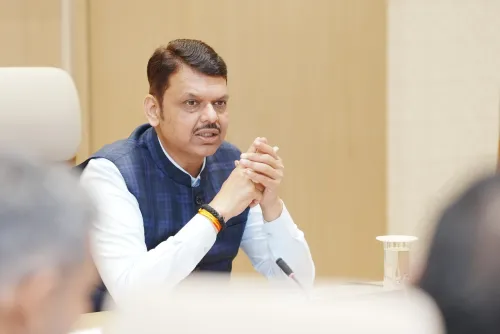
CM Fadnavis, Gadkari Inaugurate Maha Aarogya Shibir in Nagpur
Synopsis
Chief Minister Devendra Fadnavis and Union Minister Nitin Gadkari jointly inaugurated the Maha Aarogya Shibir in Nagpur on 26 July 2026, extending free medical outreach to underserved communities in a coordinated state-central welfare push.
Key Takeaways
CM Devendra Fadnavis and Union Minister Nitin Gadkari jointly inaugurated the Maha Aarogya Shibir in Nagpur on 26 July 2026 .
The camp is designed to deliver free medical screening, diagnostics, and medicines to rural and underserved communities .
Nagpur , the winter capital of Maharashtra and Gadkari's political base, hosted the event as a platform for joint state-central welfare signalling.
The initiative builds on Maharashtra's Mahatma Phule Jan Arogya Yojana , which has provided health coverage to vulnerable families since 2012 .
The scale of services delivered and any follow-up budget allocations will indicate the programme's long-term impact.
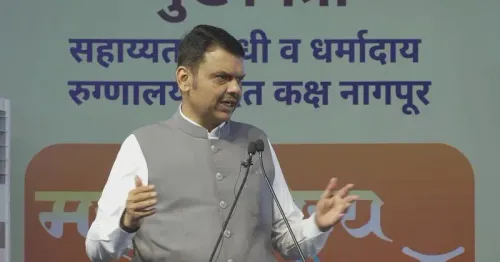
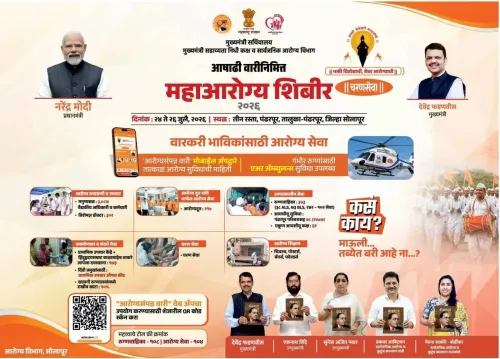
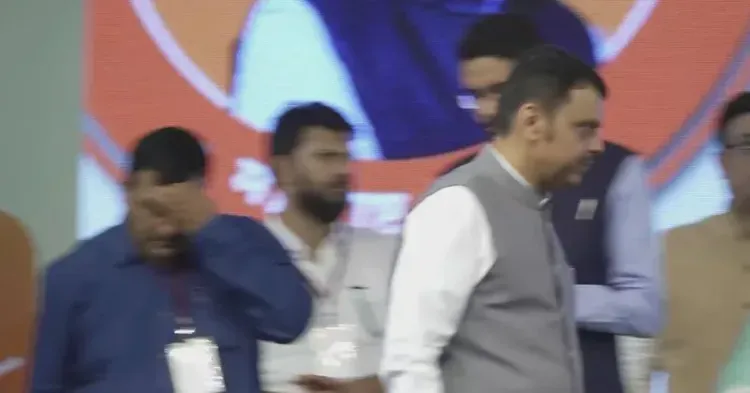
The Chief Minister's Office of Maharashtra announced on Sunday, 26 July 2026 that Chief Minister Devendra Fadnavis and Union Minister Nitin Gadkari jointly inaugurated the Maha Aarogya Shibir — a large-scale public health camp — in Nagpur, signalling a coordinated push by state and central leadership to extend medical outreach to underserved communities.
Context
The CMO Maharashtra post, shared live on 26 July 2026, read: 'मुख्यमंत्री देवेंद्र फडणवीस व केंद्रीय मंत्री नितीन गडकरी यांच्या हस्ते महाआरोग्य शिबिराचे उदघाटन' — translated: 'Inauguration of the Maha Aarogya Shibir at the hands of Chief Minister Devendra Fadnavis and Union Minister Nitin Gadkari.' The live broadcast format of the announcement underscored the significance the government attached to the event.
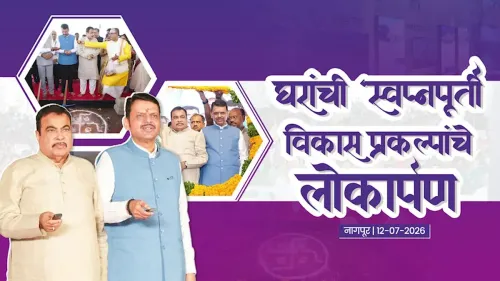
Nagpur, the winter capital of Maharashtra and the political home base of Nitin Gadkari, frequently serves as the venue for high-profile joint state-central welfare initiatives. The presence of both leaders at the inauguration reflects a deliberate alignment between the Maharashtra government and the Union Cabinet on public health delivery.
Policy Backdrop
Maharashtra has a long track record of organising periodic health camps to bring diagnostics, medicines, and specialist consultations closer to citizens who lack easy access to hospitals. The state's Mahatma Phule Jan Arogya Yojana, operational since 2012, forms the policy backbone for such outreach, covering a wide range of medical procedures for economically vulnerable families.
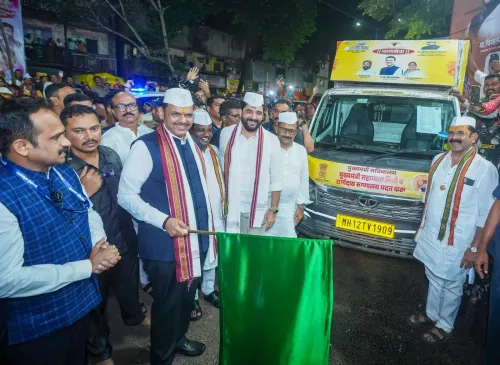
The Maha Aarogya Shibir model builds on this lineage by deploying medical teams in a single concentrated camp setting, allowing large numbers of patients — particularly from rural and peri-urban areas — to access free screening and treatment in one location. Indian states have consistently used such mega health camps as a visible, on-the-ground expression of welfare commitments.
Stakeholders and Impact
The primary beneficiaries of the Maha Aarogya Shibir are rural residents and underserved patients in and around Nagpur who face barriers of distance, cost, or specialist availability in routine healthcare access. Free diagnostic services and medicines distributed at such camps can meaningfully reduce out-of-pocket expenditure for low-income households.
The joint presence of CM Fadnavis — who heads the state administration — and Union Minister Gadkari — who carries significant influence in the Vidarbha region — also sends a political signal of federal cooperation on social welfare, a message that resonates strongly with local constituencies ahead of ongoing governance cycles.
What's Next
The scale of medical services actually delivered at the camp — including the number of patients screened, specialists deployed, and medicines distributed — will determine the real-world impact of the initiative. Observers will also watch whether this inauguration is followed by fresh state budget allocations or policy announcements to sustain and expand similar outreach programmes across Maharashtra's districts.
If the Maha Aarogya Shibir in Nagpur demonstrates measurable health outcomes, it could serve as a template for replication in other divisions of the state, reinforcing Maharashtra's positioning as an active implementer of centre-state health cooperation.
Point of View
With Nagpur serving as a politically resonant stage for both leaders. For Fadnavis, public health camps offer a visible, citizen-facing proof point for his administration's social commitments beyond infrastructure announcements. Gadkari's presence reinforces his continuing grip on Vidarbha's political narrative, even as his portfolio centres on roads and transport. The event fits a broader national pattern in which ruling parties use mega health camps to demonstrate governance reach in the months between electoral cycles.
NationPress
26 Jul 2026
Frequently Asked Questions
What is the Maha Aarogya Shibir inaugurated in Nagpur?
The Maha Aarogya Shibir is a large-scale public health camp inaugurated in Nagpur on 26 July 2026 by CM Devendra Fadnavis and Union Minister Nitin Gadkari to provide free medical screening, diagnostics, and medicines to underserved communities.
Who inaugurated the Maha Aarogya Shibir in Nagpur 2026?
Chief Minister Devendra Fadnavis and Union Minister Nitin Gadkari jointly inaugurated the Maha Aarogya Shibir in Nagpur on 26 July 2026.
What is the Mahatma Phule Jan Arogya Yojana?
The Mahatma Phule Jan Arogya Yojana is a Maharashtra government health scheme operational since 2012 that covers a wide range of medical procedures for economically vulnerable families, forming the policy backbone for outreach camps like the Maha Aarogya Shibir.
Why is Nagpur chosen for Maharashtra health camps?
Nagpur is Maharashtra's winter capital and the political base of Union Minister Nitin Gadkari, making it a prominent venue for joint state-central welfare events that carry both administrative and political significance for the Vidarbha region.
Who benefits from the Maha Aarogya Shibir?
The primary beneficiaries are rural residents and underserved patients in and around Nagpur who face barriers of distance, cost, or specialist availability, and who can access free healthcare services at a single concentrated camp location.