Piyush Goyal Urges Clay Ganesh Idols for Eco Worship
Synopsis
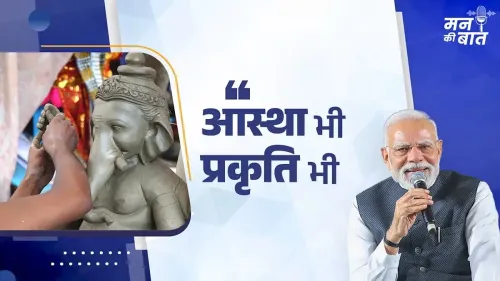
Union Minister Piyush Goyal invoked #MannKiBaat to urge citizens to install clay Ganesha idols this Ganesh Chaturthi, arguing the practice honours both tradition and nature. The appeal aligns with long-standing government campaigns on sustainable festival observance and river conservation.
Key Takeaways
Union Minister Piyush Goyal posted the appeal on 26 July 2026 under the hashtag #MannKiBaat .
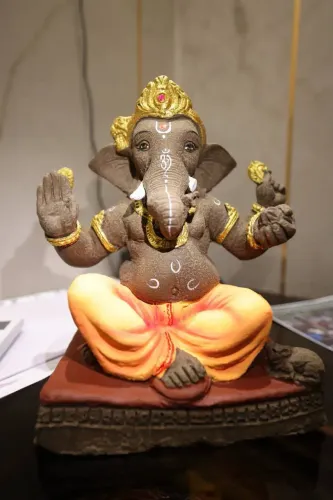
He urged devotees to install clay idols made from Indian soil during Ganesh Chaturthi .
The minister described the act as 'worship of nature itself', linking religious observance to ecological care.
Plaster of Paris idols are a recognised source of water-body pollution during post-festival immersions.
The message echoes themes from the Swachh Bharat Abhiyan (2014) and repeated Mann Ki Baat episodes on environmental protection.
Traditional clay artisans could see increased demand if the public appeal gains wider adoption.
Union Commerce and Industry Minister Piyush Goyal on Sunday, 26 July 2026, called on citizens to install clay idols of Lord Ganesha in their homes during the upcoming Ganesh Chaturthi festival, framing the practice as an act of reverence toward nature itself.
Posting under the hashtag #MannKiBaat, the minister wrote in Hindi: 'is baar Ganapati pooja mein desh ki mitti se bane Ganesh ji ko apne ghar mein sthapit karein' — urging devotees to bring home Ganesha idols made from the soil of India. He added that such an effort would itself amount to the worship of nature.
Context
The message comes ahead of Ganesh Chaturthi, one of India's most widely observed Hindu festivals, during which millions of idols are installed in homes and public pandals across the country. The festival concludes with the immersion of these idols in water bodies — a practice that has drawn sustained concern from environmental groups when idols are made from Plaster of Paris (PoP) or synthetic chemical paints, which can cause significant river and lake pollution.
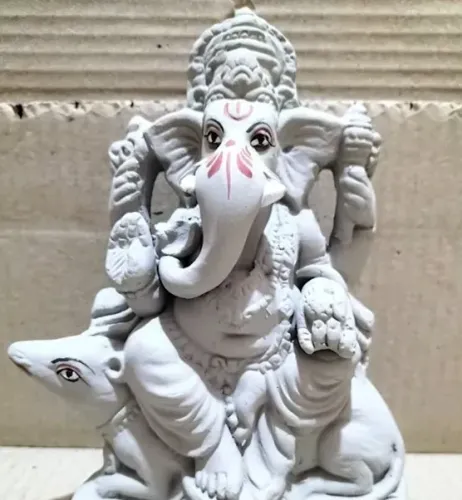
Clay idols, by contrast, dissolve naturally in water and return to the earth without releasing harmful residues, making them a long-advocated alternative by ecologists and civic bodies alike.
Policy Backdrop
Goyal's appeal is aligned with a broader government push to link religious observance with sustainable behaviour. The Swachh Bharat Abhiyan, launched in 2014, explicitly encouraged waste reduction and cleaner practices during festivals. Mann Ki Baat — Prime Minister Narendra Modi's monthly radio address, also launched in October 2014 — has repeatedly highlighted environmental themes, from plastic reduction to water conservation.
By invoking #MannKiBaat, Goyal's post situates itself within that established communication tradition, amplifying a message that has been a recurring thread in government outreach on ecology and public behaviour.
Stakeholders and Impact
The call has direct relevance for Hindu devotees across India, particularly in states such as Maharashtra, Telangana, Karnataka, and Goa, where Ganesh Chaturthi is celebrated with the greatest scale. Traditional idol artisans who work with natural clay stand to benefit commercially if the message gains traction, as demand for PoP idols has historically undercut their livelihoods.
Environmental groups have long advocated precisely this shift, and a ministerial endorsement adds institutional weight to a cause that has otherwise relied on civil society campaigns and sporadic local government directives.
What's Next
Observers will watch whether subsequent episodes of Mann Ki Baat take up the clay-idol theme more formally, and whether state governments issue advisories or guidelines ahead of the festival encouraging the switch from synthetic to natural materials. The degree to which devotees and local committees respond to such messaging will serve as a practical measure of how effectively India's political leadership can shape cultural behaviour through social media and public broadcasting.
As festivals increasingly become arenas for environmental messaging, Goyal's post reflects a deliberate strategy to make ecological responsibility feel like an extension of tradition rather than a departure from it.
Point of View
The message is deliberately embedded within Prime Minister Modi's most recognisable public-communication platform, signalling top-down ideological coherence. The framing — that choosing a clay idol 'is itself the worship of nature' — is rhetorically astute, making ecological compliance feel spiritually rewarding rather than sacrificial. If the appeal catalyses even a marginal shift in idol-purchasing behaviour across major festival states, it would represent a meaningful, low-cost policy outcome achieved through soft power rather than regulation.
NationPress
24 Oct 2026
Frequently Asked Questions
Why is Piyush Goyal asking people to use clay Ganesha idols?
Piyush Goyal urged citizens to use clay idols because they dissolve naturally in water after immersion, unlike Plaster of Paris idols which release harmful chemicals into rivers and lakes, causing pollution.
What is Mann Ki Baat and why did Goyal use that hashtag?
Mann Ki Baat is Prime Minister Narendra Modi's monthly radio address launched in October 2014 that discusses social, cultural, and environmental themes. Goyal used the hashtag to align his message with that established public-outreach platform.
How does using clay idols help the environment during Ganesh Chaturthi?
Clay idols are biodegradable and dissolve in water without releasing toxins, reducing the chemical load on rivers and lakes that typically spikes after large-scale idol immersions during Ganesh Chaturthi.
What is the connection between Ganesh Chaturthi idol immersion and river pollution?
Idols made from Plaster of Paris and synthetic paints release heavy metals and non-biodegradable residues into water bodies during immersion, degrading water quality and harming aquatic ecosystems.
Which states celebrate Ganesh Chaturthi most prominently in India?
Maharashtra, Telangana, Karnataka, and Goa observe Ganesh Chaturthi with the largest scale, making them the most directly relevant audiences for campaigns promoting eco-friendly clay idols.