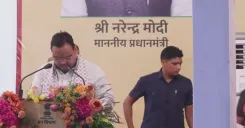
CM Fadnavis honours NSA Ajit Doval at Pune's Lokmanya Tilak Award
Synopsis
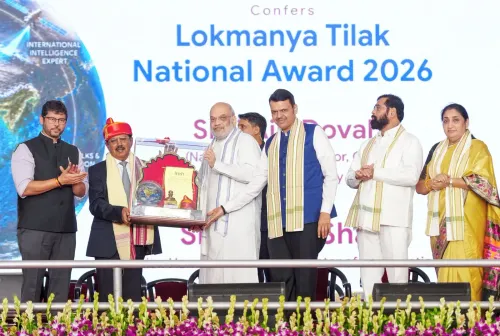
Maharashtra Chief Minister Devendra Fadnavis honoured National Security Advisor Ajit Doval at the Lokmanya Tilak National Award 2026 in Pune, crediting him with fundamentally transforming India's national security policy since his appointment in 2014.
Key Takeaways
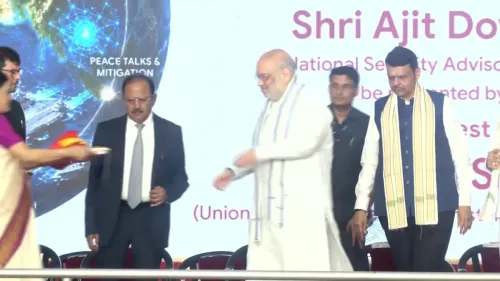
Ajit Doval received recognition at the Lokmanya Tilak National Award 2026 held in Pune on 1 August 2026 .
CM Devendra Fadnavis posted in both Marathi and Hindi, crediting Doval with 'fundamental changes' in India's national security policy.
Doval was first appointed National Security Advisor in May 2014 , ushering in a more assertive counter-terrorism and border management doctrine.
The Lokmanya Tilak National Award is an annual honour named after freedom fighter Bal Gangadhar Tilak , conferred for distinguished national service.
BJP state leaders, including Fadnavis, have consistently used regional platforms to highlight the Modi government's national security record.
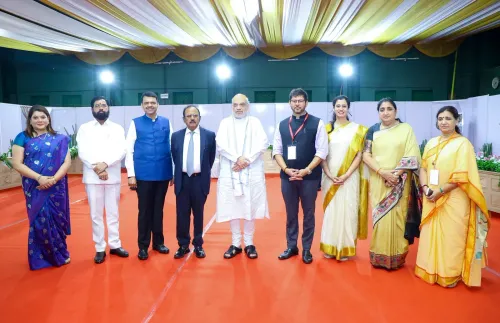
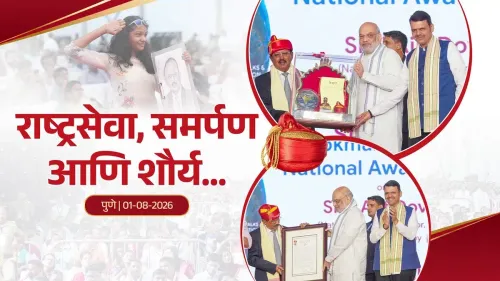
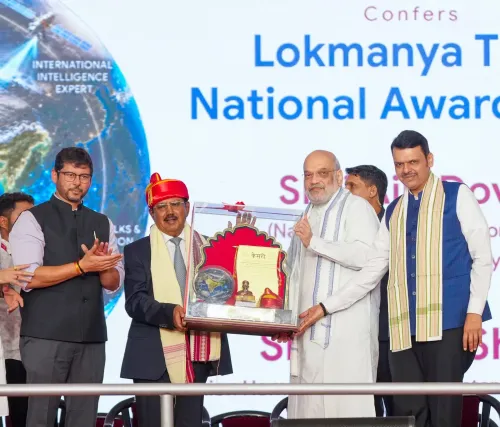
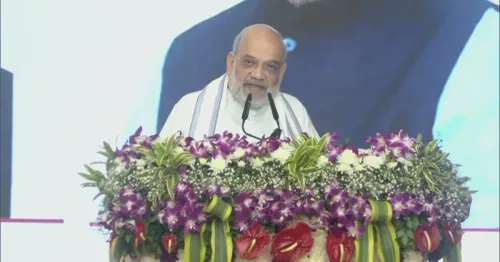
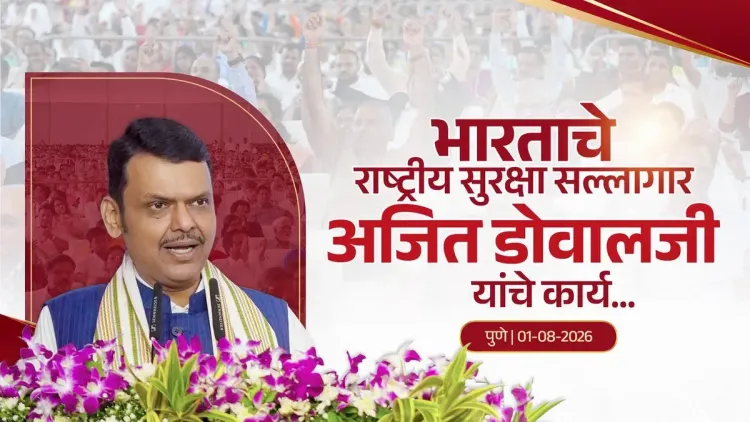
At a ceremony steeped in the legacy of one of India's most revered freedom fighters, National Security Advisor Ajit Doval was recognised for transforming the country's security doctrine — and Maharashtra Chief Minister Devendra Fadnavis made sure the moment was marked. Speaking at the Lokmanya Tilak National Award 2026 in Pune on 1 August 2026, Fadnavis paid tribute to Doval's sweeping influence on India's national security policy.
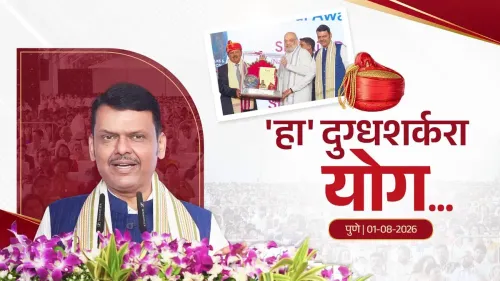
Posting from the event, Fadnavis wrote in both Marathi and Hindi: 'भारताचे राष्ट्रीय सुरक्षा सल्लागार अजित डोवालजी यांनी देशाच्या राष्ट्रीय सुरक्षा धोरणात आमूलाग्र बदल घडवून आणले' — 'India's National Security Advisor Ajit Doval has brought about fundamental changes in the country's national security policy.'
Doval's decade-long imprint on India's security architecture
When Ajit Doval was appointed NSA in May 2014, India's security establishment was due for a reset. What followed was a documented shift toward a more assertive posture — tighter intelligence coordination, revised rules of engagement, and a counter-terrorism framework that moved from reactive to proactive. Surgical strikes, border management overhauls, and a more muscular public articulation of India's red lines all became hallmarks of the era he helped define.
That doctrine did not emerge from a single decision but from a decade of sustained institutional change. Doval, a former Intelligence Bureau chief with field experience spanning decades, brought an operator's instinct to a role that had previously been more advisory than operational. The results reshaped how India's defence forces and intelligence agencies coordinate under pressure.
Why Pune, and why Tilak
The Lokmanya Tilak National Award carries weight that goes beyond a citation. Named after Bal Gangadhar Tilak — the Pune-born nationalist who weaponised mass mobilisation against colonial rule — the annual award is reserved for individuals judged to have rendered distinguished national service. Conferring it in Pune, Tilak's city, adds a layer of symbolic continuity: a freedom fighter's legacy being invoked to honour a man who, his admirers argue, has been fighting a different kind of battle for national sovereignty.
For Fadnavis, the occasion also served a political purpose that is entirely routine in Indian public life — a senior state leader using a high-profile regional platform to align Maharashtra with the central government's security narrative. BJP leaders have consistently amplified Doval's role as evidence of the Modi government's credibility on national security.
The award ceremony, if it follows the pattern of previous years, draws a cross-section of Maharashtra's political and civic establishment. Doval's presence in Pune on 1 August signals the continuing centrality of national security as a political and policy theme heading into the second half of 2026.
Point of View
Not just a policy figure. The bilingual Marathi-Hindi post also reflects deliberate outreach — Fadnavis speaking to both the local Marathi base and a broader Hindi-speaking national audience simultaneously. As 2026 progresses, expect security and sovereignty themes to feature heavily in BJP's state-level messaging.
NationPress
1 Aug 2026
Frequently Asked Questions
What is the Lokmanya Tilak National Award?
The Lokmanya Tilak National Award is an annual honour named after freedom fighter Bal Gangadhar Tilak, conferred in Pune for distinguished national service.
Why was Ajit Doval given the Lokmanya Tilak National Award 2026?
Ajit Doval was recognised for fundamentally transforming India's national security policy since his appointment as National Security Advisor in May 2014, including advances in counter-terrorism and border management.
When was Ajit Doval appointed as India's National Security Advisor?
Ajit Doval was appointed National Security Advisor in May 2014, at the start of the Modi government's first term.
What did CM Devendra Fadnavis say about Ajit Doval?
Fadnavis said in both Marathi and Hindi that Doval had brought about 'fundamental changes' in India's national security policy, speaking at the Lokmanya Tilak National Award ceremony in Pune on 1 August 2026.
Where is the Lokmanya Tilak National Award ceremony held?
The Lokmanya Tilak National Award ceremony is held in Pune, Maharashtra — the birthplace of Bal Gangadhar Tilak, after whom the award is named.