CM Fadnavis Inaugurates Nagpur Skill Centre With Gadkari
Synopsis
Maharashtra CM Devendra Fadnavis and Union Minister Nitin Gadkari inaugurated the Nagpur Skill Centre on 26 July 2026, backed by an AID-Tata collaboration. An MoU between AID and NADP was also signed to build defence-sector talent. The state targets a 90% trainee employment rate across its 2,500 skill centres.
Key Takeaways
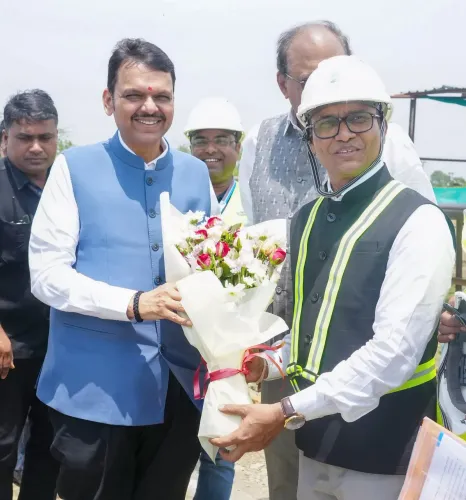
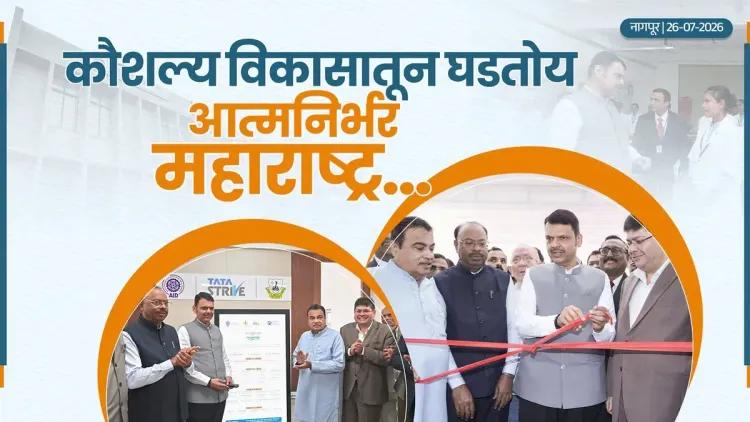
Maharashtra CM Devendra Fadnavis and Union Minister Nitin Gadkari jointly inaugurated the Nagpur Skill Centre on 26 July 2026 , established through an AID-Tata collaboration.
An MoU was signed between AID and NADP to develop a skilled talent pool for defence manufacturing , supporting MSMEs and vendors in the sector.
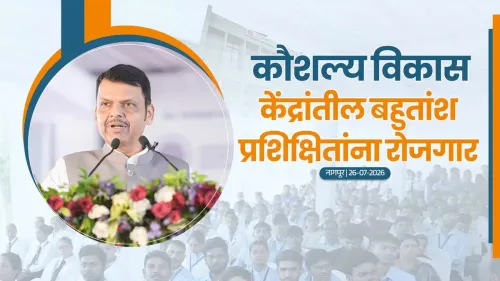
Maharashtra operates around 2,500 Skill Development Centres training nearly 4 lakh youth , with a current employment rate of 75% and a target of 90% .
The state is partnering with the Tata Group and Ratan Tata Maharashtra State Skills University to offer training up to Artificial Intelligence and Quantum technologies.
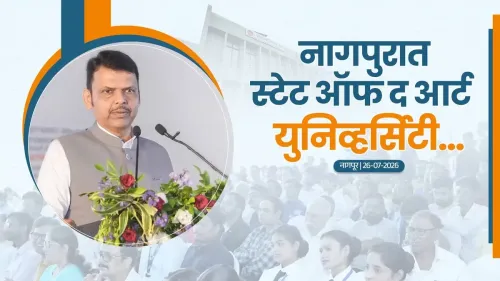
Approval has been granted for a Skill University in Nagpur with specialised schools co-designed with industry and expert institutions.
Nagpur and Vidarbha are being positioned as industrial hubs for solar modules, EVs, coal gasification, carbon capture, and steel, with skill infrastructure aligned to local demand.
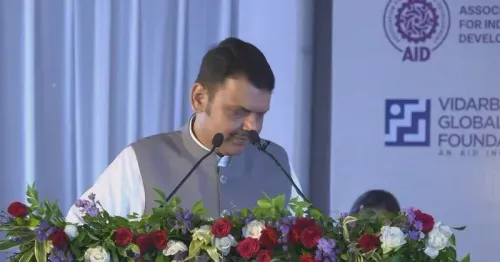
Maharashtra Chief Minister Devendra Fadnavis on Sunday, 26 July 2026, inaugurated the Nagpur Skill Centre alongside Union Minister Nitin Gadkari, marking a significant push to build an industry-ready workforce in the state. The centre, established through a collaboration between AID (Association of Industrial Development) and Tata, is designed to equip youth with sector-specific skills aligned to emerging industries.
Context
Fadnavis announced the inauguration on X, stating: 'Established through the collaboration of AID and Tata, the centre will equip youth with industry-oriented skills and create a future-ready workforce.' He framed the launch within Prime Minister Narendra Modi's national skill development agenda, noting that skill development has become 'a national priority' under Modi's leadership. The event was also attended by Minister Chandrashekhar Bawankule, MLA Krishna Khopde, Nagpur Mayor Neetatai Thakre, Deputy Mayor Leelatai Hathibed, and Standing Committee Chairman Shivani Dani-Wakhare.
The inauguration was accompanied by the signing of a Memorandum of Understanding (MoU) between AID and the National Academy of Defence Production (NADP), Nagpur. The partnership aims to foster industry-academia collaboration, promote innovation and experiential learning, and develop a talent pool specifically for the defence manufacturing sector, including support for MSMEs and vendors in the ecosystem.
Policy Backdrop
Maharashtra's skill push is anchored in the national Skill India mission, launched in 2015, and the associated Pradhan Mantri Kaushal Vikas Yojana, which introduced short-term vocational training with placement linkages. The state has since established a dedicated Skill Development Department to tighten coordination between government, industry, and educational institutions. This mirrors the broader Atmanirbhar Bharat framework, which aligns skill programmes with priority sectors such as renewables, electric mobility, and defence production.
A key institutional development announced by Fadnavis is the approval to establish a Skill University in Nagpur. The university will feature specialised schools built in collaboration with leading corporates and expert institutions, with a focus on placement outcomes. Maharashtra is also partnering with the Tata Group and the Ratan Tata Maharashtra State Skills University to deliver training spanning basic skills to advanced technologies including Artificial Intelligence and Quantum computing.
Stakeholders and Impact
Maharashtra currently operates around 2,500 Skill Development Centres training nearly 4 lakh youth. According to the Skill India report cited by Fadnavis, 75% of trainees have secured employment, with the state targeting an increase to 90%. The sectors driving demand include healthcare, solar energy, electric vehicles, and alternate fuels.
Nagpur and the broader Vidarbha region are emerging as hubs for solar modules, EVs, coal gasification, carbon capture, and steel manufacturing, creating acute demand for locally trained professionals. Fadnavis highlighted that Maharashtra has become the first state to supply agricultural power through a 16,000 MW Agri Solar network, with 2,000 solar feeders expected to generate demand for at least 50,000 trained solar technicians. The AID-NADP MoU is expected to particularly benefit defence-sector MSMEs and vendors concentrated in the Nagpur region, which hosts the NADP headquarters.
What's Next
The Chief Minister indicated that more skill centres will be established across Maharashtra to support continuous upskilling, with the approved Nagpur Skill University serving as a flagship institution for the region. The rollout timeline and curriculum design for the university, as well as measurable placement outcomes from the AID-NADP partnership, will be closely watched as benchmarks for the state's ambition to push employment rates among trainees from 75% to 90%. Maharashtra's model of anchoring skill infrastructure to specific industrial clusters — solar in Vidarbha, defence in Nagpur — could serve as a template for other states aligning workforce development with local economic geography.
Point of View
Consolidating his government's credentials on employment and industrial development in Vidarbha — a region that has historically lagged behind western Maharashtra in economic activity. By tying the skill centre to the Tata brand and the defence manufacturing ecosystem through the AID-NADP MoU, the state is signalling a shift from generic vocational training to sector-anchored workforce pipelines. The 90% placement target, if achieved and independently verified, would represent a meaningful benchmark in India's skill development landscape. The simultaneous announcement of a Nagpur Skill University and additional centres statewide suggests Fadnavis is building a visible, distributed infrastructure ahead of electoral cycles, with Nagpur — his own constituency — serving as the showcase node.
NationPress
27 Jul 2026
Frequently Asked Questions
What is the Nagpur Skill Centre inaugurated by CM Fadnavis?
The Nagpur Skill Centre is a vocational training facility established through a collaboration between AID (Association of Industrial Development) and Tata, inaugurated on 26 July 2026 by Maharashtra CM Devendra Fadnavis and Union Minister Nitin Gadkari. It aims to provide industry-oriented skills to youth in sectors such as solar energy, EVs, defence manufacturing, and advanced technologies.
What is the AID-NADP MoU signed in Nagpur?
The MoU is a partnership between the Association of Industrial Development (AID) and the National Academy of Defence Production (NADP), Nagpur, signed on 26 July 2026. It aims to foster industry-academia collaboration, support the MSME and vendor ecosystem, and develop a skilled talent pool specifically for the defence manufacturing sector.
What is the Ratan Tata Maharashtra State Skills University?
The Ratan Tata Maharashtra State Skills University is an institution through which Maharashtra is partnering with the Tata Group to deliver training ranging from basic vocational skills to advanced technologies including Artificial Intelligence and Quantum computing, as part of the state's broader skill development push.
How many skill development centres does Maharashtra have?
Maharashtra currently operates around 2,500 Skill Development Centres, training nearly 4 lakh youth. According to the Skill India report cited by CM Fadnavis, 75% of trainees have secured employment, with the state targeting an increase to 90%.
What is the Nagpur Skill University announced by Fadnavis?
The Nagpur Skill University is a state-of-the-art institution approved by the Maharashtra government to be established in Nagpur. It will feature specialised schools developed in collaboration with leading corporates and expert institutions, ensuring students graduate with industry-ready skills and placement opportunities.