CM Fadnavis Signs MoU With Korean Partners to Boost Maharashtra Skills
Synopsis
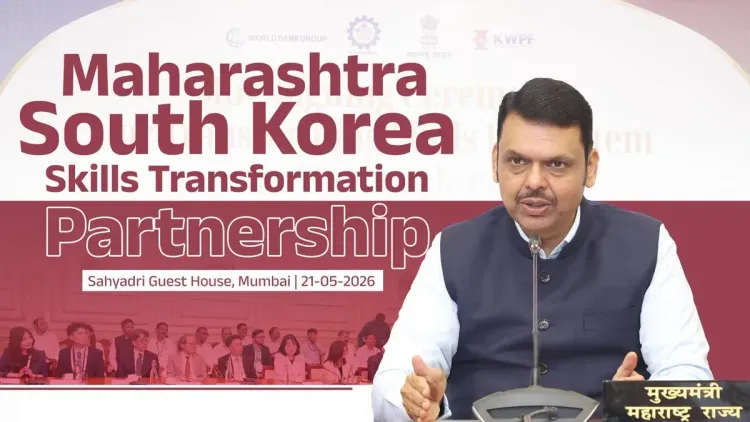
Maharashtra Chief Minister Devendra Fadnavis signed an MoU with Korean partners at Sahyadri Guest House, Mumbai, on 21 May 2026, pledging strategic collaboration to build a future-ready skilled workforce aligned with Industry 4.0 and the Skill India Mission.
Key Takeaways
MoU signed on 21 May 2026 at Sahyadri Guest House, Mumbai, between Maharashtra and Korean partners for skill development collaboration.
CM Devendra Fadnavis described the goal as 'strengthening Maharashtra's skill ecosystem through strategic collaboration with Korean partners for a future-ready workforce.' The agreement builds on India-Korea CEPA (2010) and a history of bilateral vocational and technical cooperation.
Maharashtra has concluded similar skill tie-ups with Germany, Japan and Singapore , making Korea the latest addition to its international training network.
Key expected outcomes include joint training centres, co-developed curricula and internationally recognised certification standards.
The partnership supports national goals under the Skill India Mission and Atmanirbhar Bharat , targeting Maharashtra's manufacturing clusters in Pune and Mumbai.
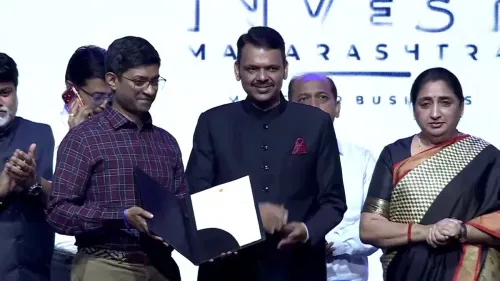
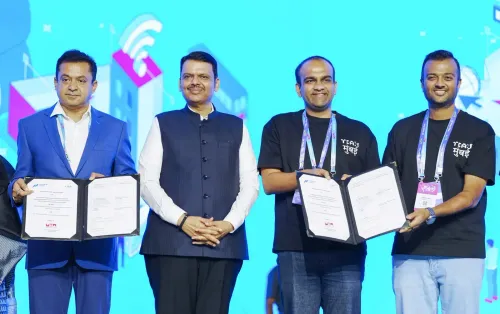
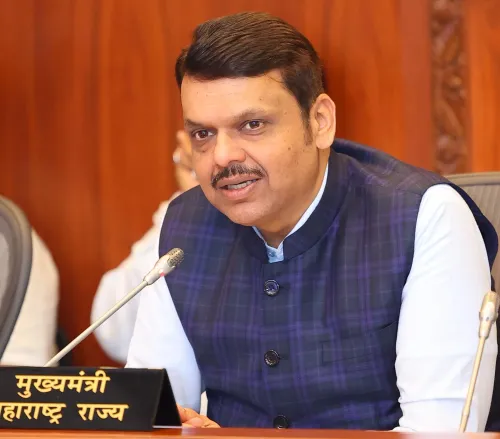
Maharashtra Chief Minister Devendra Fadnavis addressed a Memorandum of Understanding signing ceremony at Sahyadri Guest House, Mumbai, on 21 May 2026, outlining a strategic collaboration with Korean partners aimed at building a future-ready workforce for the state.
Sharing his full address on social media, Fadnavis described the event as focused on 'strengthening Maharashtra's skill ecosystem through strategic collaboration with Korean partners for a future-ready workforce.' The ceremony marks a significant step in the state's ongoing effort to attract international expertise into its vocational training architecture.
Context
Maharashtra has steadily pursued cross-border skill partnerships to modernise its Industrial Training Institutes (ITIs) and polytechnics in line with Industry 4.0 requirements. The state has previously concluded similar tie-ups with Germany, Japan, and Singapore, positioning itself as a preferred destination for technology-intensive foreign direct investment. Adding South Korea to this roster deepens the state's network of advanced-manufacturing skill corridors.
South Korea is a long-standing economic partner of India, with a strong footprint in automobiles, consumer electronics, and advanced manufacturing. The bilateral relationship gained institutional depth through the India-Korea Comprehensive Economic Partnership Agreement (CEPA) of 2010, which opened avenues for joint vocational programmes and technical cooperation that subsequent MoUs have built upon.
Policy Backdrop
The agreement sits squarely within the framework of the Skill India Mission, the flagship central programme launched in 2015 to train hundreds of millions of Indian youth in industry-relevant vocational skills and close the employability gap. State-level international partnerships are widely regarded as force-multipliers for the national mission, bringing curriculum co-development, certification standards, and industry-linked placements that domestic programmes alone cannot easily provide.
The Maharashtra government's approach also aligns with the Atmanirbhar Bharat objective of raising manufacturing's share of India's GDP. By embedding Korean technical know-how into local training ecosystems, the state aims to supply a skilled labour pool that can service both existing Korean-origin factories and new greenfield investments across sectors such as semiconductors, electric vehicles, and precision engineering.
Stakeholders and Impact
Maharashtra's youth stand as the primary beneficiaries, with the MoU expected to translate into upgraded curricula, new joint training centres, and internationally recognised certifications. The manufacturing sector — concentrated in industrial clusters around Pune, Mumbai, and Aurangabad — is positioned to draw directly on the trained workforce the collaboration is designed to produce.
Korean investors already operating in Maharashtra and those evaluating new projects are also key stakeholders: a credible, Korea-aligned skill pipeline reduces the cost and risk of setting up or expanding operations in the state. For the broader Indian economy, successful replication of this model could inform similar state-level partnerships across the country.
What's Next
Attention will now turn to the operational roll-out: establishment of joint training centres, finalisation of co-developed curricula, and the alignment of certification standards with Korean and Indian regulatory bodies. Follow-up technical delegations from South Korea to industrial clusters in Pune and Mumbai are expected to translate the MoU's intent into concrete programme timelines.
The success of this partnership will ultimately be measured by placement rates and the degree to which certified graduates are absorbed by the manufacturing sector — outcomes that will take months to assess but will shape Maharashtra's pitch to the next wave of Korean and broader Asian investors.
Point of View
The state is effectively pre-positioning its labour market for the next wave of electronics and EV investment. The move also gives Maharashtra a competitive edge over other states in the race to attract Korean conglomerates weighing India as a China-plus-one destination. Whether the partnership delivers measurable employment outcomes, however, will depend on the rigour of implementation — historically the weakest link in state-level skill MoUs.
NationPress
8 Oct 2026
Frequently Asked Questions
What is the Maharashtra-Korea skill MoU signed by CM Fadnavis?
It is a Memorandum of Understanding signed on 21 May 2026 at Sahyadri Guest House, Mumbai, establishing a strategic collaboration between Maharashtra and Korean partners to develop a future-ready skilled workforce, particularly for the manufacturing sector.
How does this MoU relate to the Skill India Mission?
The agreement functions as a state-level extension of the central government's Skill India Mission (launched 2015), using Korean technical expertise to upgrade curricula, certification standards and training infrastructure in Maharashtra's ITIs and polytechnics.
Which sectors will benefit from the Maharashtra-Korea skill partnership?
The partnership primarily targets Industry 4.0 sectors where South Korea has deep expertise, including automobiles, consumer electronics, electric vehicles, semiconductors and precision engineering, with industrial clusters in Pune and Mumbai expected to benefit most.
Has Maharashtra signed similar skill MoUs with other countries?
Yes. Maharashtra has previously concluded skill and technical cooperation agreements with Germany, Japan and Singapore. The Korean MoU is the latest addition to this network of international vocational training partnerships.
What should we watch for after the MoU signing?
Key developments to track include the establishment of joint training centres, finalisation of co-developed curricula, alignment of certification standards with Korean and Indian bodies, and follow-up technical delegations from South Korea to Pune and Mumbai industrial clusters.