CM Fadnavis Launches Metro, SCLR Phase 2, Twin Tunnel TBM in Mumbai
Synopsis
CM Devendra Fadnavis and Deputy CM Sunetra Ajit Pawar inaugurated SCLR Phase 2, Chembur Metro Station, and launched TBM Arjuna for the Thane-Borivali Twin Tunnel on 13 August 2026, projecting 60-70 km of new metro lines and modern local trains by 2029-30.
Key Takeaways
SCLR Phase 2 (Bharat Nagar Road to Akola Junction) inaugurated to ease traffic into Bandra-Kurla Complex .
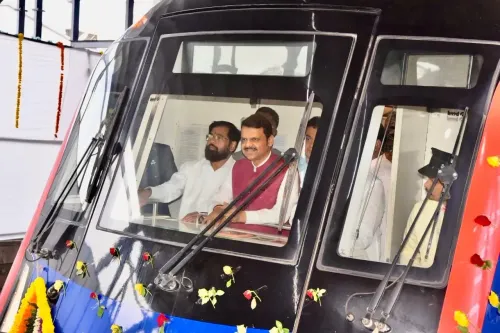
Chembur Metro Station under Metro Line 2B (Phase 1A) formally opened.
TBM 'Arjuna' launched for the Thane–Borivali Twin Tunnel ; travel time expected to drop from 90 minutes to 12–15 minutes over 11 km instead of 23 km.
CM Fadnavis projected 60–70 km of new metro corridors operational in 2026 , with integrated network serving up to 1.6 crore commuters .
Modern AC automated local trains to enter service by late 2029 or March 2030 , manufacture beginning 2027 .
BKC elevated connector renamed 'Barrister Babasaheb Anantrao Bhosale Flyover' in honour of the late former Chief Minister.
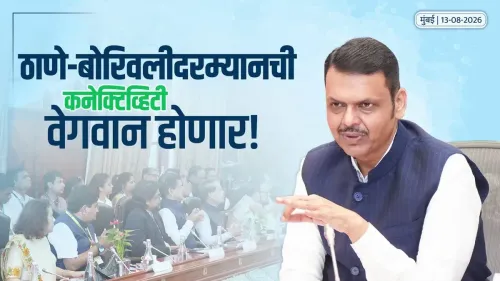
Mumbai's infrastructure calendar just got a landmark entry. Chief Minister Devendra Fadnavis and Deputy Chief Minister Sunetra Ajit Pawar on Thursday, 13 August 2026 jointly inaugurated, launched, and renamed a clutch of major Mumbai Metropolitan Region Development Authority (MMRDA) projects — signalling a decisive push to untangle the city's notoriously gridlocked arteries.
Four projects, one ceremony: what was inaugurated
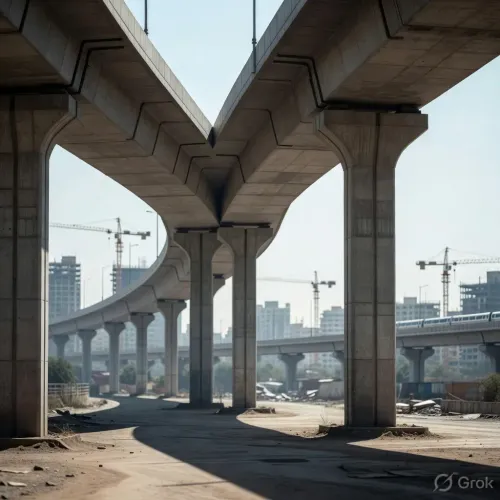
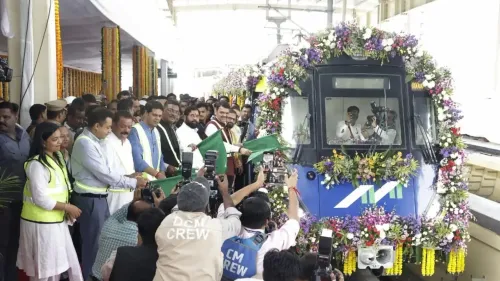
The event covered four distinct milestones. The Santa Cruz–Chembur Link Road (SCLR) Phase 2 — stretching from Bharat Nagar Road to Akola Junction — was formally opened to traffic, promising smoother movement into the Bandra-Kurla Complex (BKC), Mumbai's premier financial district. Alongside it, the Chembur Metro Station under Metro Line 2B (Phase 1A) was inaugurated, adding another node to the city's rapidly growing rapid-transit web.
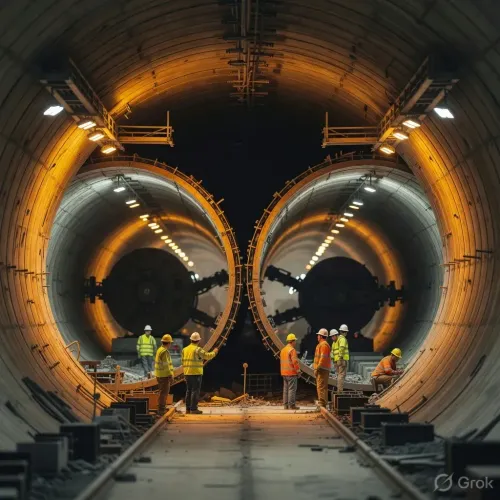
The third and perhaps most dramatic moment: the launch of 'Arjuna', the second Tunnel Boring Machine (TBM) on the Thane–Borivali Twin Tunnel Road Project. With both TBMs now operational, boring on the two parallel tunnels will proceed simultaneously. Finally, the elevated BKC connector linking G-Block, Bandra-Kurla Complex to the Eastern Express Highway was renamed the 'Barrister Babasaheb Anantrao Bhosale Flyover', honouring the late former Chief Minister's contributions to Maharashtra's formation.
Thane to Borivali in 12 minutes: the tunnel that rewrites the map
The Thane–Borivali tunnel is the headline number in today's announcements. Currently, the road distance between the two suburbs is 23 kilometres, and peak-hour travel can consume 90 minutes. The twin-tunnel alignment slashes the effective route to 11 kilometres, with projected travel time of just 12 to 15 minutes. For millions of commuters navigating Mumbai's east-west divide — a geographical challenge the city has grappled with for decades — that is a transformational shift.
CM Fadnavis directed the Brihanmumbai Municipal Corporation (BMC) and MMRDA to move swiftly on clearing the remaining congestion pinch-points along the SCLR corridor, underscoring that today's inaugurations are steps in a longer sequence, not a finish line.
60–70 km of new metro lines expected this year
Speaking at the event, CM Fadnavis projected that 60 to 70 kilometres of metro corridors would become operational within 2026. Once Mumbai's metro network is integrated with the suburban rail system, it will serve the existing 90 lakh (9 million) suburban rail passengers while opening capacity for an additional 70 lakh (7 million) commuters. That combined network would represent one of the largest urban-transit expansions in Asia.
On rolling stock, Fadnavis pointed to a central government decision that will accelerate the manufacture of air-conditioned, automated, modern local trains from 2027 onwards. The new trains are expected to enter Mumbai's suburban network by late 2029 or March 2030 — a timeline that ties the state's metro ambitions to a parallel upgrade of the century-old local rail backbone.
A flyover named for a freedom fighter and state-builder
The renaming of the BKC connector carries historical weight. Barrister Babasaheb Anantrao Bhosale, a former Chief Minister of Maharashtra, was a freedom fighter who championed girls' education, steered the creation of the Aurangabad Bench (now Chhatrapati Sambhajinagar) of the Bombay High Court, and was instrumental in carving out Gadchiroli district. Fadnavis described the naming as a tribute to his foundational role in shaping the state's administrative and social architecture.
Ministers Mangalprabhat Lodha, Girish Mahajan, and Ashish Shelar, along with Minister of State Madhuri Misal, senior legislators, and MMRDA officials were present at the ceremony.
Mumbai has been promised transformative infrastructure before. What is different now is the convergence of tunnels, metro lines, and rail modernisation on overlapping timelines — the city's commuters will be watching every boring metre of Arjuna's progress to see if the promise holds.
Point of View
Road, and tunnel announcements into a single narrative of urban transformation ahead of what will inevitably become a political accountability moment on delivery. The 2026 metro-corridor target and the 2029-30 rolling-stock timeline are ambitious; Maharashtra governments have historically faced delays on MMRDA mega-projects, so the directive to BMC and MMRDA to clear remaining bottlenecks signals awareness that partial completion undercuts the larger story. The renaming of the BKC flyover after Barrister Bhosale adds a legacy dimension, appealing to a broad cross-section of Maharashtra's political memory while keeping the ceremony's centre of gravity on governance rather than partisanship.
NationPress
13 Aug 2026
Frequently Asked Questions
What is the Thane-Borivali Twin Tunnel project?
The Thane-Borivali Twin Tunnel is an MMRDA road project that will create two parallel tunnels reducing the effective road distance between Thane and Borivali from 23 km to 11 km, cutting travel time from around 90 minutes to just 12-15 minutes.
What is TBM Arjuna and why was it launched today?
'Arjuna' is the second Tunnel Boring Machine deployed on the Thane-Borivali Twin Tunnel project. Its launch on 13 August 2026 means both tunnels can now be bored simultaneously, accelerating the project timeline.
What is SCLR Phase 2 and how does it help BKC traffic?
Santa Cruz-Chembur Link Road Phase 2 connects Bharat Nagar Road to Akola Junction, providing a more direct route into the Bandra-Kurla Complex and relieving congestion at one of Mumbai's busiest traffic corridors.
When will Mumbai get modern AC local trains?
CM Fadnavis stated that manufacture of air-conditioned, automated modern local trains will begin in 2027 following a central government decision, with the new trains expected to enter Mumbai's suburban rail network by late 2029 or March 2030.
Who was Barrister Babasaheb Anantrao Bhosale?
Barrister Babasaheb Anantrao Bhosale was a freedom fighter and former Chief Minister of Maharashtra known for promoting girls' education, establishing the Aurangabad (now Chhatrapati Sambhajinagar) High Court Bench, and creating Gadchiroli district. The BKC elevated connector was renamed in his honour.