Mahua Moitra Slams Bar Council Over Gender Gap, NALSAR Threat
Synopsis
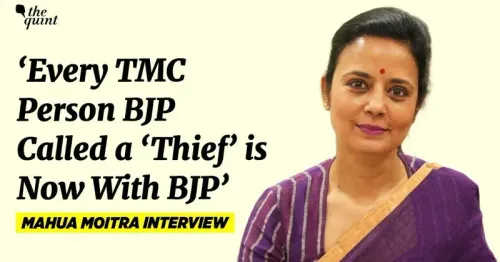
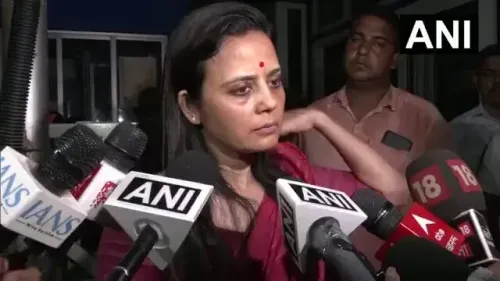
TMC MP Mahua Moitra has publicly attacked the Bar Council of India, calling out its all-male leadership, years of skipped internal elections, its intervention in the Supreme Court's same-sex marriage case, and a reported threat against NALSAR University of Law's 2026 graduating batch.
Key Takeaways
TMC MP Mahua Moitra posted a sharp critique of the Bar Council of India on 13 August 2026 .
She highlighted that the statutory body has an all-male leadership despite women comprising 49 per cent of India's population.
The Bar Council has reportedly not held internal elections for several years, drawing criticism from legal professionals.
Its leadership publicly intervened in the Supreme Court 's same-sex marriage hearings; the court rejected legal recognition of same-sex unions in October 2023 .
Moitra alleged the Bar Council is now threatening 2026 graduates of NALSAR University of Law in Hyderabad — though the specific details remain unverified.
The post connects institutional accountability failures to broader questions of gender representation in India's legal establishment.
An all-male statutory body that has skipped elections for years is now threatening the next generation of law graduates — and TMC MP Mahua Moitra is calling it out. On 13 August 2026, the Krishnanagar MP fired a pointed broadside at the Bar Council of India, questioning how a body with zero women in leadership can claim authority over the country's legal profession in a nation where women make up 49 per cent of the population.
An All-Male Body, Overdue Elections, and a Lecture on Marriage
Moitra's post stacks three charges in rapid succession. First: the Bar Council of India, the statutory apex body established under the Advocates Act, 1961 to regulate the legal profession, has not held internal elections for what she describes as 'donkey's years.' Professional regulatory bodies in India have faced sustained criticism for extended office-bearer terms without fresh polls — a pattern the Bar Council has not escaped. Second: its leadership publicly intervened in the Supreme Court's same-sex marriage hearings, lecturing the bench on social morality. The apex court ultimately declined to grant legal recognition to same-sex unions in October 2023, leaving the question to Parliament — but the Bar Council's posture during those proceedings drew its own controversy. Third — and the charge flagged as most immediate — the body is now reportedly threatening 2026 graduates of NALSAR University of Law, the prestigious national law university in Hyderabad established in 1998.
NALSAR in the Crosshairs
The specific nature of the reported threat to NALSAR's 2026 batch has not been independently confirmed from established public record, and NationPress is not asserting those details as verified fact. What is on record is Moitra's framing: that an unelected, unrepresentative body is wielding institutional power over the professional futures of young law graduates — graduates who have cleared one of India's most rigorous legal education programmes. NALSAR alumni routinely enter the top tier of the Indian bar, the judiciary, and public policy. Any administrative action affecting their entry into the profession would carry significant consequences.
The Gender Arithmetic of India's Legal Establishment
The deeper provocation in Moitra's post is structural. Women have become a growing share of India's legal workforce — filling classrooms at national law universities, populating junior bars across the country, and increasingly appearing in senior roles. Yet the leadership of the Bar Council of India has remained an all-male preserve. The arithmetic Moitra highlights is stark: a body that represents advocates in a country of 49 per cent women has, by her account, no women at its apex. That gap between the composition of the profession and the composition of its regulator is a governance question, not merely a political one.
India's legal establishment has long operated as a self-regulating guild — and like many such guilds, it has been slow to open its doors. The Bar Council's delayed elections and gender-uniform leadership now sit at the intersection of two live debates: institutional accountability and representation. Moitra has placed both on the record in a single post. The Council's response — if any — will define what comes next for NALSAR's class of 2026 and for every woman who passed the bar exam this year.
Point of View
Gender exclusion, and overreach — into a single indictment of the Bar Council of India, a body that rarely faces this kind of public political pressure. The timing, targeting a 2026 graduate cohort, anchors an abstract governance critique in a concrete, human consequence that is harder to dismiss. This fits a broader pattern of opposition politicians using regulatory bodies' internal dysfunction as a proxy for attacking the wider establishment — a strategy that gains traction precisely because the Bar Council's election delays and gender uniformity are documented, not alleged. Whether the Council responds substantively or stonewalls will reveal how much accountability pressure statutory legal bodies are actually willing to absorb.
NationPress
28 Sept 2026
Frequently Asked Questions
Why is Mahua Moitra criticising the Bar Council of India?
Moitra is criticising the Bar Council of India for having an all-male leadership, failing to hold internal elections for years, intervening in the Supreme Court's same-sex marriage case, and reportedly threatening 2026 NALSAR law graduates.
Has the Bar Council of India held elections recently?
The Bar Council of India has faced repeated criticism for not holding regular internal elections, with office-bearers continuing extended terms — a pattern Moitra referenced in her post. Specific election dates have not been confirmed in recent public record.
What did the Bar Council of India do in the same-sex marriage case?
The Bar Council of India's leadership intervened in the Supreme Court hearings on same-sex marriage petitions, taking a position against legal recognition. The Supreme Court ultimately rejected the petitions in October 2023, leaving the issue to Parliament.
What is NALSAR University of Law?
NALSAR University of Law is a national law university in Hyderabad, established in 1998. It offers a five-year integrated law programme and is regarded as one of India's top legal education institutions.
What threat is the Bar Council accused of making against NALSAR graduates?
Moitra's post alleges the Bar Council is threatening 2026 NALSAR graduates, though the specific nature of that threat has not been independently verified from established public record.