CM Fadnavis Launches Rojgar Mahakumbh, Bets on India's Workforce Edge
Synopsis
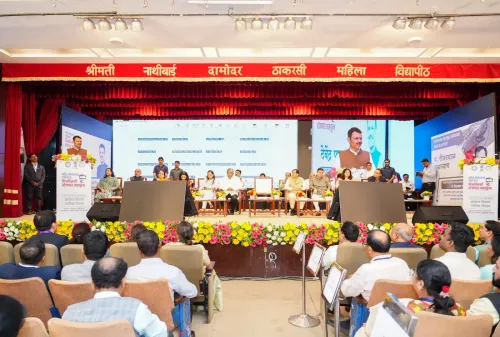
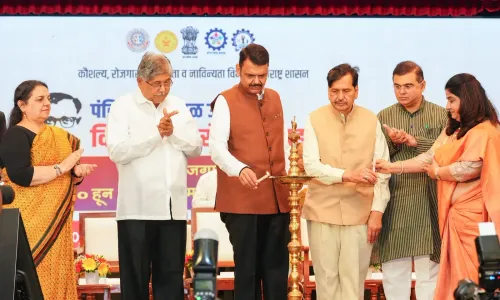
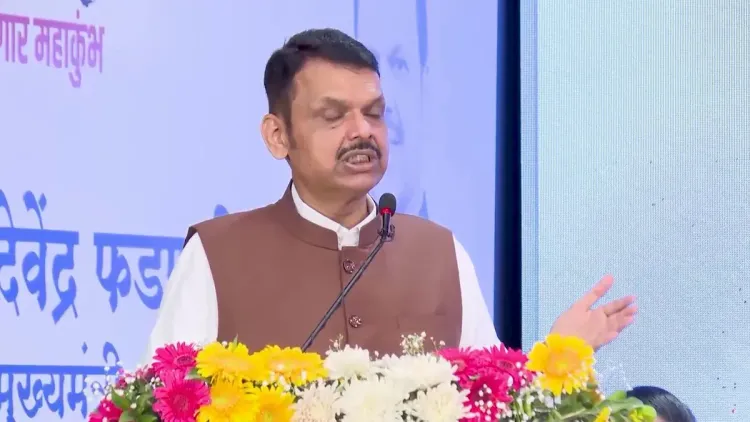
Maharashtra CM Devendra Fadnavis inaugurated the Pandit Deendayal Upadhyay Vishwavikrami Rojgar Mahakumbh in Mumbai on 29 September 2026, arguing that only India can meet the human-resource needs of the world's developed economies.
Key Takeaways
Devendra Fadnavis inaugurated the Pandit Deendayal Upadhyay Vishwavikrami Rojgar Mahakumbh in Mumbai on 29 September 2026 .
Fadnavis asserted that only India has the capacity to supply human resources to developed economies facing workforce shortages.
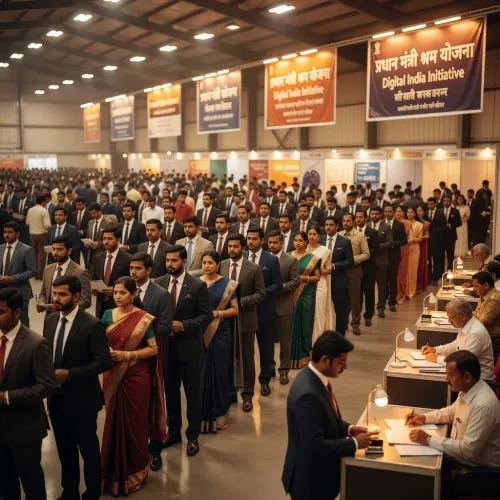
The event is billed as a world-record-scale employment fair, targeting global talent-matching for Indian job seekers.
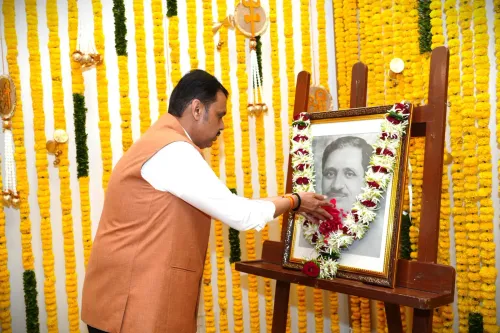
The fair's name honours Pandit Deendayal Upadhyay , the BJP's ideological anchor who championed Integral Humanism.
The initiative aligns with India's National Skill Development Mission (2015) , which aims to make Indian workers globally employable.
Key sectors in demand include IT, healthcare, and engineering across ageing economies in Europe, Japan, and North America.
India's demographic dividend finally has a stage — and Maharashtra just built it. Maharashtra Chief Minister Devendra Fadnavis on 29 September 2026 inaugurated the Pandit Deendayal Upadhyay Vishwavikrami Rojgar Mahakumbh in Mumbai, anchoring the event around a pointed argument: that developed economies are running short on human capital, and India alone has the supply to fill that gap.
One Sentence That Frames India's Global Labour Play
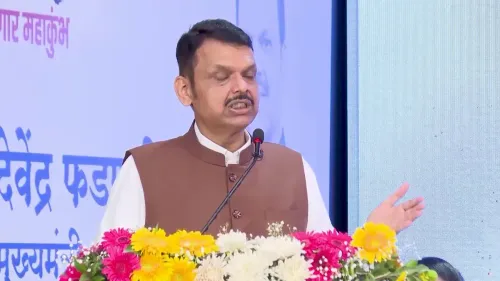
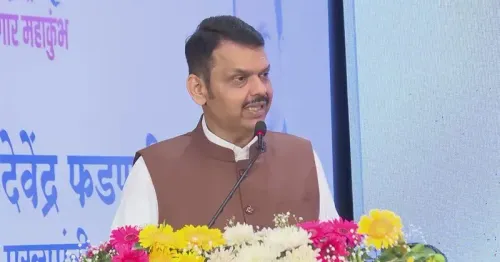
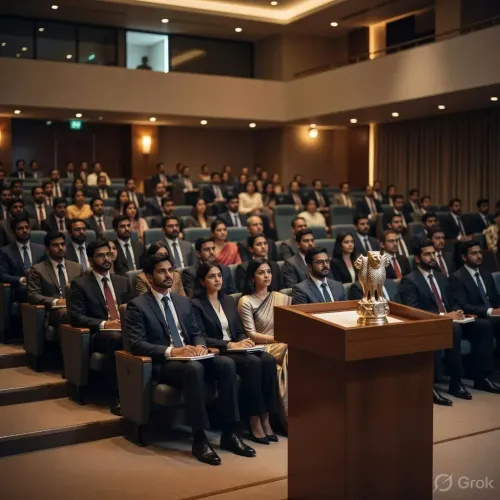
Speaking at the inauguration, Fadnavis stated — in both Marathi and Hindi — 'Vikasit arthavyavastha asalelya deshanna manav-sansadhanachi garaj asun, tyacha puravatha karanyachi kshamata kevala Bharataakade ahe' ('Developed economies need human resources, and only India has the capacity to supply them'). It is a compact thesis, but the weight behind it is enormous. Aging populations across Europe, Japan, and North America are contracting their workforces even as demand in sectors like IT, healthcare, and engineering accelerates — creating a structural vacuum that India's young, trainable population is uniquely positioned to fill.
Why the Mahakumbh Carries Deendayal Upadhyay's Name
The choice of name is deliberate and ideologically loaded. Pandit Deendayal Upadhyay, the BJP's foundational philosopher, championed 'Integral Humanism' — a doctrine that placed the individual's productive potential at the centre of national development. Naming a world-record-scale job fair after him signals that the ruling party sees skilled-labour export not as economic migration but as a civilisational contribution, consistent with Upadhyay's vision of India as a self-reliant yet globally engaged nation.
Maharashtra's Bet on Being India's Talent Gateway
The Mahakumbh is not happening in a vacuum. India's National Skill Development Mission, launched in 2015, set the policy rails for exactly this kind of initiative — building a pipeline of globally employable workers. Maharashtra, as India's financial capital and home to Mumbai, is positioning itself as the natural interface between Indian talent and international demand. Under BJP governance, the state has increasingly hosted large-scale talent-matching platforms, and this event — billed as a world-record employment fair — is the most ambitious iteration yet.
The audience that matters most here is not in the convention hall. It is the millions of young job-seekers across Maharashtra and beyond who are watching to see whether this Mahakumbh translates into actual placements, signed international partnerships, and a credible skilled-migration framework — or remains a headline moment. Those numbers, when they emerge, will tell the real story.
Point of View
Reinforcing that workforce export is being presented as national purpose, not mere economic necessity. Maharashtra's role as the host state underscores its bid to be the administrative and logistical hub of India's global talent pipeline. The real test, however, will be whether verifiable placement data and bilateral agreements follow — without those, the Mahakumbh risks being remembered as spectacle rather than policy inflection point.
NationPress
29 Sept 2026
Frequently Asked Questions
What is the Rojgar Mahakumbh inaugurated by CM Fadnavis in Mumbai?
The Pandit Deendayal Upadhyay Vishwavikrami Rojgar Mahakumbh is a large-scale employment fair held in Mumbai on 29 September 2026, aimed at connecting Indian job seekers with opportunities in developed economies facing labour shortages.
Why is the event named after Pandit Deendayal Upadhyay?
Pandit Deendayal Upadhyay is the BJP's foundational philosopher known for his 'Integral Humanism' doctrine, which placed individual productive potential at the centre of national development — making his name a symbolic fit for a human-capital-focused initiative.
What did CM Devendra Fadnavis say at the Rojgar Mahakumbh inauguration?
Fadnavis stated that developed economies need human resources and only India has the capacity to supply them, delivering the message in both Marathi and Hindi.
Which sectors are driving demand for Indian workers in developed economies?
Sectors such as IT, healthcare, and engineering in ageing economies across Europe, Japan, and North America are among the primary drivers of international demand for skilled Indian professionals.
How does the Rojgar Mahakumbh connect to India's national skill policy?
The event aligns with India's National Skill Development Mission launched in 2015, which set the policy framework for building a pipeline of globally employable workers from India.