CM Karnataka's Office Acts on Viral Kalaburagi Ganja Claim
Synopsis
The Chief Minister's Office of Karnataka responded to a viral X post alleging cannabis use in Kalaburagi's Taj Nagar. Police investigation found the complaint was a misidentification of alcohol; the poster apologised in writing. Beat patrols in Kalaburagi have since been intensified.
Key Takeaways
The Chief Minister's Office of Karnataka acted on a public complaint posted on X alleging ganja consumption in Taj Nagar, Kalaburagi .
Kalaburagi City Police conducted an on-site inspection on CMO directions and found no cannabis activity.
Investigation confirmed the complainant had misidentified alcohol consumption as cannabis use and issued a written apology .
Despite the false alarm, police have intensified beat patrols across Kalaburagi to deter actual narcotics activity.
Awareness programmes targeting drug abuse are being organised in the city as a follow-up measure.
The response is part of Karnataka CMO's #CMSolves initiative, using social media for real-time civic grievance redress.
A viral post alleging cannabis consumption in Taj Nagar, Kalaburagi landed on the desk of the Chief Minister's Office of Karnataka — and within hours, city police were on the ground to verify it. The CMO's swift response on Tuesday, 29 September 2026, under the hashtag #CMSolves, offers a window into how Karnataka's government is deploying social media as a real-time civic grievance channel.
What the Kalaburagi Police Actually Found
When Kalaburagi City Police conducted a site inspection of Taj Nagar on directions from the CMO, the investigation revealed no narcotics activity. The individual who had posted the complaint on X had, in fact, mistaken someone consuming alcohol for cannabis use. That person subsequently issued a written apology acknowledging the error — closing the immediate complaint loop.
The episode underscores a growing challenge in the age of social media alerts: well-intentioned but inaccurate posts can trigger emergency responses. In this case, the rapid verification worked precisely as designed — and cleared an innocent location of a damaging label within the same news cycle.
Beat Patrols Intensified Across Kalaburagi Despite the False Alarm
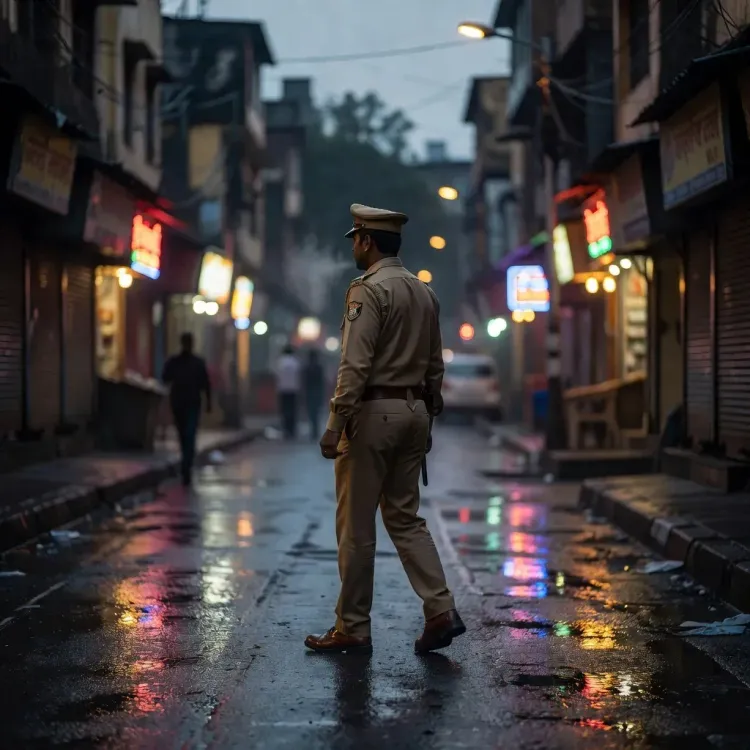
Even though the specific complaint was found to be mistaken, the CMO's post notes that Kalaburagi police have intensified beat patrols across the city to crack down on any actual illegal narcotics activity. Awareness programmes are also being organised as a parallel civic measure. The false alarm, in other words, still produced a productive policing dividend.
Kalaburagi — formerly known as Gulbarga — is a major city in northern Karnataka. Local authorities have periodically dealt with concerns about substance abuse in urban pockets, making regular beat policing and community outreach a standing priority for the district force.
Karnataka's CMO and the Social Media Complaint Playbook
The Chief Minister's Office of Karnataka has built a visible practice of monitoring X for citizen complaints and documenting responses publicly, often under hashtags like #CMSolves. Indian state governments have progressively expanded social media monitoring cells to handle exactly these kinds of local, hyper-specific complaints — substance abuse reports, pothole alerts, illegal construction — that would otherwise take weeks to wind through bureaucratic channels.
The Kalaburagi case is a small but telling proof of concept: a resident posts a concern, an official office picks it up, police verify within hours, and the outcome — whether confirmed or refuted — is communicated back publicly. The cycle is transparent, fast, and on record.
Whether that speed and openness can scale to the volume of complaints a state government receives daily remains the central question — but today's episode in Taj Nagar suggests the machinery, at least for now, is turning.
Point of View
And the public apology loop suggests it can. However, this model's credibility depends on consistent follow-through: intensified patrols announced today must translate into sustained presence, not a one-cycle optics exercise. For the ruling dispensation in Karnataka, visible responsiveness on local issues doubles as political signalling — demonstrating a 'government that listens' — but the model only holds if outcomes, not just responses, are tracked publicly.
NationPress
29 Sept 2026
Frequently Asked Questions
What was the complaint made about Taj Nagar in Kalaburagi?
A person posted on X alleging that cannabis (ganja) was being consumed openly in Taj Nagar, Kalaburagi, prompting the Chief Minister's Office of Karnataka to direct local police to investigate.
What did Kalaburagi police find when they investigated the ganja complaint?
Police found no cannabis activity. The investigation confirmed the complainant had mistaken someone drinking alcohol for cannabis consumption and subsequently issued a written apology.
What action did Karnataka police take after the false ganja complaint in Kalaburagi?
Even though the complaint was found to be inaccurate, Kalaburagi City Police intensified beat patrols across the city and began organising awareness programmes to prevent actual narcotics activity.
What is the #CMSolves initiative by Karnataka's Chief Minister's Office?
#CMSolves is a social media grievance-response initiative by the Chief Minister's Office of Karnataka, where public complaints posted on X are monitored, verified, and resolved — with outcomes communicated back publicly.
Where is Taj Nagar located?
Taj Nagar is a locality in Kalaburagi (formerly known as Gulbarga), a major city in northern Karnataka.