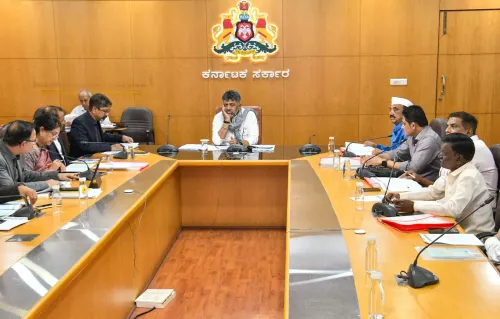
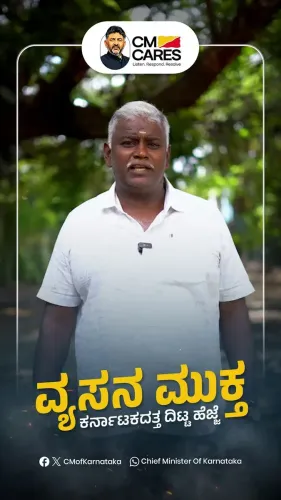
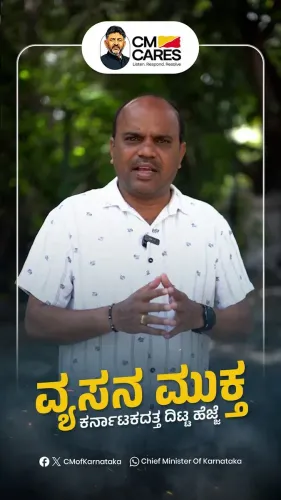
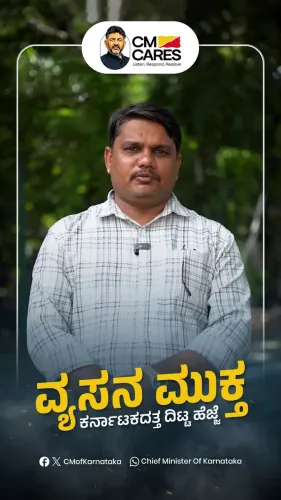
CM Karnataka Office Calls for Drug-Free State, Shares Helpline
Synopsis
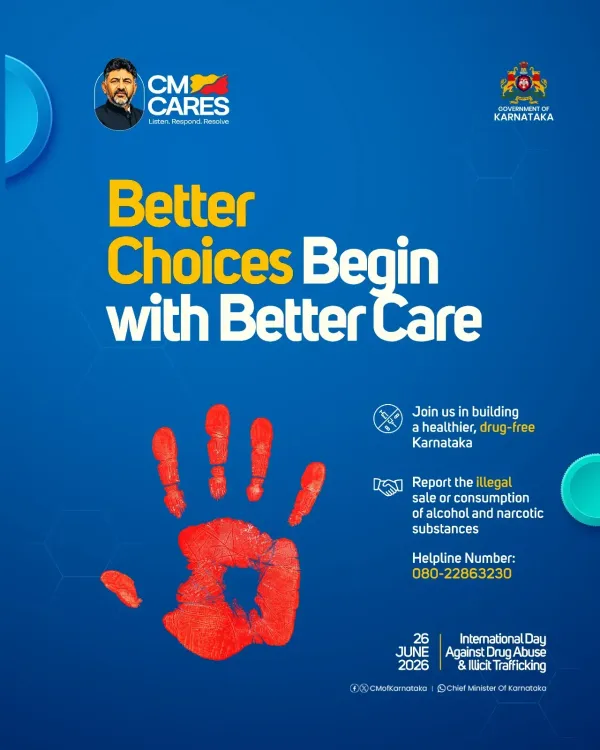
The Chief Minister's Office of Karnataka issued a bilingual public appeal on 26 June 2026 to combat rising drug and illegal liquor use, directing citizens and students to report illegal activities via helpline 080-22863230 with full confidentiality assured.
Key Takeaways
The Chief Minister's Office of Karnataka posted a public anti-drug appeal on 26 June 2026 in English and Kannada.
Citizens and students can report illegal drug and liquor activities by calling helpline 080-22863230 .
All complaints received on the helpline will be kept strictly confidential .
The campaign aligns with the national Nasha Mukt Bharat Abhiyan , launched in August 2020.
The post was tagged #CMCares , #DrugFreeKarnataka , and #SayNoToDrugs , targeting both the general public and students.
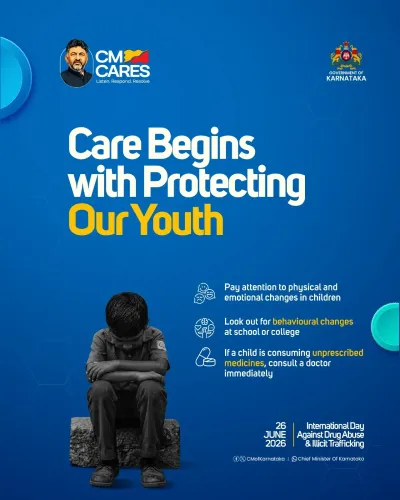
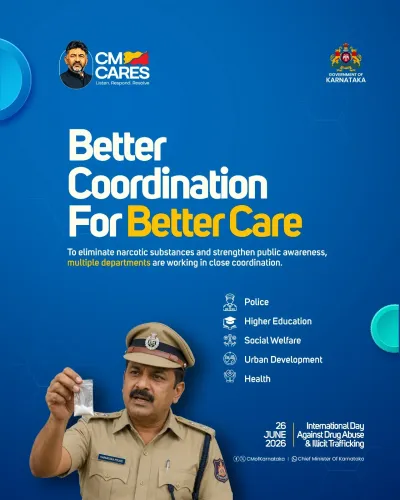
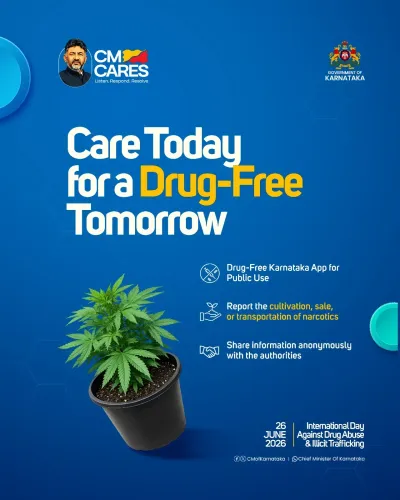
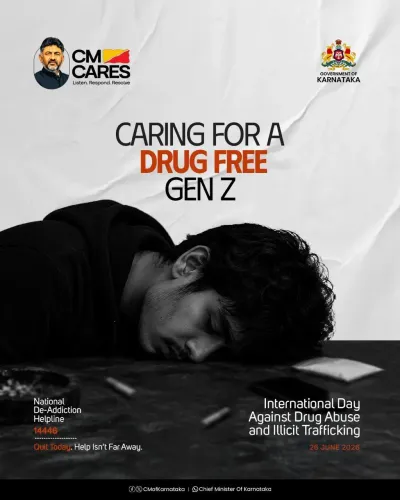
The Chief Minister's Office of Karnataka issued a public appeal on Friday, 26 June 2026, urging citizens and students across the state to join efforts to build a drug-free Karnataka by raising awareness, supporting those affected by substance abuse, and reporting illegal drug activities through a dedicated helpline.
Context
The post, shared in both English and Kannada, called on the public to abandon substance use — ಮಾದಕ ವಸ್ತು ಸೇವನೆ ಇಂದೇ ತ್ಯಜಿಸಿ ('give up substance use today') — and flagged the growing menace of illegal liquor consumption, sale, and drug use in society. The CMO stated that public cooperation is 'essential' to curb these activities. The message was tagged with #CMCares, #DrugFreeKarnataka, and #SayNoToDrugs.
Citizens and students with information on illegal activities were directed to call helpline number 080-22863230. The post assured that all complaints and information received would be kept strictly confidential.
Policy Backdrop
Karnataka's appeal aligns with the Nasha Mukt Bharat Abhiyan, a national drug demand-reduction campaign launched in August 2020 that operates through state governments to drive awareness, establish reporting mechanisms, and expand rehabilitation outreach. The campaign has been a cornerstone of India's coordinated response to substance abuse under the Narcotic Drugs and Psychotropic Substances (NDPS) Act.
Indian states have increasingly combined helplines, school-level outreach programmes, and confidentiality guarantees to lower the barrier for citizens — particularly students — to report drug-related crimes. Karnataka's move follows this well-established pattern of state-level mobilisation under a central framework.
Stakeholders and Impact
The appeal specifically addresses two groups: the general public and students, reflecting concern that substance abuse is penetrating educational environments. By guaranteeing confidentiality of complaints, the government aims to overcome the fear of reprisal that often prevents citizens from reporting such crimes.
The initiative places civic responsibility at the centre of the anti-drug effort, positioning every individual — not just law enforcement — as an active participant in safeguarding communities. The helpline serves as a direct channel between citizens and the state's enforcement machinery.
What's Next
The Karnataka government's renewed public push raises expectations of follow-through in the state legislature, where discussions on expanding de-addiction infrastructure and integrating drug awareness into school curricula could feature in the next session. The effectiveness of the helpline model will depend on sustained outreach and visible action on complaints received. How the state scales this initiative beyond a social media appeal into measurable policy outcomes will be closely watched by public health advocates and civil society groups.
Point of View
The broader test will be whether the helpline is adequately staffed and whether actionable follow-ups are visible to the public. Set against the national Nasha Mukt Bharat Abhiyan framework, this post is less a standalone initiative and more Karnataka's public reaffirmation of a pre-existing federal commitment.
NationPress
25 Sept 2026
Frequently Asked Questions
What is the Karnataka anti-drug helpline number?
The Karnataka government has directed citizens and students to call 080-22863230 to report illegal drug activities or illegal liquor sale. All complaints are kept confidential.
What is the DrugFreeKarnataka campaign about?
#DrugFreeKarnataka is a public awareness initiative by the Chief Minister's Office of Karnataka urging citizens to choose awareness, support those affected by substance abuse, and report illegal drug and liquor activities to authorities.
What is Nasha Mukt Bharat Abhiyan?
Nasha Mukt Bharat Abhiyan is a national drug demand-reduction campaign launched in August 2020 by the central government. It works through state administrations to drive awareness, establish helplines, and expand rehabilitation outreach.
Will my identity be kept secret if I report drug activity in Karnataka?
Yes. The Chief Minister's Office of Karnataka has explicitly assured that all complaints and information provided to the helpline 080-22863230 will be kept strictly confidential.
Who can call the Karnataka drug helpline?
Both the general public and students are encouraged to call helpline 080-22863230 if they have information about illegal drug use, illegal liquor consumption, or related activities in their communities.