CM Fadnavis Launches Record-Scale Job Fair in Mumbai
Synopsis
Chief Minister Devendra Fadnavis inaugurated the Pandit Deendayal Upadhyay Vishwavikrami Rojgar Mahakumbh in Mumbai on 29 September 2026, launching over 400 simultaneous job fairs targeting 50,000 placements from 1,00,000 registered youth, with 1,500-plus events planned statewide and a pitch for global opportunities via agreements with 28 countries.
Key Takeaways
CM Devendra Fadnavis inaugurated the Pandit Deendayal Upadhyay Vishwavikrami Rojgar Mahakumbh in Mumbai on 29 September 2026 .
More than 400 job fairs were held simultaneously across Maharashtra on the inauguration day alone.
Over 1,00,000 youth registered for the fairs; the government aims to place 50,000 in the first phase.
Maharashtra's Skill Department has planned a total of 1,500-plus job fairs statewide in phased rollout.
CM Fadnavis cited India's agreements with 28 countries to open international employment pathways for skilled youth.
The drive is part of the Seva, Sankalp, Abhiyan campaign launched on PM Modi's birthday, with AI and Quantum Computing highlighted as priority reskilling sectors.
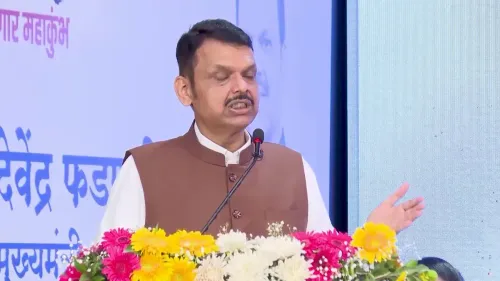
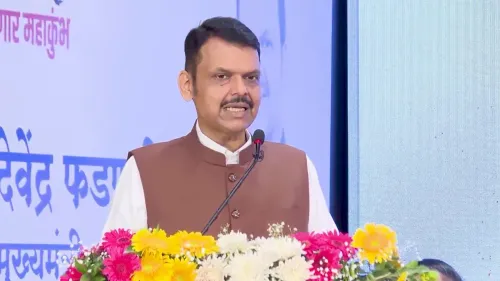
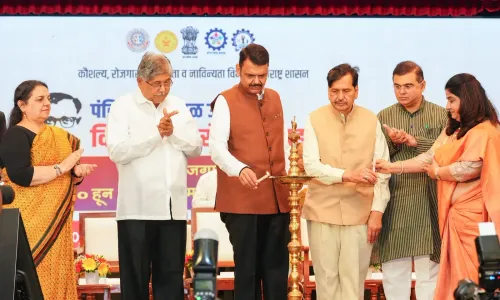
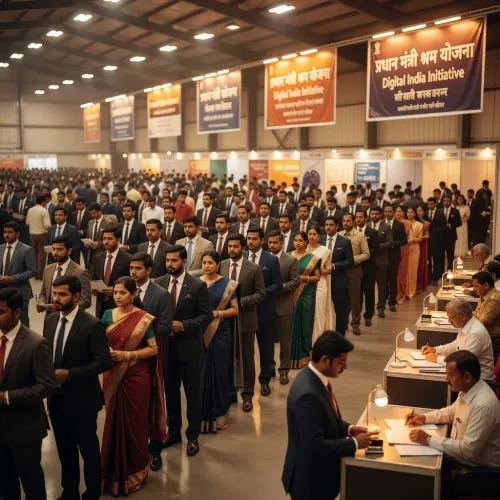
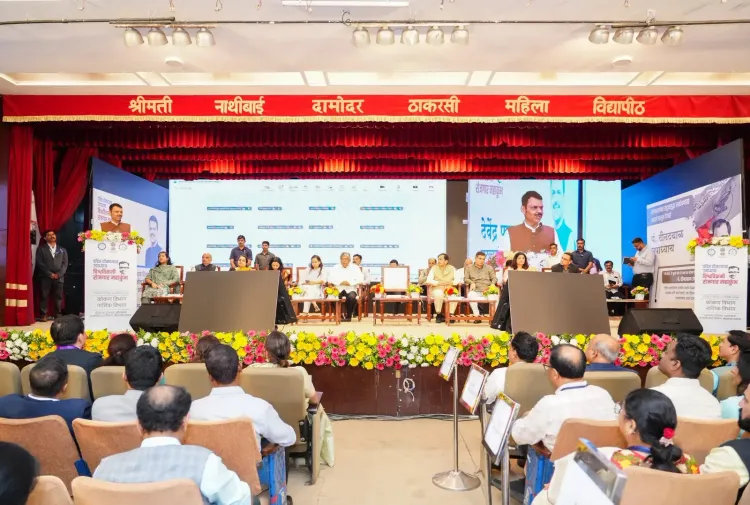
More than 1,00,000 young job-seekers registered, 400-plus simultaneous job fairs firing across Maharashtra in a single day — and a stated ambition to place 50,000 of them before the week is out. Chief Minister Devendra Fadnavis inaugurated the 'Pandit Deendayal Upadhyay Vishwavikrami Rojgar Mahakumbh' in Mumbai on Tuesday, 29 September 2026, setting the stage for what the state government is billing as a record-breaking employment drive.
What the Mahakumbh actually is — and why today
The mega-fair is organised by Maharashtra's Skill, Employment, Entrepreneurship and Innovation Department and forms the centrepiece of the state-wide 'Seva, Sankalp, Abhiyan' (Service, Resolve, Campaign) launched to mark Prime Minister Narendra Modi's birthday. Naming the event after Pandit Deendayal Upadhyay — the ideological anchor of the ruling dispensation — places it squarely within a longer lineage of BJP-aligned welfare branding, from the national Deen Dayal Upadhyaya Grameen Kaushalya Yojana of 2014 to the Skill India Mission of 2015.
Today's simultaneous fairs are the opening salvo. The department has planned more than 1,500 job fairs across the state in total, with the remaining events to follow in phases so that candidates who miss placement in the first round are not left behind.
Fadnavis's demographic argument — and the global pitch
Speaking at the inauguration, CM Fadnavis leaned hard on India's youth bulge. The country's average age sits at 27 to 28 years, he noted, with roughly 65 per cent of the population in the employable bracket — a window of demographic opportunity that will not stay open indefinitely. His argument: the world's advanced economies are hungry for skilled workers, and India has both the numbers and the training infrastructure to supply them.
To that end, he said India has signed agreements with 28 countries to facilitate overseas placement, and the Skill Department will provide the necessary support to help Maharashtra's youth access those international openings. He specifically called out Artificial Intelligence and Quantum Computing as sectors where continuous reskilling — not a one-time certificate — will define who stays employable. The message was pointed: adapt or be left behind.
The political weight in the room
Deputy Chief Minister Eknath Shinde, Minister Chandrakant Patil, Minister Mangalprabhat Lodha, Minister Jaykumar Rawal, Minister Aditi Tatkare, MLA Dr. Manisha Kayande, and SNDT Women University's Acting Vice-Chancellor Dr. Hemlata Bagla were all present — a ministerial line-up that signals the state treats this not as a departmental event but as a flagship political commitment ahead of what remains a competitive electoral environment in Maharashtra.
Fadnavis also framed the drive within Modi's broader economic narrative, describing India as the world's fourth-largest and fastest-growing economy — a positioning that ties state-level delivery to central-government credibility. Whether the placement numbers bear that framing out will be the real test.
50,000 placements — the number that will be scrutinised
The headline target is clear: 50,000 jobs from the first wave of fairs, with the remaining registered candidates to be absorbed through subsequent rounds. Placement outcomes from the 400-plus simultaneous fairs and the follow-through on the remaining 1,100-plus planned events will be the metrics that determine whether this Mahakumbh becomes a genuine policy milestone or a well-photographed announcement. The bilateral labour agreements, too, will need to translate from MoU language into actual overseas postings before the global ambition becomes a ground-level reality.
Maharashtra has made the bet. The scoreboard opens now.
Point of View
000-placement target gives the government a concrete, auditable metric, which is both a strength and a risk: success amplifies the narrative, but shortfalls will be equally visible. Fadnavis's emphasis on AI reskilling and bilateral labour agreements signals an attempt to reframe Maharashtra's skill agenda from domestic job-matching to a globally competitive workforce pipeline — an ambition that will require sustained institutional follow-through well beyond a single high-profile launch day.
NationPress
29 Sept 2026
Frequently Asked Questions
What is the Pandit Deendayal Upadhyay Vishwavikrami Rojgar Mahakumbh?
It is a large-scale employment fair drive organised by Maharashtra's Skill, Employment, Entrepreneurship and Innovation Department, inaugurated by CM Devendra Fadnavis in Mumbai on 29 September 2026, with over 1,500 job fairs planned statewide and a target of placing 50,000 youth in the first phase.
How many job fairs are being held under this programme?
The Maharashtra government has planned more than 1,500 job fairs in total. Over 400 of these were held simultaneously on the inauguration day itself, with the remaining events to follow in phases.
How many youth registered for the Rojgar Mahakumbh job fairs?
Approximately 1,00,000 young job-seekers registered for the fairs. The state government is targeting placements for at least 50,000 of them in the first phase, with continued fairs for the rest.
What is the Seva Sankalp Abhiyan linked to this event?
The Seva, Sankalp, Abhiyan is a statewide campaign launched across Maharashtra on the occasion of Prime Minister Narendra Modi's birthday. The Rojgar Mahakumbh is its flagship initiative, linking employment outreach to the national celebration.
Does the Maharashtra job fair include overseas employment opportunities?
Yes. CM Fadnavis stated that India has signed agreements with 28 countries to facilitate overseas placement, and the Skill Department will support Maharashtra's youth in accessing international job opportunities, particularly in countries facing skilled-labour shortages.