CM Fadnavis launches Rojgar Mahakumbh in Mumbai with Deendayal vision
Synopsis
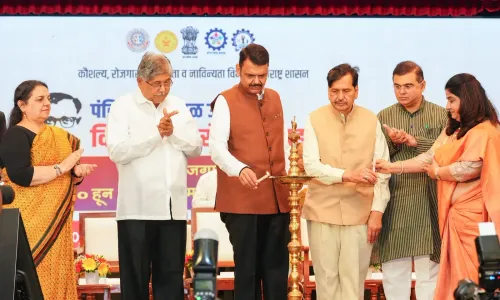
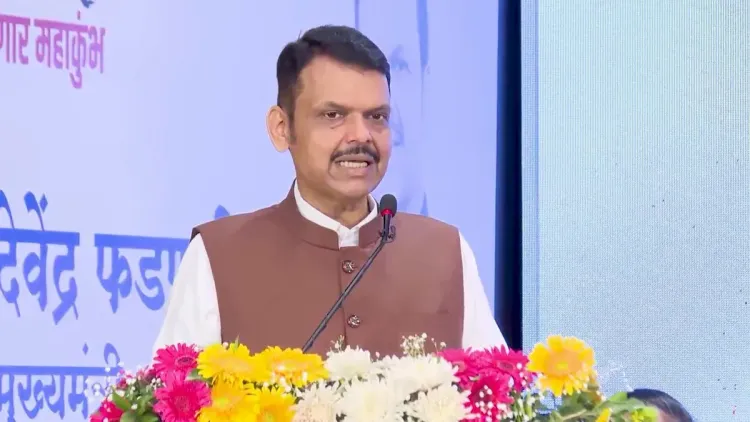
Maharashtra CM Devendra Fadnavis inaugurated the Pandit Deendayal Upadhyay Vishwavikrami Rojgar Mahakumbh in Mumbai on 29 September 2026, invoking an education-training-employment trinity to drive a poverty-free and unemployment-free India.
Key Takeaways
CM Devendra Fadnavis inaugurated the Pandit Deendayal Upadhyay Vishwavikrami Rojgar Mahakumbh in Mumbai on 29 September 2026 .
The event is anchored to a three-point framework: education, training, and employment , aimed at building a poverty-free, unemployment-free, and disease-free India.
The conclave is named after Pandit Deendayal Upadhyay , the Bharatiya Jana Sangh ideologue whose philosophy of Integral Humanism stresses grassroots development.
The format follows the model pioneered by the Deen Dayal Upadhyay Grameen Kaushalya Yojana (launched 2014 ), which linked rural skilling to wage employment through public-private partnerships.
Maharashtra has hosted multiple large-scale employment conclaves designed to connect job seekers to training and placement under one roof.
Job-offer conversion rates and follow-up training batches will be the key metrics to watch in the coming months.
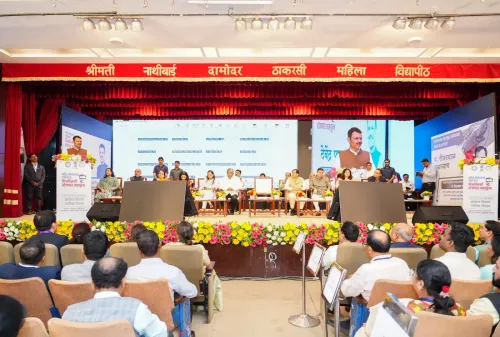
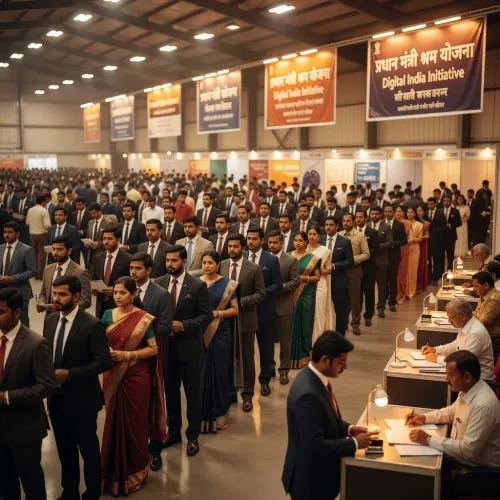
A city-sized employment conclave opened in Mumbai on 29 September 2026 as Maharashtra Chief Minister Devendra Fadnavis inaugurated the Pandit Deendayal Upadhyay Vishwavikrami Rojgar Mahakumbh — framing the mega-fair not as a routine job mela but as a step toward a poverty-free, unemployment-free, and disease-free India.
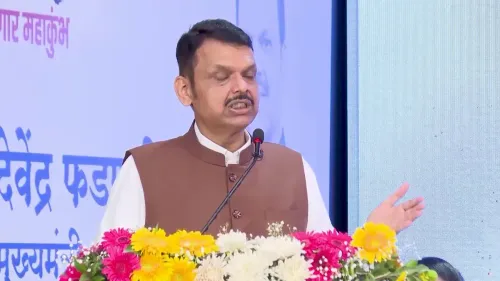
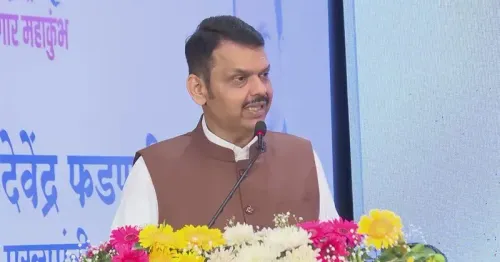
Speaking at the inauguration, CM Fadnavis invoked a three-point formula — education, training, and employment — as the structural backbone for realising that vision. In his words, 'गरिबीमुक्त, बेरोजगारीमुक्त आणि रोगमुक्त भारत' ('a poverty-free, unemployment-free and disease-free India') can only be built by erecting a system anchored in this trinity. The message was delivered in both Marathi and Hindi, signalling the conclave's intent to speak to Maharashtra's full demographic breadth.
Deendayal Upadhyay's philosophy as the event's ideological spine
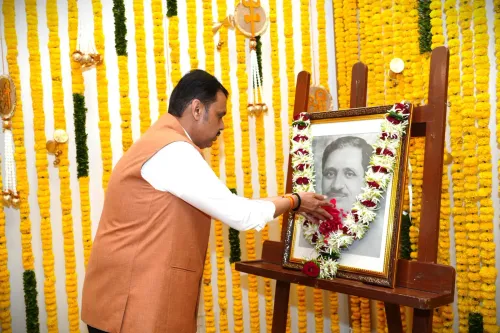
The choice of name is deliberate. Pandit Deendayal Upadhyay — the Bharatiya Jana Sangh leader and architect of 'Integral Humanism' — argued that genuine development must reach the last person in the social order, not just aggregate growth statistics. Naming a record-scale employment fair after him ties the event directly to that philosophy: that education and dignified work are the twin levers of human upliftment, not charity or subsidy alone.
This lineage has policy roots. The Deen Dayal Upadhyay Grameen Kaushalya Yojana, launched in 2014, pioneered the model of skilling rural youth for wage employment through public-private pipelines. The Rojgar Mahakumbh format scales that logic to an urban, multi-sector stage — connecting job seekers not just to vacancies but to structured training pathways that precede placement.
Maharashtra's recurring bet on skill-to-employment pipelines
Maharashtra has hosted multiple iterations of large-scale employment conclaves, each designed to compress the journey from classroom to payroll. The Mahakumbh model brings recruiters, training institutions, and government skilling schemes under one roof — letting a young job seeker assess, enrol, and interview in a single visit. It is a format that trades the slow churn of individual job portals for the concentrated energy of a physical marketplace.
The real test, as always, will be in the conversion numbers: how many of the offers made on the floor translate into sustained employment months later. CM Fadnavis and his administration have staked political credibility on those follow-through figures — and Maharashtra's youth workforce will be watching closely.
If the pipeline holds, the Mahakumbh becomes a replicable template. If it does not, the spectacle risks being remembered as exactly that — spectacle. The Chief Minister has set the ambition high. The scoreboard starts now.
Point of View
Measurable governance deliverables. For Fadnavis, the conclave is both a policy instrument and a political signal on Maharashtra's continuing focus on urban employment. The three-part formula mirrors the Centre's own skill-development vocabulary, reinforcing state-Centre alignment on the workforce agenda. The real political dividend will depend entirely on whether placement numbers hold up to scrutiny in the months that follow.
NationPress
29 Sept 2026
Frequently Asked Questions
What is the Rojgar Mahakumbh inaugurated by CM Fadnavis in Mumbai?
The Pandit Deendayal Upadhyay Vishwavikrami Rojgar Mahakumbh is a large-scale employment conclave inaugurated by Maharashtra CM Devendra Fadnavis in Mumbai on 29 September 2026, designed to connect job seekers with training institutions and employers under one roof.
What is the education-training-employment 'trisutri' mentioned by Fadnavis?
The 'trisutri' (three-point formula) refers to education, training, and employment as the three pillars CM Fadnavis outlined for building a poverty-free, unemployment-free, and disease-free India.
Who was Pandit Deendayal Upadhyay and why is the Mahakumbh named after him?
Pandit Deendayal Upadhyay was the key ideologue of the Bharatiya Jana Sangh and the philosopher behind 'Integral Humanism,' which stresses development reaching every individual. The event is named after him to connect its employment mission to his vision of grassroots upliftment.
What is the Deen Dayal Upadhyay Grameen Kaushalya Yojana?
Launched in 2014, the Deen Dayal Upadhyay Grameen Kaushalya Yojana is a central government scheme that skills rural youth for wage employment through public-private training partnerships — the policy model the Rojgar Mahakumbh format builds upon.
How will the success of the Rojgar Mahakumbh be measured?
The key metrics will be participation numbers, the rate at which job offers made at the event convert into sustained employment, and any follow-up training batches announced by the Maharashtra government in the months ahead.