CM Fadnavis launches Satyamev Jayate Water Cup 2027
Synopsis
Maharashtra's CMO said CM Devendra Fadnavis launched the statewide Satyamev Jayate Water Cup Competition 2027, organised by Paani Foundation, at Varsha Bungalow in Mumbai on 28 November 2026, with Aamir Khan and minister Sanjay Rathod present.
Key Takeaways
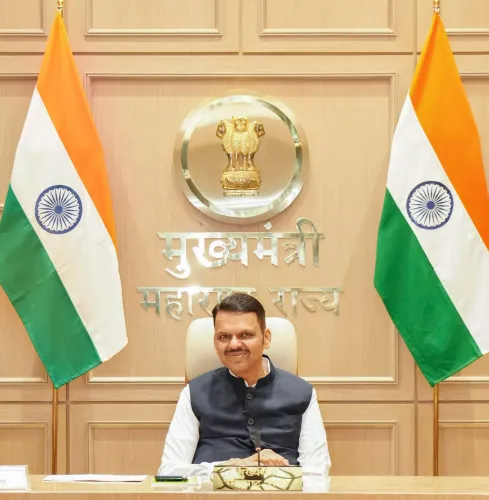
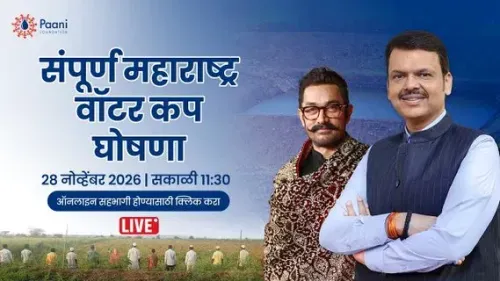
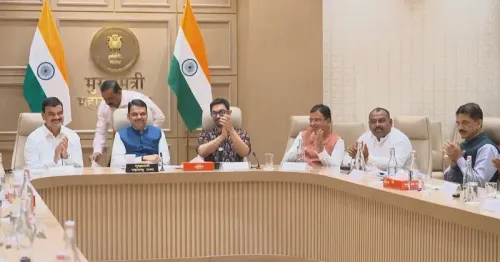
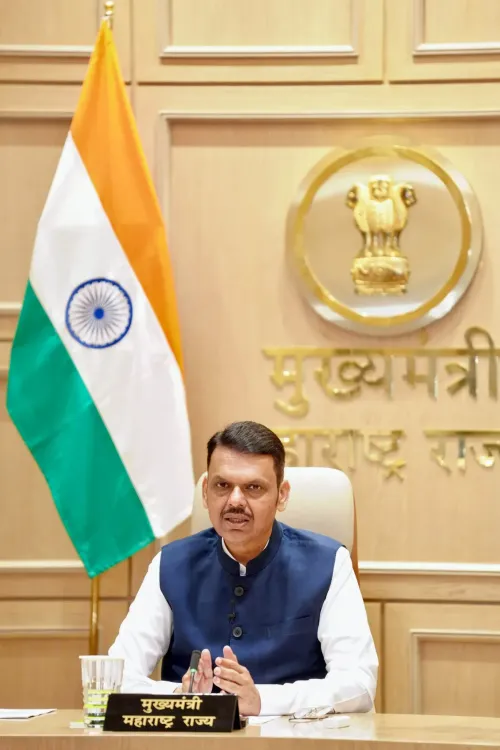
The Chief Minister's Office of Maharashtra said CM Devendra Fadnavis launched the Sampurna Maharashtra Satyamev Jayate Water Cup Competition 2027 at 11.45 am on 28 November 2026.
The event was held at Varsha Bungalow in Mumbai and organised by Paani Foundation.
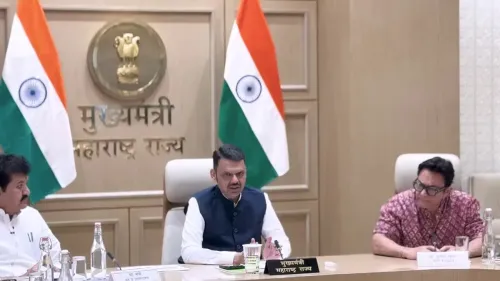
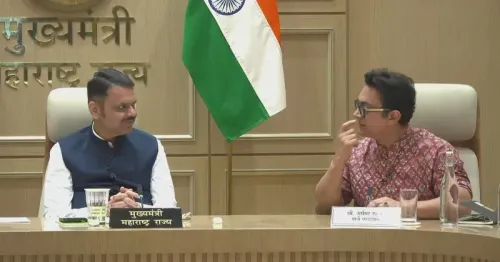
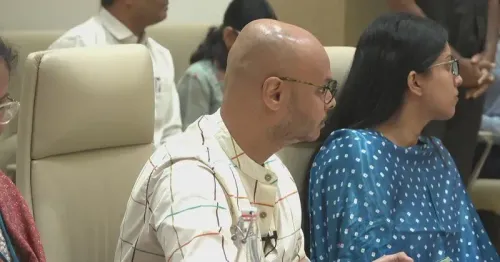
Founder Aamir Khan, CEO Satyajit Bhatkal, minister Sanjay Rathod and senior district officials were present.
The office described the launch as one step towards a drought-free Maharashtra.
Paani Foundation has run the Satyamev Jayate Water Cup since 2016 to drive village watershed works.
Rules, prizes and district targets for the 2027 edition were not set out in the launch announcement.
Maharashtra's bid to outrun drought just got a public starting gun. The Chief Minister's Office of Maharashtra said Chief Minister Devendra Fadnavis on 28 November 2026 launched the Sampurna Maharashtra Satyamev Jayate Water Cup Competition 2027 at Varsha Bungalow in Mumbai, calling it one step toward a drought-free state. Paani Foundation founder Aamir Khan, chief executive Satyajit Bhatkal, minister Sanjay Rathod and senior officials from various districts stood with him at the 11.45 am ceremony.
The office's trilingual post put it plainly: दुष्काळमुक्त महाराष्ट्राच्या दिशेने एक पाऊल (one step towards a drought-free Maharashtra). The English line announced the 'Launch of Sampurna Maharashtra Satyamev Jayate Water Cup Competition 2027, organised by the Paani Foundation, at the hands of CM Devendra Fadnavis,' and listed who had gathered at the chief minister's Mumbai residence.
Paani Foundation's Water Cup, scaled across Maharashtra
The Satyamev Jayate Water Cup is not a new brand. Paani Foundation has run the competition since 2016 to push villages to finish watershed works — contour trenches, check dams, recharge structures — and cut drought vulnerability through community labour rather than only state machinery. Founder Aamir Khan, known for carrying the Satyamev Jayate water message into public life, and CEO Satyajit Bhatkal have been the civil-society face of that effort.
Maharashtra governments have repeatedly partnered with the foundation on competitive, village-driven watershed programmes. The pattern is consistent: administrative backing from the state, mobilisation on the ground, and a race among gram panchayats to complete water-conservation works before the rains. Saturday's launch of a Sampurna Maharashtra (entire Maharashtra) edition for 2027 extends that model across the state rather than a limited cluster of talukas.
Drought-prone villages remain the real contest ground
The people who will decide whether the 2027 cup means anything are not at Varsha Bungalow. They are in drought-prone villages and rural farming communities where groundwater has fallen and a failed monsoon still means crop loss, tanker water and distress migration. Competitive watershed work has been Maharashtra's favoured answer to that cycle: turn conservation into a public contest, then measure whether wells actually rise.
The Chief Minister's Office did not spell out rules, prizes or district targets in the launch post. Those details were not part of the announcement. What the record does show is a decade-long bet that village participation and completed earthworks can move the needle on drought. Observers will watch three numbers once the 2027 competition concludes: how many villages join, how much watershed work is finished, and whether groundwater levels actually change.
Fadnavis launching the cup at Varsha Bungalow, with a sitting minister and district officers present, signals that the 2027 edition is meant to run with the state's administrative spine, not only as an NGO campaign. For a state that has lived with recurring scarcity, that is the test: can a celebrity-backed village contest, scaled statewide, still deliver water where tankers have become routine?
Point of View
And village-level watershed contests on the other. The Water Cup, born from the Satyamev Jayate platform and run by Paani Foundation since 2016, sits in that second track — a way for successive governments to partner with civil society without owning every shovel of earthwork. Fadnavis putting the 2027 statewide edition at Varsha Bungalow, with district officers present, fuses celebrity mobilisation with the administrative machine. The policy question is not the ceremony; it is whether participation and groundwater data in 2027 look different from a decade of the same experiment.
NationPress
28 Nov 2026
Frequently Asked Questions
What is the Satyamev Jayate Water Cup Competition 2027?
It is a statewide water-conservation contest organised by Paani Foundation and launched by Maharashtra Chief Minister Devendra Fadnavis on 28 November 2026. The cup is meant to get villages to complete watershed works as a step toward a drought-free Maharashtra. Paani Foundation has run earlier editions of the Water Cup since 2016.
Who launched the Maharashtra Water Cup 2027?
Chief Minister Devendra Fadnavis launched it at Varsha Bungalow in Mumbai, according to the Chief Minister's Office of Maharashtra. Minister Sanjay Rathod, Paani Foundation founder Aamir Khan and CEO Satyajit Bhatkal were among those present.
What is Paani Foundation?
Paani Foundation is a non-government organisation set up to make Maharashtra drought-free through community watershed management. It is associated with founder Aamir Khan and CEO Satyajit Bhatkal and has organised the Satyamev Jayate Water Cup since 2016.
Where and when was the Water Cup 2027 launched?
The launch was held at 11.45 am on 28 November 2026 at Varsha Bungalow in Mumbai. The Chief Minister's Office of Maharashtra announced the event the same afternoon.
Why is Maharashtra promoting a drought-free Water Cup?
The state has faced recurrent drought and groundwater depletion, especially in rural farming belts. Governments have repeatedly partnered with Paani Foundation on competitive village watershed programmes so that conservation work is completed at scale before the monsoon.