CMO Maharashtra: Fadnavis launches Water Cup 2027
Synopsis
Maharashtra Chief Minister Devendra Fadnavis launched the Sampurna Maharashtra Water Cup 2027 at Varsha Niwas, Mumbai, with Pani Foundation. He called for a people's water-conservation movement, linked Jalyukt Shivar 3.0 to central schemes, set a pre-monsoon works deadline, and ordered a high-power committee while expanding the contest to nagar panchayats.
Key Takeaways
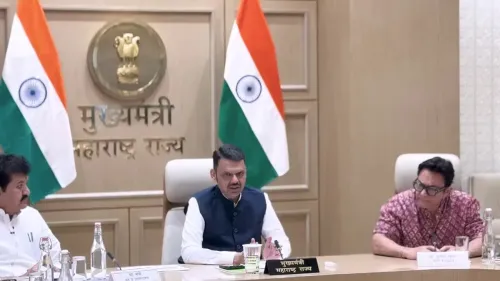
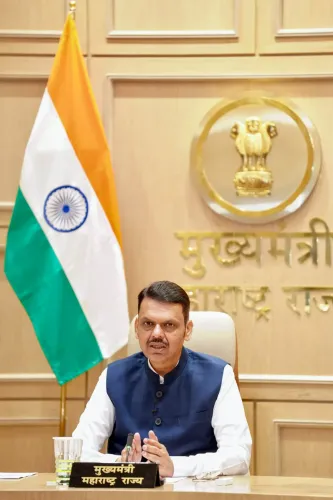
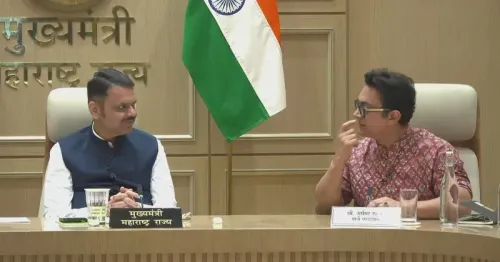
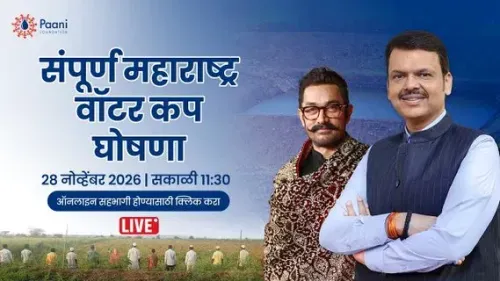
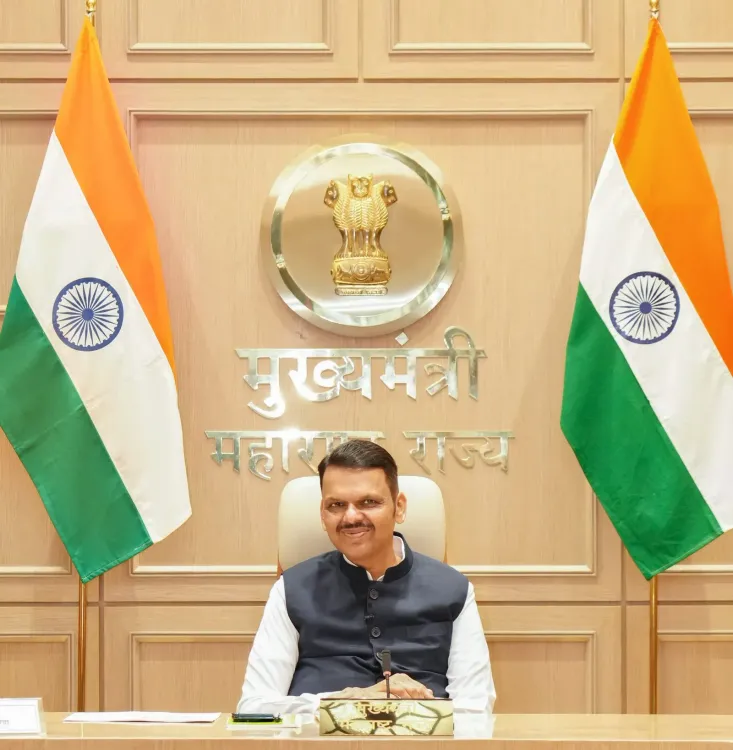
The Chief Minister's Office of Maharashtra said CM Devendra Fadnavis launched Sampurna Maharashtra Water Cup 2027 on 28 November 2026 at Varsha Niwas, Mumbai.
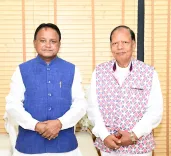
The event was organised by Pani Foundation; founder Aamir Khan, CEO Satyajit Bhatkal and minister Sanjay Rathod attended.
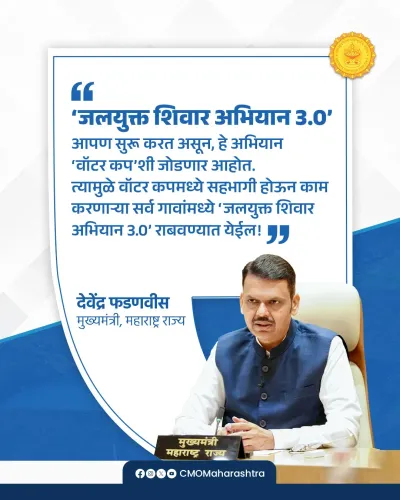
Fadnavis called for Jalyukt Shivar 3.0 to converge with the Centre's VB-G RAM G scheme and other programmes so more villages become water-rich.
A state-level high-power committee and a panel of principal secretaries plus Pani Foundation representatives will monitor implementation.
All water-conservation works are to be completed before the monsoon, with micro-planning of villages and watersheds and no half-finished sites.
The Water Cup is to be expanded to nagar panchayats and small municipal councils, with separate criteria to be fixed with the urban development department.
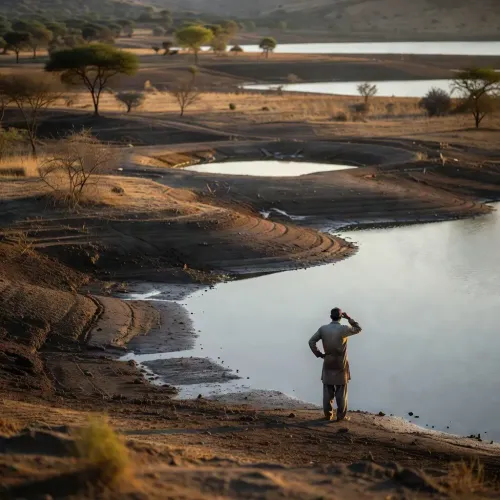
Dried tanks and an El Nino warning framed the moment as the Chief Minister's Office of Maharashtra said Chief Minister Devendra Fadnavis on 28 November 2026 launched the Sampurna Maharashtra Water Cup 2027 at Varsha Niwas in Mumbai. He called for a mass water-conservation movement built on public participation, not just government works. The launch, organised by Pani Foundation, puts a new statewide contest at the centre of Maharashtra's drought fight.
The official post opened with a pledge to raise a wide conservation movement through lok sahabhag (people's participation). Fadnavis said the fight against drought now needs collective resolve, and that receding water sources against an El Nino backdrop should not be treated only as a crisis. They should be treated as an opening for future water security.
Dried sources, El Nino and a scientific recharge push
He argued that a scientific study of dried water bodies, followed by conservation works in their catchments, can revive those sources and help hold groundwater at a usable level. Villages shaped by the earlier Jalyukt Shivar drive and by Water Cup contests, the office noted, have stayed water-secure even in drought years. That record is what the state now wants to scale.
Fadnavis asked the state government, Pani Foundation and villagers to work in lockstep, folding Jalyukt Shivar 3.0 together with the Centre's VB-G RAM G scheme and other government programmes so that more villages become water-rich. The post quoted him as saying, 'No village should be left behind,' with the government standing behind every settlement with schemes, resources and administrative backing.
Jalyukt Shivar 3.0 and a hard pre-monsoon clock
Jalyukt Shivar Abhiyan, launched in 2015, was built around watershed works and desilting to make villages drought-resilient. Pani Foundation, founded by actor Aamir Khan, began village-level Water Cup contests around 2016 to turn conservation into a competitive public campaign. Fadnavis tied that lineage to a practical order: finish all conservation works before the monsoon, with micro-planning of villages and watersheds, no delay in administrative sanctions or estimates, and no half-finished sites.
He also pointed to the Gaal-mukt Dharan, Gaal-yukt Shivar campaign — silt-free dams, silt-rich fields — which, he said, has already lifted storage capacity and farm fertility. Those efforts must now be coordinated so conservation work is wider, not piecemeal. The administrative machinery, he added, should prepare in advance so villagers' enthusiasm does not stall in paperwork.
A high-power committee and a district-level watch
For delivery, a state-level high-power committee has been set up. A high-level panel of principal secretaries from various departments and Pani Foundation representatives will also stay in play, the office said, to keep a continuous watch on progress. District collectors and zilla parishad chief executive officers were told to coordinate at district and taluka level, clear bottlenecks and keep villagers motivated.
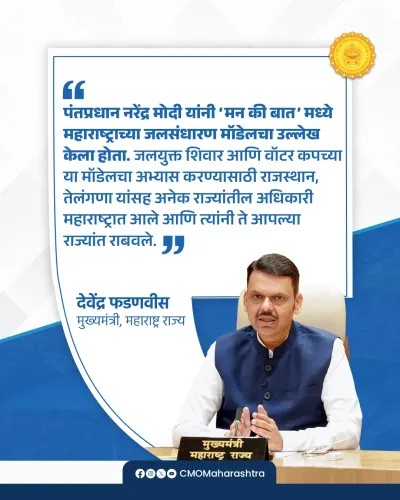
The same post noted that Maharashtra's conservation model has travelled beyond the state. Prime Minister Narendra Modi had, in Mann Ki Baat, asked other states to study it. Officials from Rajasthan, Telangana and elsewhere have visited Maharashtra and carried similar programmes home — a pattern Fadnavis cited as proof that trained manpower and past experience can now deliver a sharper round of work.
Water Cup 2027 to pull in nagar panchayats
The campaign's footprint is set to widen. Fadnavis said the Water Cup should include nagar panchayats and small municipal councils, with separate criteria to be decided after talks with the urban development department. Those bodies remain partly rural, he noted, and should not sit outside a people's water movement.
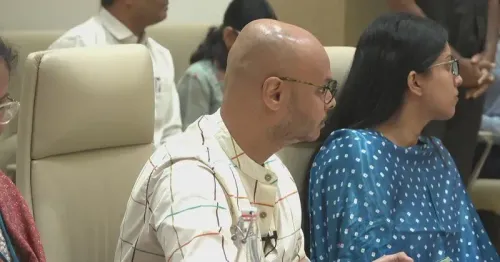
Minister Sanjay Rathod, Pani Foundation founder Aamir Khan, chief executive officer Satyajit Bhatkal, and senior officers from several districts attended the launch at Varsha Niwas.
The next test is not the speech. It is whether the new committees, the pre-monsoon works and the expanded Water Cup actually put water back into dried sources before the rains arrive.
Point of View
Village-led watershed work rather than only large dams. Jalyukt Shivar 3.0 plus a 2027 Water Cup, a high-power committee and a pre-monsoon deadline show the state treating drought as a governance cycle, not a seasonal shock. Pulling nagar panchayats into the contest is the real policy stretch, because peri-urban water stress now sits next to rural scarcity. Convergence with a central scheme is the political glue — it lets Mumbai claim both local mobilisation and New Delhi's resource pipeline.
NationPress
28 Nov 2026
Frequently Asked Questions
What is the Maharashtra Water Cup 2027?
It is a statewide people's water-conservation contest launched by Chief Minister Devendra Fadnavis with Pani Foundation. The 2027 edition is meant to scale village-level watershed work and, later, bring in nagar panchayats and small municipal councils.
Where did Devendra Fadnavis launch Water Cup 2027?
He launched it at Varsha Niwas in Mumbai on 28 November 2026. The Chief Minister's Office of Maharashtra said Pani Foundation organised the event.
What is Jalyukt Shivar Abhiyan?
It is Maharashtra's watershed development programme, launched in 2015, to raise village water availability through desilting and conservation works. Fadnavis said Jalyukt Shivar 3.0 should now be run in convergence with central and state schemes.
How is Pani Foundation linked to the Water Cup?
Pani Foundation, founded by Aamir Khan, has run village Water Cup competitions since around 2016 to drought-proof rural Maharashtra. Its representatives will sit on a high-level committee watching the 2027 campaign.
What committee did Maharashtra set up for Water Cup 2027?
A state-level high-power committee has been formed for implementation. A high-level panel of principal secretaries and Pani Foundation representatives will also track progress, while collectors and zilla parishad CEOs coordinate at district and taluka level.