CM Fadnavis Launches Silk Cocoon Auction Market in Jalna
Synopsis
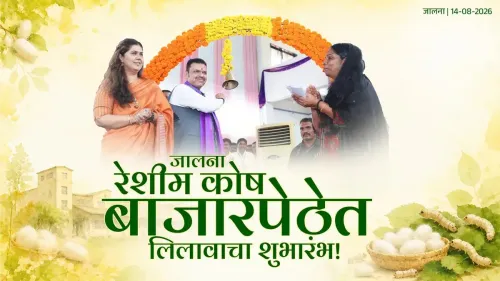
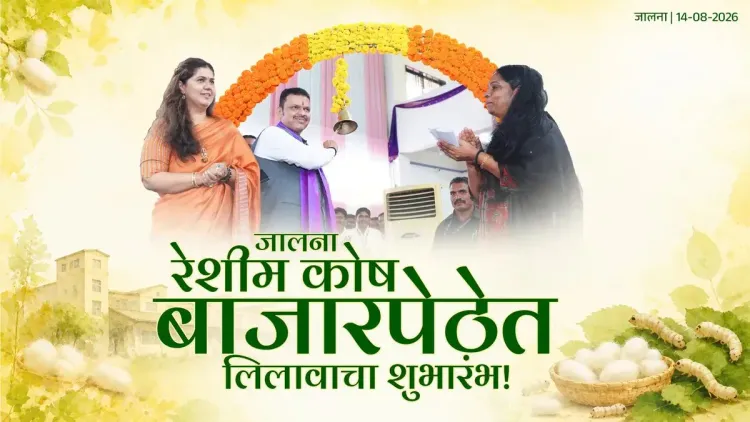
Chief Minister Devendra Fadnavis inaugurated Jalna's silk cocoon auction market on 14 August 2026, ringing the traditional bell to launch a transparent, organised trading platform for Marathwada sericulture farmers — a region long targeted for agricultural diversification away from water-intensive crops.
Key Takeaways
CM Devendra Fadnavis inaugurated the silk cocoon auction market in Jalna on 14 August 2026 by ringing the traditional market bell.
The market aims to provide silk cocoon farmers a transparent, organised, and capable auction platform, reducing dependence on informal middlemen.
Jalna is in Maharashtra's Marathwada region, where sericulture has been promoted as a drought-resilient alternative livelihood since the early 2010s.
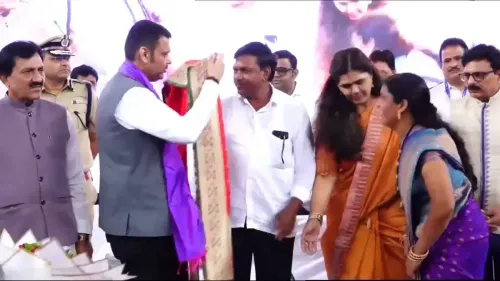
Minister Pankaja Munde , Minister Sanjay Sawkare , and five MLAs attended, signalling strong political backing for the initiative.
Key metrics to watch include farmer registration numbers, auction price realisations, and potential expansion to other sericulture districts in Maharashtra.
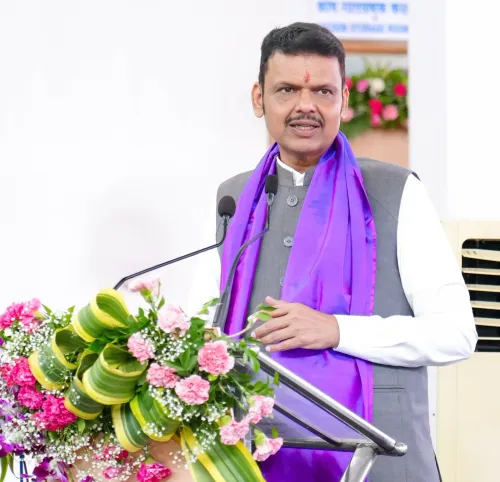
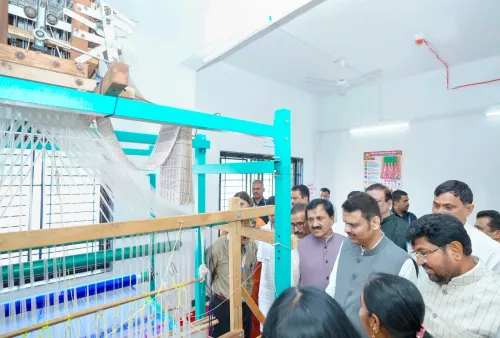
A bell rang out at Jalna's silk cocoon market on Friday, 14 August 2026, and with it, Chief Minister Devendra Fadnavis formally opened a new chapter for sericulture farmers across Maharashtra's drought-battered Marathwada region. The Chief Minister's Office of Maharashtra announced that Fadnavis inaugurated the silk cocoon auction process by ringing the traditional bell — a gesture that signals the market is open for business and farmers' produce is now entering an organised, transparent trading system.
What the Bell at Jalna Actually Signals
The inauguration, the CMO stated, is 'an important step towards providing a transparent, organised and capable market for silk cocoons produced by farmers.' That phrasing matters. For years, silk cocoon growers in Marathwada — a region historically synonymous with agrarian distress and erratic rainfall — sold their produce through informal, fragmented channels where price discovery was opaque and bargaining power rested firmly with middlemen. An organised auction platform shifts that equation.
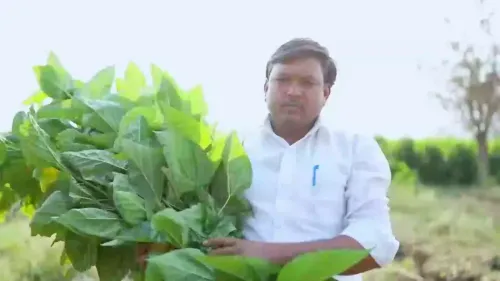
Marathwada has been a focus of Maharashtra's sericulture push since the early 2010s, when successive state governments identified silk cultivation as a viable alternative livelihood for farmers in water-scarce districts. Silk mulberry cultivation is relatively low on water demand compared to sugarcane or cotton, making it a practical diversification crop for the region.
Fadnavis, Munde, and a Room Full of Legislators
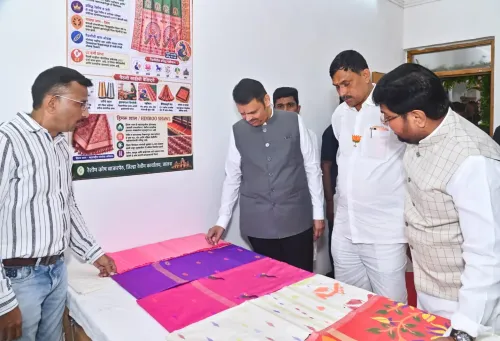
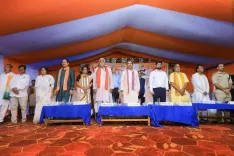
The inauguration carried political weight beyond the ceremonial. Minister Pankaja Munde — whose portfolio spans rural development and whose political base is rooted in Marathwada — was present alongside Minister Sanjay Sawkare. The gathering also included MLAs Babanrao Lonikar, Santosh Danve, Narayan Kuche, Arjun Khotkar, and Hikmat Udhan. The turnout of multiple legislators from the region signals that the Jalna market is being positioned as a flagship rural-economy initiative, not a quiet administrative exercise.
Organised Markets as Maharashtra's Agricultural Playbook
Maharashtra has repeatedly turned to structured, auction-based commodity markets as its preferred tool for improving farmer incomes — from APMCs for onions and grapes to specialised platforms for non-cereal crops. The Jalna silk cocoon market follows that same playbook: bring the transaction into the open, create price competition among buyers, and give the producer a documented, contestable price. Whether this market delivers on that promise will depend on farmer participation rates, the number of registered buyers, and the price premiums farmers actually realise over informal-channel benchmarks.
The metrics to watch are straightforward: how many farmers register, what average price per kilogram emerges from early auctions, and whether the government moves to replicate the model in other sericulture districts of Maharashtra. Those numbers will tell the real story of whether the bell at Jalna rang in genuine reform or a well-photographed opening ceremony.
Point of View
It is also a politically shrewd move in a region where Pankaja Munde's rural constituency overlaps — co-opting a Marathwada-rooted minister in a visible reform signals coalition coherence ahead of any future electoral cycle. The real test, however, is operational: Maharashtra has a history of inaugurating agricultural market infrastructure that underperforms on actual farmer participation, and silk cocoon markets require a critical mass of both growers and licensed buyers to generate genuine price competition. If the Jalna market sustains activity beyond the inaugural quarter, it could become a template for the state's non-cereal crop marketing architecture.
NationPress
14 Aug 2026
Frequently Asked Questions
What is the Jalna silk cocoon market inaugurated by CM Fadnavis?
It is an organised auction platform in Jalna district where sericulture farmers can sell their silk cocoons through a transparent bidding process, replacing informal and fragmented sales channels.
Why is sericulture promoted in Marathwada?
Marathwada is a drought-prone region where water-intensive crops like sugarcane and cotton are risky. Silk mulberry cultivation requires relatively little water, making sericulture a practical livelihood diversification option for farmers there.
Who was present at the Jalna silk cocoon market inauguration?
CM Devendra Fadnavis , Minister Pankaja Munde , Minister Sanjay Sawkare , and MLAs Babanrao Lonikar, Santosh Danve, Narayan Kuche, Arjun Khotkar , and Hikmat Udhan attended the event.
How does an organised silk cocoon auction benefit farmers?
An auction-based market creates competition among buyers, improving price discovery and giving farmers a documented, transparent price — reducing the leverage that informal middlemen typically hold over producers.
Will Maharashtra expand the silk cocoon market model to other districts?
No official announcement of expansion has been made. Observers will watch farmer participation rates and price realisations at the Jalna market before any replication in other sericulture districts can be assessed.