Khattar calls for Partition horrors in school textbooks
Synopsis
On Partition Horrors Remembrance Day, Union Minister Manohar Lal Khattar called for the 1947 Partition's human catastrophe — which displaced over 10 million people — to be formally taught through school curriculum books, aligning with the central government's push to embed Partition memory in formal education.
Key Takeaways
Union Power Minister Manohar Lal Khattar posted on 14 August 2026 — Partition Horrors Remembrance Day — calling for Partition horrors to be included in school textbooks.
The 1947 Partition displaced more than 10 million people and caused the deaths of hundreds of thousands in communal violence.
Partition Horrors Remembrance Day on 14 August was instituted in 2021 by Prime Minister Narendra Modi .
NCERT governs school textbook content across India; successive revisions since 2014 have adjusted modern Indian history chapters.
The National Education Policy 2020 called for greater emphasis on Indian history and heritage in school curricula.
The next NCERT textbook update cycle for Classes 8–12 will determine whether this call shapes formal curriculum.
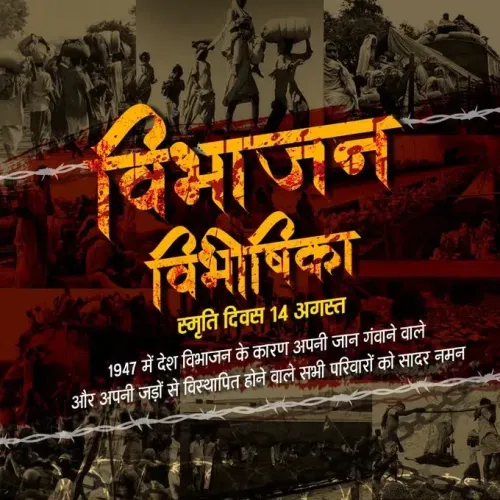
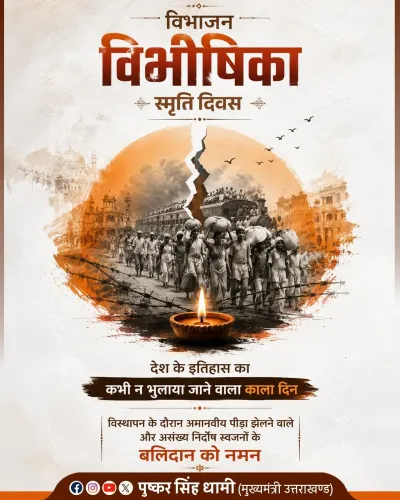
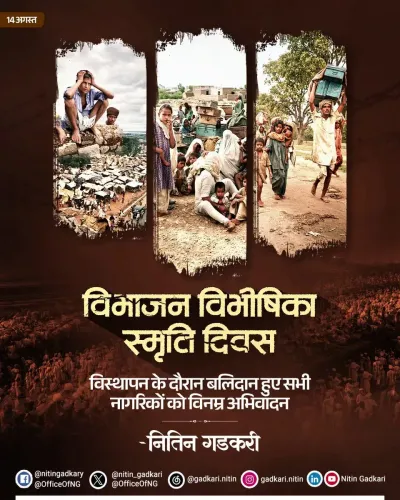
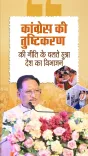
On Partition Horrors Remembrance Day, 14 August, Union Power Minister Manohar Lal Khattar made a pointed call: the suffering of 1947 must find its way into every school textbook in India. The message is short, the demand is not.
Posting in Hindi on 14 August 2026, Khattar wrote: 'We must make the new generation aware of the horrors of Partition and the period associated with it through our curriculum books.' ('हमें अपने पाठ्यक्रम की पुस्तकों में नई पीढ़ी को विभाजन की विभीषिका तथा उससे जुड़े कालखंड से अवश्य अवगत कराना होगा..') The word he chose — vibhishika, meaning catastrophe or horror — is not the language of routine history lessons. It signals moral urgency.
What the Partition cost, and why textbooks matter
The Partition of British India in 1947 displaced more than 10 million people and killed hundreds of thousands in communal violence that swept across the subcontinent in weeks. Entire families were erased. Generations carried the trauma silently. For decades, critics argued that the full human cost of that rupture was treated as a footnote in formal education — a political event, not a human catastrophe.
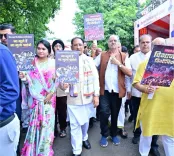
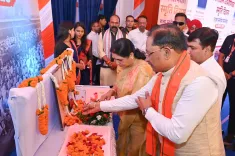
Khattar's statement lands on the one day set aside to confront that silence. In August 2021, Prime Minister Narendra Modi announced that 14 August would be observed annually as Partition Horrors Remembrance Day — a formal, state-level acknowledgement that the violence of Partition deserved its own place in national memory.
NCERT revisions and the curriculum debate
The body that actually controls what goes into school textbooks is NCERT — the National Council of Educational Research and Training. Its textbooks are used across central and most state schools. Since 2014, successive revisions to NCERT content have adjusted the treatment of modern Indian history, including the independence and Partition period. The National Education Policy 2020 explicitly called for greater emphasis on Indian history and heritage — providing policy cover for further changes.
What Khattar is calling for fits squarely within that arc: more space, and more emotional honesty, in the chapters covering 1947. The next round of NCERT updates for Classes 8 to 12 will be the practical test of whether that call translates into curriculum.
Point of View
Framing earlier textbook omissions as deliberate erasure. Whether this translates into specific NCERT mandates or remains rhetorical depends on the Ministry of Education's next curriculum cycle — but the political groundwork is clearly being laid ahead of it.
NationPress
14 Aug 2026
Frequently Asked Questions
What did Manohar Lal Khattar say about Partition and textbooks?
Khattar called for the new generation to be made aware of the horrors of the 1947 Partition and the period surrounding it through school curriculum books, posting the statement on Partition Horrors Remembrance Day, 14 August.
What is Partition Horrors Remembrance Day?
Partition Horrors Remembrance Day is observed every year on 14 August to commemorate the victims of the violence and displacement caused by the 1947 Partition of India. It was instituted by Prime Minister Narendra Modi in August 2021.
Is the 1947 Partition covered in NCERT textbooks?
NCERT textbooks do cover the 1947 Partition as part of modern Indian history. However, successive revisions since 2014 have adjusted that content, and leaders like Khattar argue the full human cost of Partition — mass displacement and communal violence — deserves more prominent treatment.
What does the National Education Policy 2020 say about Indian history?
The National Education Policy 2020 called for greater emphasis on Indian history and heritage in school curricula, which has since been cited as policy backing for NCERT textbook revisions that expand coverage of events including Partition.
How many people were displaced during the 1947 Partition of India?
The 1947 Partition displaced more than 10 million people and resulted in the deaths of hundreds of thousands in communal violence — one of the largest and most violent mass migrations in recorded history.