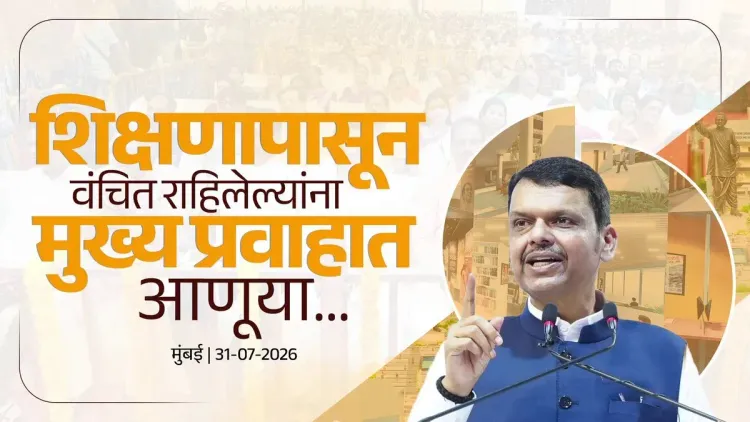
CM Fadnavis lays foundation for Annabhau Sathe Research Institute
Synopsis
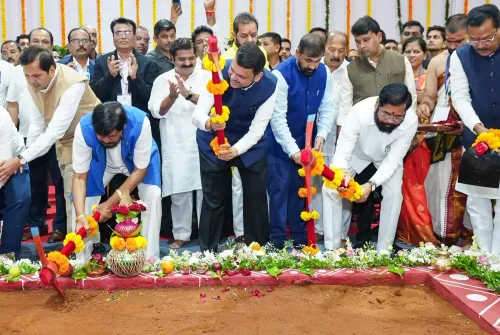
Maharashtra CM Devendra Fadnavis laid the foundation stone of the Lokshahir Annabhau Sathe Research and Training Institute in Mumbai on 31 July 2026, vowing to mainstream all education-deprived citizens through targeted state schemes.
Key Takeaways
Foundation stone laid for the Lokshahir Annabhau Sathe Research and Training Institute in Mumbai on 31 July 2026 .
CM Devendra Fadnavis pledged to bring education-deprived communities into the mainstream through 'various schemes and measures'.
The institute is named after Annabhau Sathe , the celebrated Marathi folk poet and social activist who championed marginalised communities.
Maharashtra has run SC/ST and OBC education schemes — scholarships, hostels, access programmes — since the 1990s ; this institute adds a research and training layer.
Funding details and a construction timeline are yet to be announced; the next state budget cycle will be the key indicator of commitment.
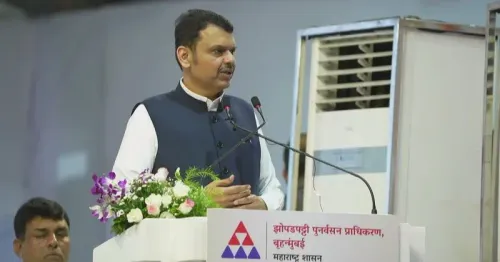
A folk poet who once wrote for the forgotten now has a research institute rising in his name — and Maharashtra Chief Minister Devendra Fadnavis laid its foundation stone in Mumbai on 31 July 2026, pledging to bring every education-deprived citizen into the mainstream through targeted schemes and interventions.
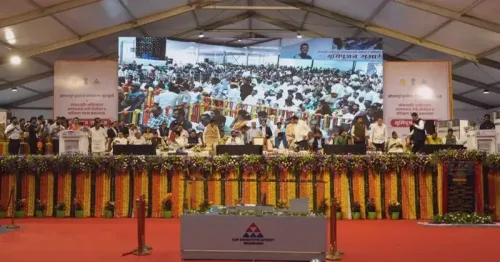
Posting in Marathi and Hindi, Fadnavis declared: 'Let us bring all those deprived of education into the mainstream through various schemes and measures!' The occasion was the bhoomi pujan (foundation-laying ceremony) of the Lokshahir Annabhau Sathe Research and Training Institute — a project that carries both symbolic and policy weight in Maharashtra's long-running effort to close educational gaps for marginalised communities.
Who was Annabhau Sathe, and why this name matters
Annabhau Sathe was a Marathi folk poet, writer, and social activist who spent his life amplifying the voices of Maharashtra's most excluded communities. His lokshahiri — people's poetry — became a cultural touchstone for Dalit and working-class movements across the state. Naming a research and training institute after him is a deliberate signal: the project is not merely administrative infrastructure, it is framed as a continuation of his legacy of inclusion.
Maharashtra's education-inclusion push: the longer arc
Maharashtra governments have run scholarships, hostels, and access schemes for SC/ST and Other Backward Class students since the 1990s. The new institute is positioned within that lineage — adding a research and training dimension that goes beyond financial support toward systemic study of why exclusion persists and how to dismantle it. State administrations have periodically announced such centres; the test, as always, will be in the rollout timeline and budget allocations that follow the ceremony.
The project's focus on communities deprived of schooling speaks to a stubborn reality: despite decades of reservation policy and welfare schemes, first-generation learners and out-of-school adults remain a significant cohort in Maharashtra's social landscape. A dedicated research institution could, in principle, generate the data and training frameworks that scattered schemes have historically lacked.
Watch for funding details and a construction timeline in the next state budget cycle — those numbers will reveal whether the institute is a landmark or a cornerstone.
Point of View
Dalit-inclusive cultural identity at a time when social-justice optics matter in state politics. The research-and-training framing also signals an intent to move beyond welfare transfers toward institutional knowledge-building — a more durable, if harder to execute, approach to educational exclusion. Whether the institute becomes a genuine policy engine or a ceremonial landmark will depend entirely on the funding and autonomy it receives in coming budgets. The broader pattern of such announcements in Maharashtra suggests cautious optimism is warranted, but scrutiny of the rollout is essential.
NationPress
31 Jul 2026
Frequently Asked Questions
What is the Lokshahir Annabhau Sathe Research and Training Institute?
It is a proposed state institute in Mumbai, whose foundation stone was laid by CM Devendra Fadnavis on 31 July 2026, focused on research and training aimed at bringing education-deprived communities into the mainstream.
Who was Annabhau Sathe?
Annabhau Sathe was a Marathi folk poet, writer, and social activist known for championing Dalit and working-class communities in Maharashtra through his 'lokshahiri' — people's poetry.
Why did CM Fadnavis lay the foundation stone of this institute?
Fadnavis laid the bhoomi pujan as part of Maharashtra's broader push for educational inclusion, pledging to use various government schemes to mainstream all those who have been deprived of education.
What schemes does Maharashtra have for education of marginalised communities?
Maharashtra has run scholarships, hostels, and access programmes for SC/ST and Other Backward Class students since the 1990s; the new institute is intended to add a research and training dimension to these existing efforts.
When and where was the Annabhau Sathe Institute foundation stone laid?
The foundation stone was laid in Mumbai on 31 July 2026 by Maharashtra Chief Minister Devendra Fadnavis.