Vande Bharat Express completes India's first live heart transport by train, Surat to Ahmedabad
Synopsis
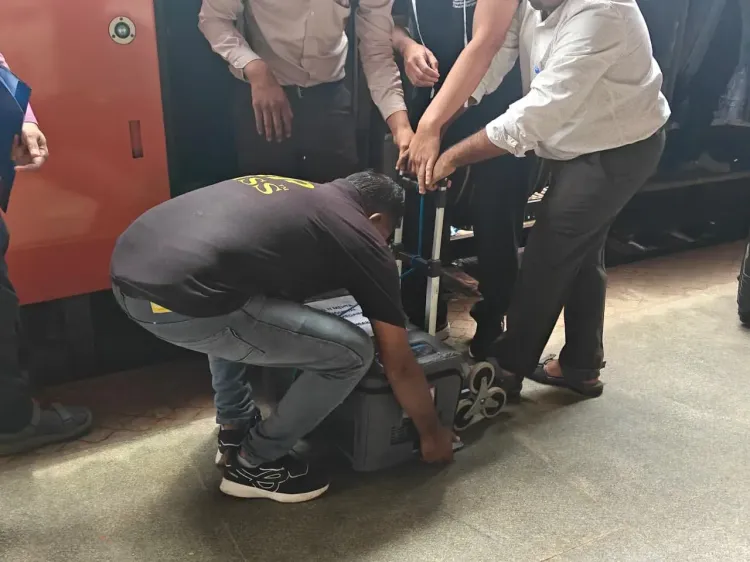
India's railways entered the organ transplant chain for the first time on 31 July, with a live human heart travelling by Vande Bharat Express from Surat to Ahmedabad — a mission that required multi-agency green corridors, split-second timing, and the train's own punctuality to keep the organ viable. It could redefine emergency medical logistics on India's rail network.
Key Takeaways
Indian Railways completed India's first live heart transport by train on 31 July .
The organ was carried on Train No.
20901 , the Mumbai Central–Gandhinagar Capital Vande Bharat Express , from Surat to Ahmedabad .
The heart was transplanted at the U.N.
Mehta Institute of Cardiology and Research Centre, Ahmedabad .
A green corridor was established by the RPF and Gujarat State Police from Platform No.
1 to the hospital upon arrival.
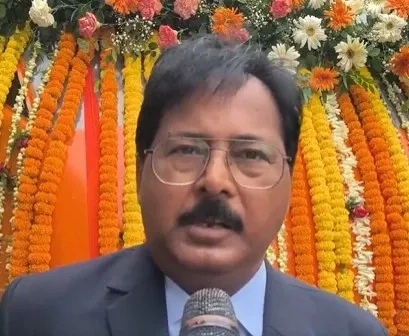
Divisional Railway Manager Ved Prakash described the mission as 'a moment of immense pride and satisfaction' for Indian Railways.
The operation involved coordination across Indian Railways, RPF, Gujarat State Police, doctors, and organ transplant coordinators.
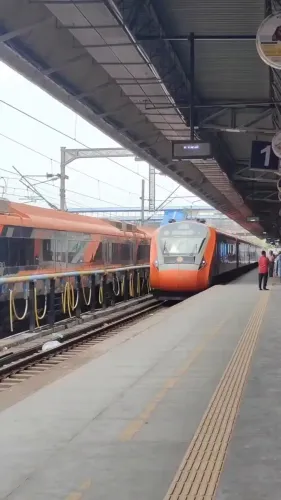
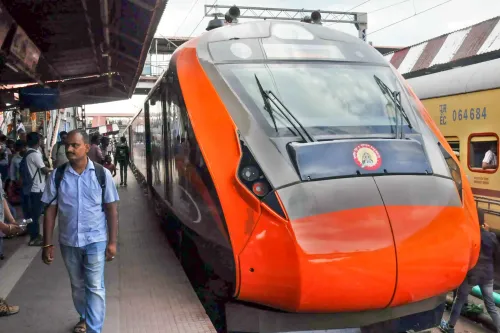
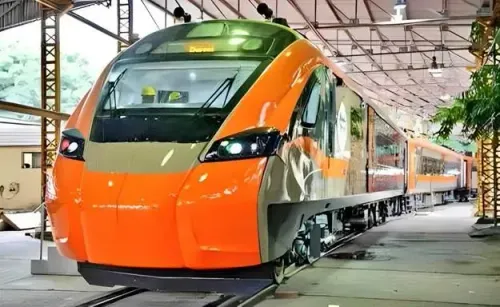
Indian Railways on 31 July completed what it described as the country's first-ever transportation of a live human heart by train, with the organ travelling aboard the Mumbai Central–Gandhinagar Capital Vande Bharat Express (Train No. 20901) from Surat to Ahmedabad for a transplant at the U.N. Mehta Institute of Cardiology and Research Centre. The milestone marks a new frontier for India's railway network — one that now extends beyond passengers and freight into emergency medical logistics.
How the Mission Unfolded
The operation required precision-level coordination across multiple agencies. Indian Railways, the Railway Protection Force (RPF), Gujarat State Police, and specialist medical teams — including organ transplant coordinators and doctors — worked in tandem to ensure the heart reached Ahmedabad within the narrow viability window that governs all live organ transplants.
Upon the train's arrival at Ahmedabad railway station, the RPF and Gujarat Police swiftly established a green corridor from Platform No. 1 directly to the U.N. Mehta Institute, clearing the route so the organ could be moved without a moment's delay. The transplant procedure was then initiated within the prescribed time.
What the Railway Administration Said
Divisional Railway Manager (Ahmedabad) Ved Prakash called the mission a defining moment for the organisation. 'This is a moment of immense pride and satisfaction for Indian Railways that a live heart has been safely and timely transported from Surat to Ahmedabad through the Vande Bharat Express. Every moment is crucial in such lifesaving missions. The excellent coordination between Indian Railways, the RPF, Gujarat State Police and the medical teams made this mission successful. For us, playing a role in saving a person's life is not merely a responsibility, but the highest duty of service and humanity,' he said.
Why the Vande Bharat Was Central to the Mission
According to the railway administration, the Vande Bharat Express's speed, punctuality, and schedule reliability were decisive factors in keeping the organ viable during transit. A live heart has an extremely limited window — typically four to six hours — between procurement and successful transplantation, leaving no margin for delays. The semi-high-speed train's consistent performance on the Surat–Ahmedabad corridor made it the most viable rail option for the mission.
Notably, this is the first reported instance in India of a live heart being transported by train for transplantation, expanding the scope of green corridor logistics — previously limited to road convoys — to the railway network.
Broader Significance for Medical Logistics in India
India has a well-documented organ shortage crisis, with thousands of patients on transplant waiting lists at any given time. Green corridors on roads have long been used to ferry organs between hospitals, but rail-based transport opens a new, potentially more scalable channel — particularly for city-pairs served by fast, punctual trains. This mission could serve as a template for formalising rail organ transport protocols across other high-frequency corridors. Authorities indicated that the success of this operation underscores the potential for deeper integration between Indian Railways and the country's healthcare infrastructure.
Point of View
Vulnerable to traffic, weather, and human error. Rail offers schedule predictability that roads cannot guarantee in most urban corridors. The real question now is institutional: will Railways and the health ministry codify a protocol, or will this remain a one-off moment of pride? The Vande Bharat network is expanding rapidly; if organ transport is formally integrated into its operating procedures, the impact on transplant success rates — and waiting-list mortality — could be measurable. That conversation needs to start now, not after the next emergency.
NationPress
31 Jul 2026
Frequently Asked Questions
What is India's first live heart transport by train?
On 31 July, Indian Railways transported a live human heart by train for the first time in the country's history, carrying the organ from Surat to Ahmedabad aboard the Vande Bharat Express for transplantation at the U.N. Mehta Institute of Cardiology and Research Centre. It is the first reported instance of rail being used for live heart transport in India.
Which train was used to transport the heart from Surat to Ahmedabad?
The heart was carried on Train No. 20901, the Mumbai Central–Gandhinagar Capital Vande Bharat Express. The train's speed, punctuality, and reliability were cited by railway authorities as key to keeping the organ viable within its transplantation window.
What is a green corridor and how was it used here?
A green corridor is a dedicated, cleared route that allows an organ to be moved from point to point without traffic delays. After the Vande Bharat arrived at Ahmedabad railway station, the RPF and Gujarat State Police established a green corridor from Platform No. 1 directly to the U.N. Mehta Institute of Cardiology and Research Centre.
Why does live organ transport require such coordination?
A live heart typically remains viable for only four to six hours between procurement and transplantation, leaving virtually no margin for delay. Every minute of transit time is critical, which is why multi-agency coordination — covering transport, traffic management, and medical readiness — is essential to mission success.
Could this become a regular practice for organ transport in India?
Authorities have indicated that the success of this operation highlights the potential for Indian Railways to be formally integrated into emergency medical logistics. If protocols are standardised, the Vande Bharat network's expanding reach could offer a scalable, reliable channel for organ transport across multiple city-pairs in India.