Cabinet Clears ₹5,070 Cr Floating Solar Scheme PM-SSY
Synopsis
The Union Cabinet has approved the Pradhan Mantri Surya Sarovar Yojana (PM-SSY) with a ₹5,070 crore outlay to develop 5,000 MW of floating solar PV projects and at least 10,000 MWh of energy storage, with project sanctions running from FY 2026-27 to FY 2030-31 and a ₹1 crore per MW central subsidy on commissioning.
Key Takeaways
The Union Cabinet approved Pradhan Mantri Surya Sarovar Yojana (PM-SSY) on 31 July 2026 with a total outlay of ₹5,070 crore .
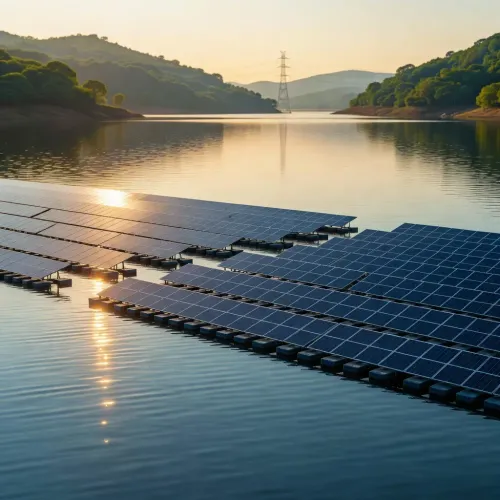
The scheme targets 5,000 MW of floating solar PV capacity deployed on reservoirs and water bodies.
A minimum 10,000 MWh energy storage system will be developed alongside the generation capacity to firm up supply.
Project sanctions will be granted from FY 2026-27 through FY 2030-31 .
Eligible projects receive ₹1 crore per MW in central financial assistance after successful commissioning.
The scheme advances India's 500 GW non-fossil fuel target by 2030 while avoiding land-acquisition conflicts.
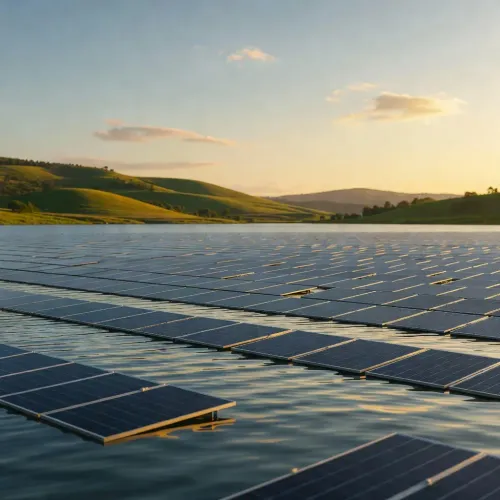
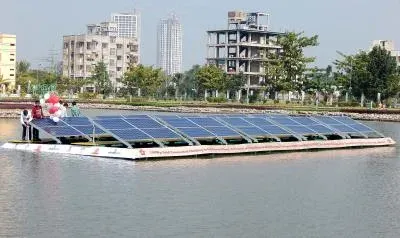
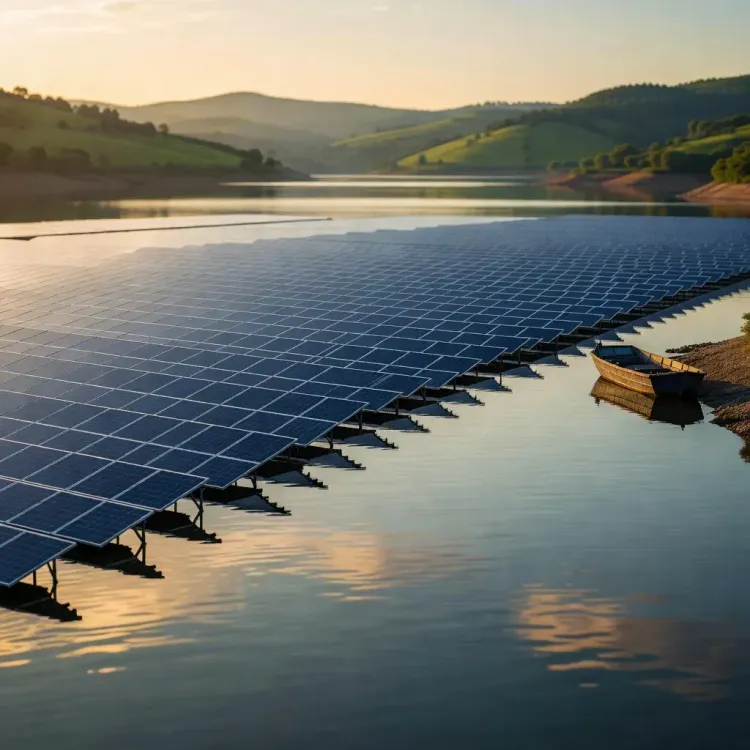
India just made a serious bet on water-borne solar power. Union Agriculture Minister Shivraj Singh Chouhan announced on Friday, 31 July 2026 that the Union Cabinet, under the leadership of Prime Minister Narendra Modi, has approved the Pradhan Mantri Surya Sarovar Yojana (PM-SSY) — a scheme designed to float solar panels on India's reservoirs and water bodies at a total outlay of ₹5,070 crore.
Posting in Hindi on X, Chouhan wrote that the scheme will develop floating solar PV projects with a combined generation capacity of 5,000 megawatts (MW), paired with an energy storage system of at least 10,000 megawatt-hours (MWh) — the battery backstop that turns intermittent solar into firm, dispatchable power.
What PM-SSY actually builds — and why storage is the real story
The generation number is headline-worthy, but the 10,000 MWh minimum storage mandate is the architectural choice that sets PM-SSY apart from earlier solar pushes. India's grid has long struggled with the 'duck curve' problem — solar floods supply at noon, then drops sharply at sunset just as evening demand peaks. Pairing floating PV with battery or pumped-hydro storage directly targets that mismatch, making the power genuinely usable rather than merely generated. Project sanctions will be issued across five financial years, from FY 2026-27 through FY 2030-31. Eligible floating solar PV projects will receive a central financial assistance of ₹1 crore per MW after successful commissioning — a performance-linked incentive structure designed to reward delivery, not just announcement.Floating solar's logic: no land, no conflict
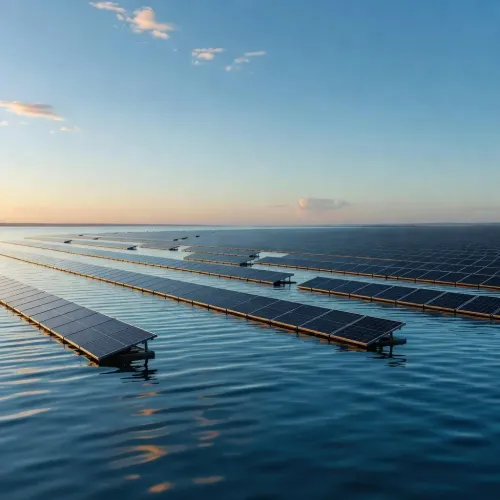
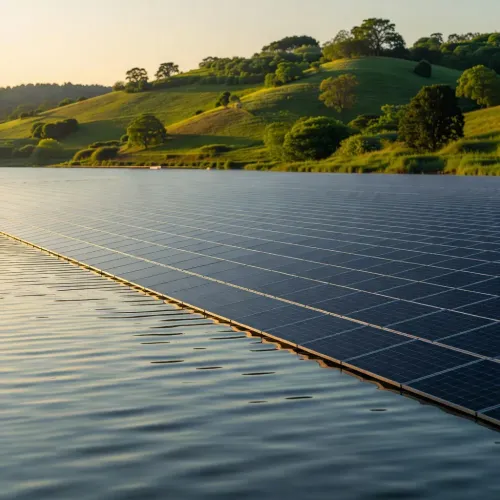
India's land-acquisition battles have slowed conventional ground-mounted solar for years. Floating PV sidesteps that entirely by deploying panels on reservoirs, irrigation tanks, and lakes — surfaces that already belong to the state and serve no competing agricultural or residential use. An added benefit: the panels reduce evaporation from water bodies, a meaningful bonus in water-stressed regions. India has thousands of suitable reservoirs, many of them managed by state irrigation and power utilities, making them natural candidates for the project pipeline. The scheme fits squarely into India's updated climate commitment — a 500 GW non-fossil fuel capacity target by 2030 under its Nationally Determined Contribution to the Paris Agreement. With conventional and rooftop solar already scaling rapidly, floating solar with integrated storage represents the next frontier in the country's energy transition.What happens next: tenders, water bodies, and state buy-in
The immediate watch-points are the identification of eligible water bodies by state governments and the issuance of tenders from FY 2026-27 onward. State power utilities and renewable energy developers will be the key execution partners. The ₹1 crore per MW central subsidy is calibrated to bridge the cost gap that has historically made floating solar more expensive than land-based alternatives — a gap that has been narrowing fast as panel and storage costs fall globally. For a government that has made energy security a core plank of its 'Viksit Bharat' vision, PM-SSY is both a capacity play and a signal: India's solar ambition is moving off the ground and onto the water.Point of View
A pattern visible across recent central schemes. Floating solar's land-conflict-free profile also gives the Centre a politically cleaner instrument to push renewable targets in states where land acquisition has stalled ground-mounted projects. The five-year sanction window through FY 2030-31 aligns the scheme precisely with India's Paris Agreement deadline, making it as much a diplomatic signal as a domestic energy play.
NationPress
31 Jul 2026
Frequently Asked Questions
What is Pradhan Mantri Surya Sarovar Yojana (PM-SSY)?
PM-SSY is a central government scheme approved by the Union Cabinet on 31 July 2026 to develop 5,000 MW of floating solar PV projects on reservoirs and water bodies, backed by at least 10,000 MWh of energy storage, at a total outlay of ₹5,070 crore.
What is the total budget for PM Surya Sarovar Yojana?
The Union Cabinet approved a total outlay of ₹5,070 crore for the PM-SSY scheme.
What financial help will floating solar projects get under PM-SSY?
Eligible floating solar PV projects will receive central financial assistance of ₹1 crore per MW after successful commissioning and operation.
When will PM-SSY projects be sanctioned and completed?
Project sanctions under PM-SSY will be issued from FY 2026-27 through FY 2030-31, covering a five-year rollout window.
Why is floating solar better than ground-mounted solar in India?
Floating solar panels are installed on reservoirs and water bodies already owned by the state, avoiding land-acquisition disputes that have delayed many ground-mounted projects. The panels also reduce water evaporation — a significant bonus in water-stressed regions.