PM Surya Sarovar Yojana: Cabinet clears ₹5,070 crore floating solar scheme
Synopsis
India's floating solar capacity sits at just 700 MW against an assessed potential of 102 GWp. The Cabinet's ₹5,070 crore PM Surya Sarovar Yojana is the government's most direct attempt yet to close that gap — with 5,000 MW targeted by 2031, mandatory storage, and a domestic manufacturing mandate baked in from day one.
Key Takeaways
The Union Cabinet approved PM Surya Sarovar Yojana (PM-SSY) on 31 July with a total outlay of ₹5,070 crore .
The scheme targets 5,000 MW of floating solar capacity with at least 10,000 MWh of co-located energy storage.
India's current floating solar installed base is only 700 MW against an estimated potential of 102.18 GWp , per NISE .
Central Financial Assistance of ₹1 crore per MW will be disbursed post-commissioning; up to ₹50 lakh per project is available for feasibility studies.
The scheme is projected to cut 10 million tonnes of CO₂ annually and create 16,000–17,000 full-time equivalent jobs .
Project sanctions run from FY 2026-27 to FY 2030-31 ; disbursements continue through FY 2032-33 .
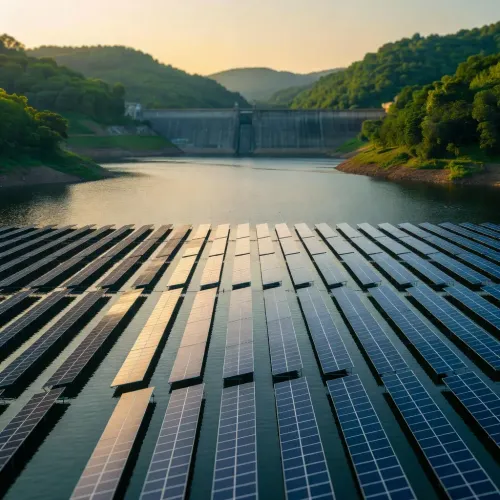
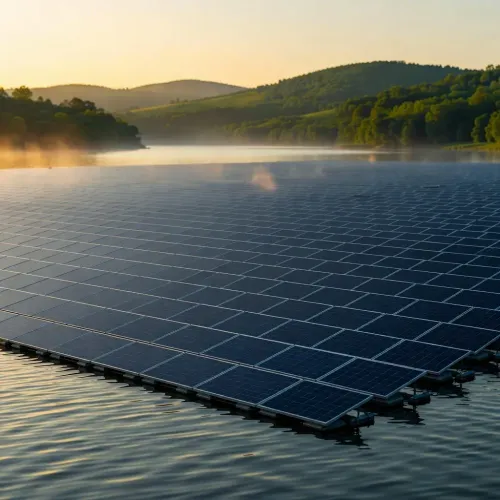
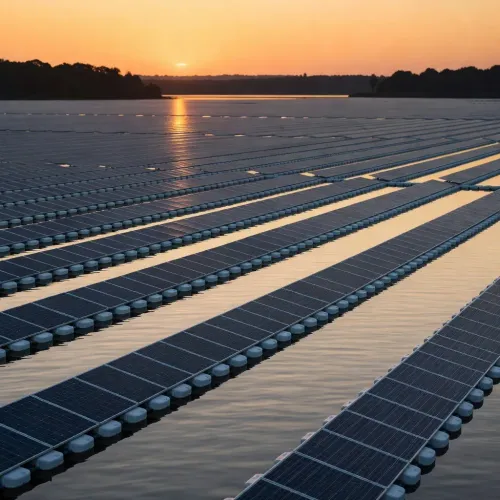
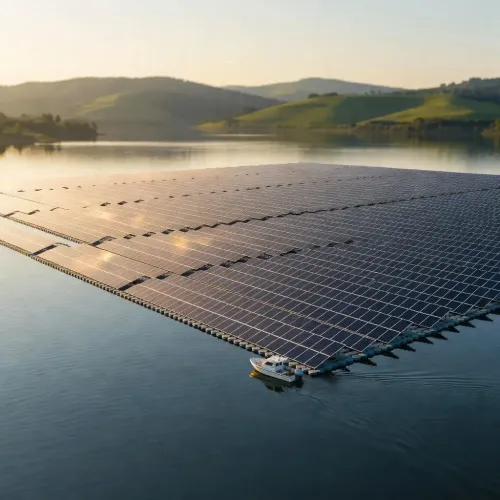
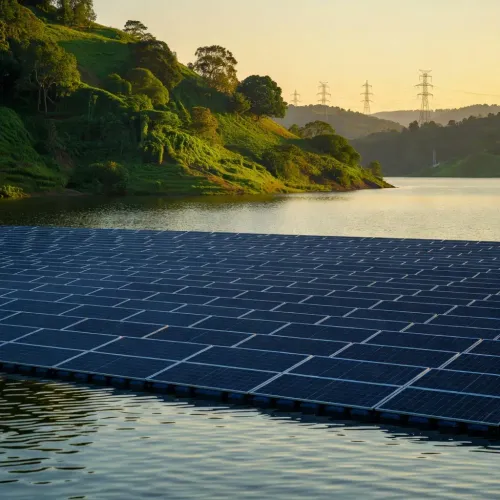
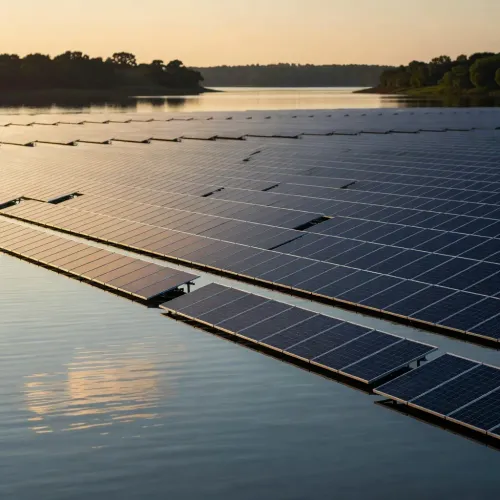
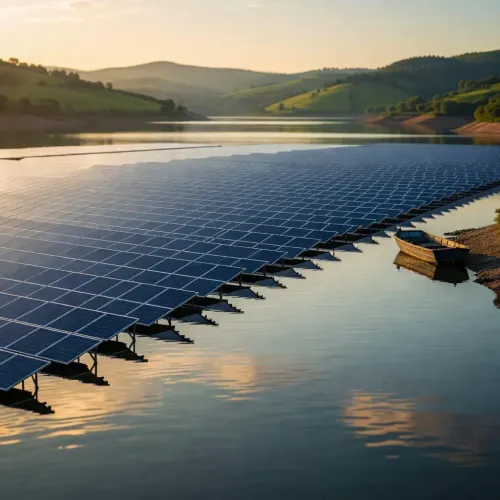
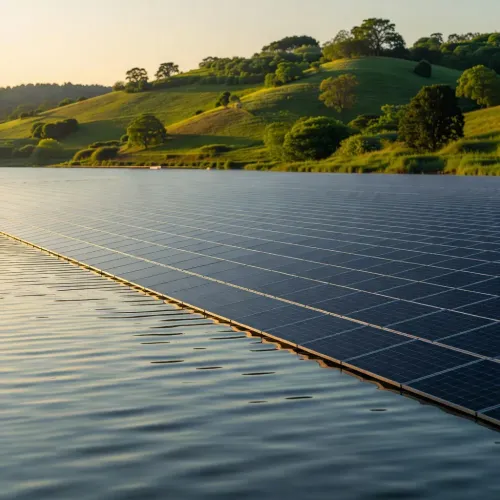
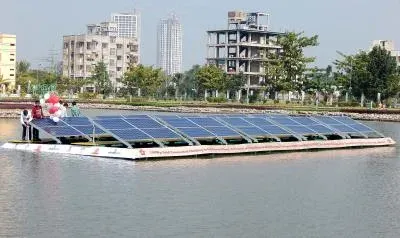
The Union Cabinet, chaired by Prime Minister Narendra Modi, on Friday, 31 July approved the Pradhan Mantri Surya Sarovar Yojana (PM-SSY) — a ₹5,070 crore scheme to develop Floating Solar Photovoltaic (FSPV) projects paired with co-located Energy Storage Systems (ESS) across India's reservoirs and inland water bodies. The move is aimed at adding 5,000 MW of floating solar capacity to a national base that currently stands at just 700 MW.
What the Scheme Covers
Under PM-SSY, projects will be sanctioned between FY 2026-27 and FY 2030-31, with financial disbursements continuing through FY 2032-33. Each eligible project will receive Central Financial Assistance (CFA) of ₹1 crore per MW after successful commissioning. An additional CFA of up to ₹50 lakh per project is available for preparatory activities — including bathymetry, hydrography assessments, and environmental studies — to reduce development risk before construction begins.
The scheme mandates a minimum Energy Storage System capacity of two hours, translating to at least 10,000 MWh of storage across the full 5,000 MW build-out. All states and Union Territories are eligible to benefit.
The Untapped Potential Behind the Push
The Cabinet approval follows a recent assessment by the National Institute of Solar Energy (NISE), which estimated India's floating solar potential at approximately 102.18 GWp across reservoirs and suitable inland water bodies. Against that backdrop, the current installed base of 700 MW represents less than 1% of the identified potential — underlining the scale of the opportunity the government is now attempting to unlock.
Notably, floating solar projects offer a structural advantage over ground-mounted installations: they utilise existing reservoirs and industrial ponds, eliminating competition for scarce land. Water evaporation from reservoir surfaces is also reduced, providing an ancillary water conservation benefit.
Climate, Jobs, and Domestic Manufacturing
According to the Cabinet communique, PM-SSY is projected to cut approximately 10 million tonnes of CO₂ emissions annually once fully operational. The scheme is also expected to generate around 16,000–17,000 full-time equivalent jobs across the project value chain — spanning installation, operations, and maintenance.
The government has embedded a domestic manufacturing imperative within the scheme. Floatation systems, PV cells, modules, and energy storage components are to be sourced domestically where possible, aligning the initiative with the Aatmanirbhar Bharat vision. This positions PM-SSY as both a clean energy and an industrial policy instrument.
Grid Reliability and National Climate Goals
The integration of storage systems is a deliberate design choice: it addresses one of the persistent criticisms of solar power — intermittency — by ensuring that generation can be dispatched even when sunlight is unavailable. Officials said the scheme will strengthen grid reliability and support India's broader national energy and climate objectives, including its commitments under the Viksit Bharat framework.
With project sanctions running to FY 2030-31 and disbursements extending to FY 2032-33, the scheme's full impact on India's renewable energy mix will materialise over the next seven years — making execution quality and state-level uptake the critical variables to watch.
Point of View
With land-rich states oversubscribing and others barely participating. Floating solar's land-neutrality should theoretically level that playing field, but bathymetric complexity and reservoir ownership disputes have historically slowed project clearances. The domestic manufacturing clause is the right instinct, but without enforceable local-content norms and a credible supply chain for floatation systems, it risks becoming a paper commitment. India needs 102 GWp of floating solar potential to translate into actual gigawatts — and that requires more than a central subsidy.
NationPress
14 Sept 2026
Frequently Asked Questions
What is the PM Surya Sarovar Yojana (PM-SSY)?
PM Surya Sarovar Yojana is a ₹5,070 crore central government scheme approved on 31 July to develop 5,000 MW of Floating Solar Photovoltaic projects with co-located Energy Storage Systems across India's reservoirs and inland water bodies. Projects will be sanctioned between FY 2026-27 and FY 2030-31.
How much Central Financial Assistance will projects receive under PM-SSY?
Eligible projects will receive CFA of ₹1 crore per MW after successful commissioning. An additional CFA of up to ₹50 lakh per project is available for preparatory work such as feasibility studies, bathymetry, hydrography, and environmental assessments.
Why is floating solar preferred over ground-mounted solar?
Floating solar projects use existing reservoirs and industrial ponds, eliminating competition for scarce land. They also reduce water evaporation from reservoir surfaces and, when paired with storage, can deliver dispatchable power — addressing solar intermittency.
What is India's current floating solar capacity and potential?
India's installed floating solar capacity stands at 700 MW. The National Institute of Solar Energy (NISE) has estimated the country's floating solar potential at approximately 102.18 GWp across reservoirs and suitable inland water bodies — meaning current capacity is less than 1% of what is feasible.
What are the climate and employment benefits projected under PM-SSY?
The scheme is projected to reduce CO₂ emissions by approximately 10 million tonnes annually once fully operational. It is also expected to generate around 16,000–17,000 full-time equivalent jobs across the project value chain, including domestic manufacturing of floatation systems, PV modules, and energy storage components.