Hindi complements Indian languages, not competes: Maha Dy CM Shinde at Hindi Diwas
Synopsis
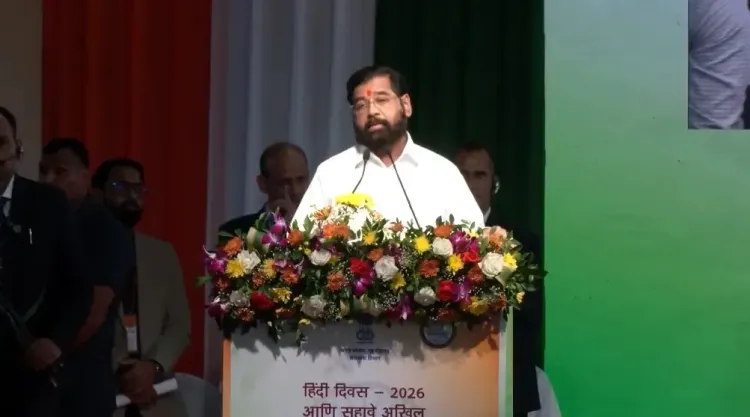
At the Hindi Diwas 2026 conference in Navi Mumbai, Maharashtra Deputy CM Eknath Shinde pitched Hindi as a cultural bridge — not a threat — to regional languages, invoking Saint Namdev's link to the Guru Granth Sahib as proof of centuries-old linguistic dialogue. The speech signals a deliberate effort to frame national language policy as pluralistic rather than hegemonic.
Key Takeaways
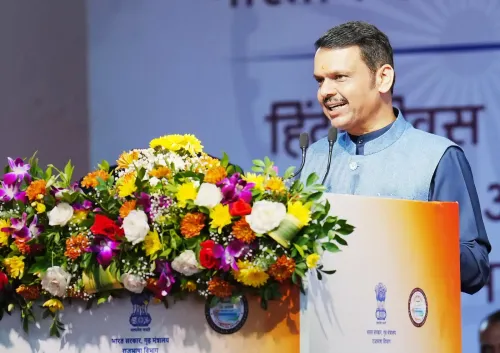
Maharashtra Deputy CM Eknath Shinde spoke at Hindi Diwas 2026 and the 6th All India Official Language Conference in Navi Mumbai on 14 September 2026 .
Shinde said Hindi is a 'companion' to Indian languages, not a competitor, and must advance alongside regional tongues.
He cited Saint Namdev's compositions in the Guru Granth Sahib as evidence of centuries of inter-linguistic dialogue in India.
He called for Hindi to expand into science, technology, judiciary, police , and general administration.
Shinde acknowledged Marathi's Classical Language status and praised Hindi-speaking communities for their role in Maharashtra's growth.
Union Home Minister Amit Shah was present at the event, which was held under the 'Ek Bharat, Shreshtha Bharat' framework.
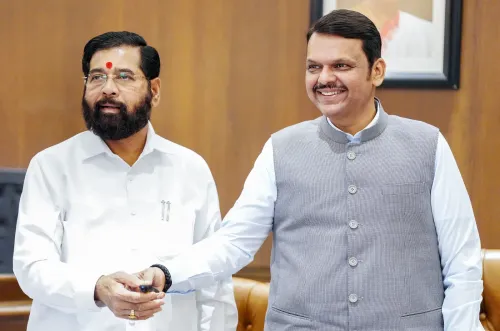
Maharashtra Deputy Chief Minister Eknath Shinde on Monday, 14 September 2026, declared that Hindi is not a rival to any Indian language but a unifying companion that bridges the country's vast linguistic diversity. Speaking at the Hindi Diwas 2026 celebrations and the 6th All India Official Language Conference in Navi Mumbai, Shinde said the promotion of Hindi must go hand in hand with the preservation of all regional languages.
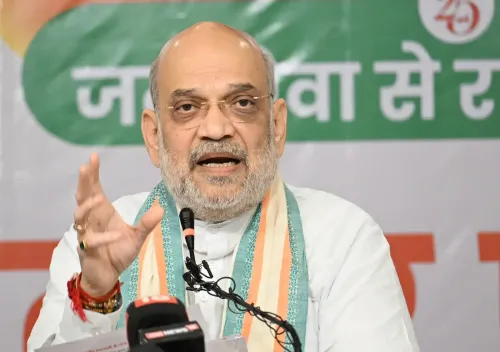
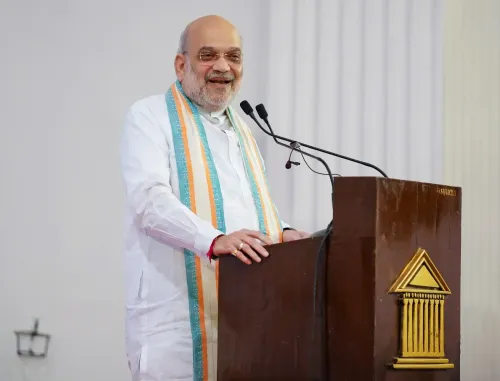
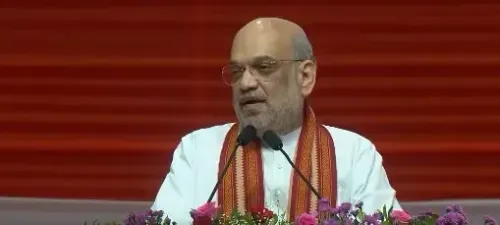
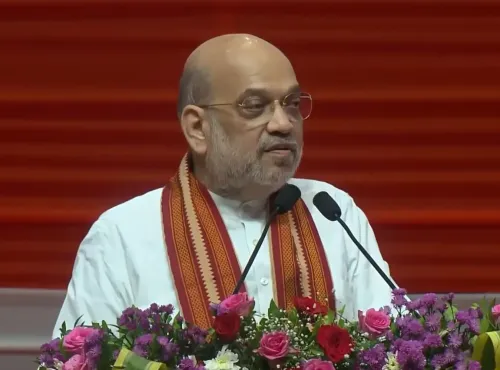
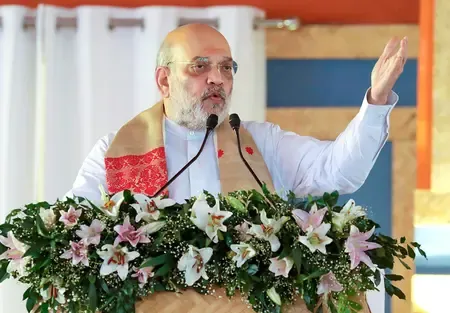
The event was held in the presence of Union Home Minister Amit Shah, who has been at the forefront of driving the use of Hindi across central government operations.
Marathi and Hindi: A Shared Script, A Shared Heritage
Welcoming Amit Shah to Maharashtra, Shinde drew attention to the deep historical and cultural ties between Marathi and Hindi, both rooted in the Devanagari script. He cited the spiritual legacy of saints Dnyaneshwar, Tukaram, and Namdev, whose teachings shaped not only Maharashtra's religious traditions but also contributed to a broader cultural cohesion across the subcontinent.
Notably, Shinde highlighted that the compositions of Saint Namdev travelled as far as Punjab and found a place in the Guru Granth Sahib — evidence, he argued, that Indian languages have maintained a living dialogue for centuries. From Kabir, Tulsidas, and Mirabai to modern literary traditions, Hindi has served as a conduit for Indian culture and philosophy reaching the wider public.
Hindi as a Partner, Not a Replacement
Shinde was unequivocal in clarifying the intent behind Hindi promotion: it is not to displace any regional language, but to move forward alongside all Indian tongues. He noted that Maharashtra takes pride in Marathi having received Classical Language status, while simultaneously extending respect to Hindi as the official language of the Union.
He urged that languages rooted in Indian soil be used more extensively in official administration. This comes amid an ongoing national conversation about the role of Hindi in a constitutionally multilingual country, with several southern states periodically raising concerns about Hindi imposition.
Expanding Hindi into Governance and Specialised Fields
The Deputy Chief Minister advocated pushing Hindi beyond everyday conversation into specialised domains including science, technology, the judiciary, police administration, and general governance. He argued that such an expansion would make communication between citizens and the state seamless and more inclusive.
Shinde appreciated that under the leadership of Prime Minister Narendra Modi and Home Minister Amit Shah, Hindi has received a significant push in government operations, pointing specifically to Shah's commitment to processing ministry files in Hindi.
Maharashtra's Role in the Larger National Vision
Highlighting Mumbai's status as the financial capital of India, Shinde described Maharashtra as the engine of the country's economic progress. He expressed confidence that with the 'double-engine' government accelerating state development, Maharashtra's contribution to the Viksit Bharat 2047 vision would be pivotal.
Acknowledging the state's social fabric, Shinde recognised the significant contribution of Hindi-speaking communities to Maharashtra's industry, trade, and social development. He appealed to this community — who have, in his words, 'forged bonds with the soil of Maharashtra' — to continue working toward national progress.
The conference, Shinde noted, serves as a platform for connecting diverse linguistic groups and reinforcing the vision of 'Ek Bharat, Shreshtha Bharat'. With the language debate far from settled nationally, the event's tone — conciliatory and pluralistic — signals the ruling dispensation's preferred framing ahead of future political contests in multilingual states.
Point of View
He attempts to neutralise the Hindi-imposition charge that has historically energised opposition in non-Hindi states. What is missing from the speech, however, is any concrete mechanism: if Hindi is to enter the judiciary or science, what does that mean for litigants and researchers in Tamil Nadu, Bengal, or Kerala? The pluralism is rhetorical unless backed by policy that guarantees mother-tongue access is not squeezed in practice. The Amit Shah presence — and the filing-in-Hindi reference — will not go unnoticed by critics who see administrative Hindi-push as creeping centralisation regardless of the framing.
NationPress
14 Sept 2026
Frequently Asked Questions
What did Eknath Shinde say at Hindi Diwas 2026?
Maharashtra Deputy CM Eknath Shinde said Hindi is a companion to Indian languages, not a competitor, and that its promotion must go hand in hand with preserving regional languages. He spoke at the 6th All India Official Language Conference in Navi Mumbai on 14 September 2026 in the presence of Union Home Minister Amit Shah.
Where was the 6th All India Official Language Conference held?
The 6th All India Official Language Conference was held in Navi Mumbai on 14 September 2026 as part of Hindi Diwas 2026 celebrations. Union Home Minister Amit Shah was present at the event.
How did Shinde connect Marathi and Hindi culturally?
Shinde highlighted that both languages share the Devanagari script and referenced saint-poets such as Dnyaneshwar, Tukaram, and Namdev. He notably pointed out that Saint Namdev's compositions influenced the Guru Granth Sahib, arguing that Indian languages have maintained cultural dialogue for centuries.
What domains did Shinde say Hindi should expand into?
He advocated extending Hindi into science, technology, the judiciary, police, and general administration, arguing this would make citizen-government communication more seamless and inclusive.
What is the 'Ek Bharat, Shreshtha Bharat' vision referenced at the event?
'Ek Bharat, Shreshtha Bharat' is a Union government initiative aimed at celebrating and strengthening the cultural and linguistic diversity of India while promoting national unity. Shinde described the conference as a platform for connecting diverse linguistic groups under this vision.