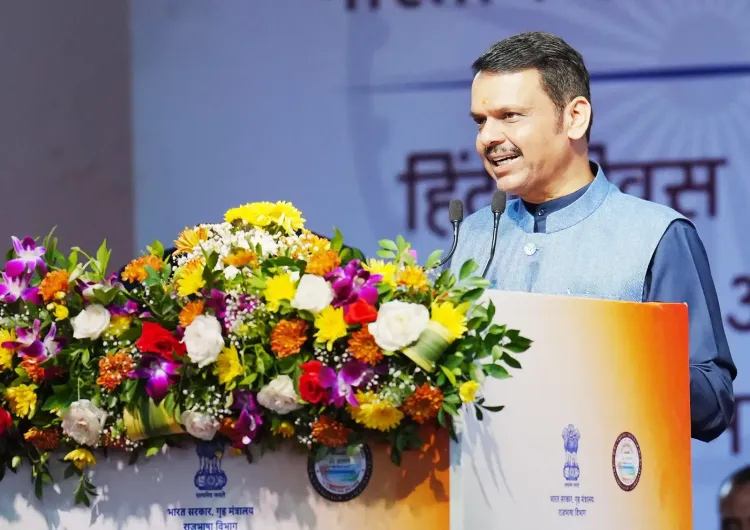
PM Modi speaking Hindi globally fills us with pride: CM Fadnavis at Hindi Diwas
Synopsis
At the 6th All India Official Language Conference in Navi Mumbai on Hindi Diwas, Maharashtra CM Devendra Fadnavis declared that hearing PM Modi speak Hindi on global stages fills the country with pride, while Home Minister Amit Shah invoked Veer Savarkar's linguistic legacy and underlined Marathi's classical language status — framing language policy as a pillar of national identity.
Key Takeaways
Maharashtra CM Devendra Fadnavis praised PM Modi for speaking Hindi on global platforms at the Hindi Diwas event in Navi Mumbai on 14 September 2026 .
The 6th All India Official Language Conference was attended by Union Home Minister Amit Shah , who called Maharashtra India's most multilingual state.
Amit Shah highlighted that the Modi government granted classical language status to Marathi .
The Ministry of Home Affairs honoured Veer Savarkar 's linguistic contributions through the 'Shabd Sindhu' initiative.
Both leaders reaffirmed the New Education Policy (NEP) 's emphasis on mother-tongue-based foundational education.
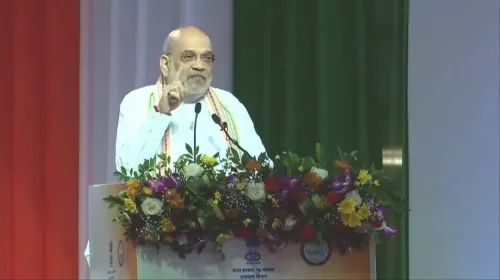
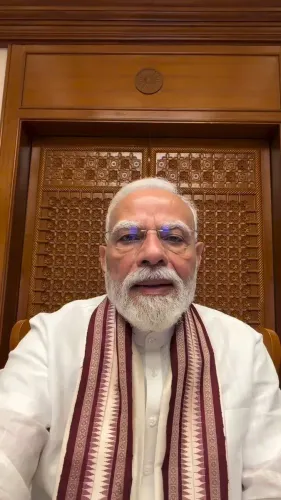
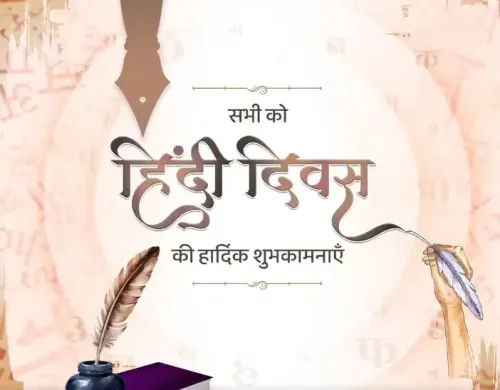
Maharashtra Chief Minister Devendra Fadnavis on Monday, 14 September praised Prime Minister Narendra Modi's commitment to Indian languages, saying that hearing the Prime Minister address global forums in Hindi fills the nation with pride. Fadnavis was speaking at the Hindi Diwas celebration and the 6th All India Official Language Conference held in Navi Mumbai, an event also addressed by Union Home Minister Amit Shah.
CM Fadnavis on Language Policy and Modi's Legacy
After apologising for his late arrival, Fadnavis underscored the significance of hosting the national convention in Maharashtra. He noted that such conferences were once treated as mere formalities, but Home Minister Shah had spearheaded the effort to rotate them across different states — giving each region a stake in the national language discourse.
Reflecting on history, Fadnavis pointed out that Hindi was widely used for official work even during the British era, before both Hindi and English were formally designated as official languages in 1963. He argued that since Prime Minister Modi assumed office, mother tongues and official regional languages have received 'unprecedented respect' across the country.
'You must learn your mother tongue, and the New Education Policy (NEP) ensures this by promoting education in local languages alongside additional Indian languages,' Fadnavis told the gathering.
He also recalled that former Prime Minister Atal Bihari Vajpayee, then an opposition leader, was among the first to address the United Nations in Hindi — and credited writer Munshi Premchand with making conversational Hindi acceptable for official use.
Amit Shah: Marathi Deserves Deep Respect, Maharashtra Most Multilingual
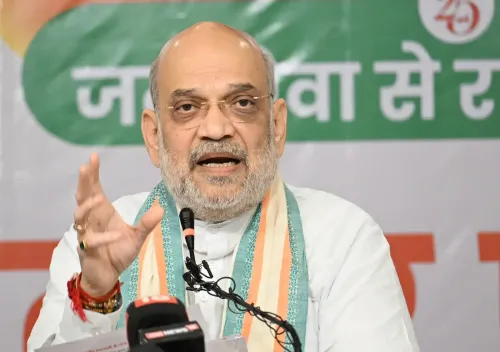
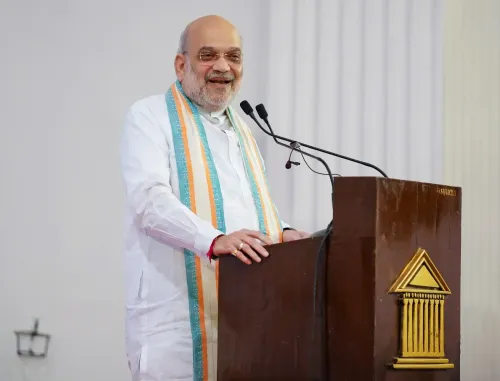
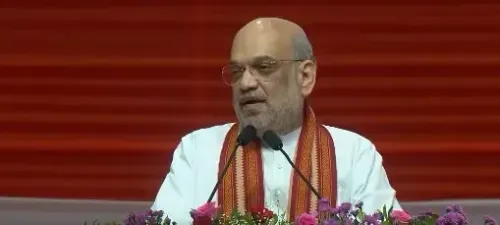
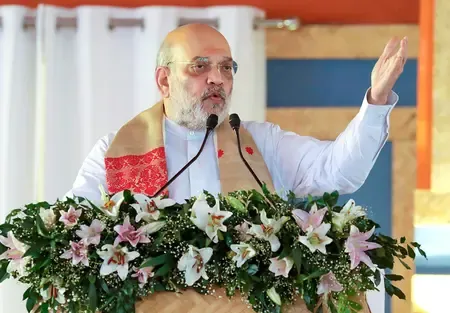
Home Minister Amit Shah, addressing the conference, emphasised the importance of regional languages and asserted that Marathi deserves deep respect. He highlighted that the Modi administration had granted classical language status to Marathi — a long-pending demand of the state.
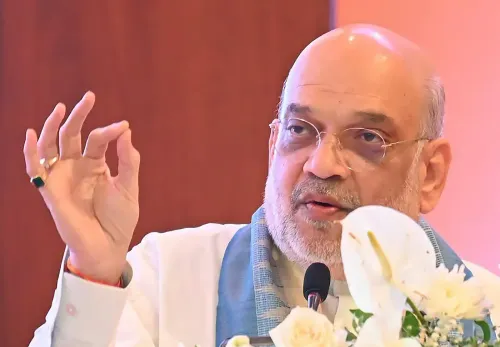
Shah described Maharashtra as the most multilingual state in India, calling its linguistic diversity a national asset. He invoked the words of freedom fighter and social reformer Vinoba Bhave: 'If I had not used Hindi, I could not have reached every village in Kashmir, Assam, and Kerala with the revolutionary message of Bhoodan and Gramdan. It was the official language that enabled me to communicate with people across the nation.'
Veer Savarkar's Linguistic Legacy Invoked
Describing Maharashtra as the land of Veer Savarkar, Shah underscored that Savarkar was not only a freedom fighter and social reformer but also one of the most learned linguists of his era. He built upon Lokmanya Tilak's call for the purification of Marathi, coining numerous words that had previously been absent in Indian languages — words that found natural acceptance in Marathi and other national languages.
Shah added that the Ministry of Home Affairs has honoured Savarkar's linguistic legacy in Hindi through the 'Shabd Sindhu' initiative, which seeks to document and preserve his lexical contributions.
NEP and Mother-Tongue Education at the Centre
Both leaders reiterated the central government's focus on language preservation through the New Education Policy (NEP). Shah emphasised that foundational learning in one's mother tongue is essential for a child's holistic growth — a principle now embedded in India's national curriculum framework. The conference, bringing together officials from across the country, is expected to produce actionable recommendations on promoting official languages in governance and education.
Point of View
A state with a strong regional-language identity, signals a deliberate effort to frame Hindi promotion as complementary to, not competitive with, Marathi pride. Shah's invocation of Savarkar and the 'Shabd Sindhu' initiative connects language policy to a broader cultural-nationalist narrative. Yet the tension between promoting Hindi globally and protecting regional languages domestically remains unresolved — the NEP's mother-tongue mandate will be the real test of whether this conference translates into classroom reality or stays at the level of ceremonial rhetoric.
NationPress
14 Sept 2026
Frequently Asked Questions
What is the 6th All India Official Language Conference?
It is a national conference organised to advance India's official language policy, bringing together government officials from across the country. The 6th edition was held on 14 September 2026 in Navi Mumbai on the occasion of Hindi Diwas, and was attended by Union Home Minister Amit Shah and Maharashtra CM Devendra Fadnavis.
Why did CM Devendra Fadnavis praise PM Modi at the Hindi Diwas event?
Fadnavis stated that hearing Prime Minister Modi speak Hindi on global platforms fills the nation with pride. He also credited the Modi government with giving unprecedented respect to mother tongues and regional official languages since 2014.
What did Amit Shah say about the Marathi language?
Home Minister Amit Shah asserted that Marathi deserves deep respect and highlighted that the Modi administration had granted classical language status to Marathi. He also described Maharashtra as the most multilingual state in India.
What is the 'Shabd Sindhu' initiative mentioned by Amit Shah?
The 'Shabd Sindhu' is a Ministry of Home Affairs initiative that honours Veer Savarkar's linguistic legacy in Hindi. Savarkar is credited with coining numerous words absent in Indian languages that found natural acceptance in Marathi and other national languages.
How does the New Education Policy relate to language promotion?
The New Education Policy (NEP) promotes foundational education in a child's mother tongue alongside additional Indian languages. Both CM Fadnavis and Home Minister Shah cited the NEP as the central government's key instrument for preserving and promoting India's linguistic diversity.