Puri: Cabinet Clears ₹84,084 Cr Offshore Exploration Scheme

Synopsis
The Union Cabinet has approved Samudra Manthan, a ₹84,084 crore national offshore exploration scheme through FY 2030-31. Announced by Petroleum Minister Hardeep Singh Puri, the initiative targets deepwater and ultra-deepwater drilling, seismic surveys, and frontier basin exploration to reduce India's heavy dependence on crude oil imports.
Key Takeaways
The Union Cabinet approved Samudra Manthan on 31 July 2026 with an outlay of ₹84,084 crore through FY 2030–31 .
The scheme covers seismic surveys, deepwater and ultra-deepwater drilling, frontier basin exploration, and common offshore infrastructure.
India currently imports over 80 percent of its crude oil, the structural pressure driving the scheme.
Samudra Manthan builds on earlier upstream reforms: HELP (2016) , OALP (2016) , and the Discovered Small Fields policy (2015) .
Digital programme management, technology adoption, capacity building, and global collaboration are integral components of the scheme.
Key early indicators will be the rollout of seismic survey contracts and the structure of the next offshore acreage bidding round.
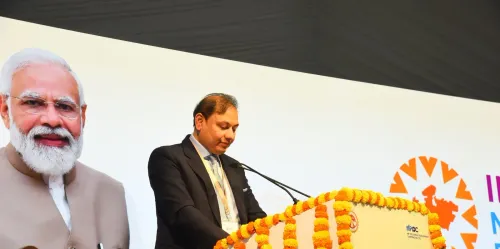
India is diving — literally — into its deep seas to break free from an 80-percent crude oil import dependence that has shadowed its energy story for decades. The Union Cabinet, chaired by Prime Minister Narendra Modi, on Friday, 31 July 2026, approved Samudra Manthan, a national offshore exploration scheme with an outlay of ₹84,084 crore running through FY 2030–31, announced Union Petroleum Minister Hardeep Singh Puri.
What Samudra Manthan sets out to do
The scheme is not a single project — it is a platform. It pools together seismic surveys, deepwater and ultra-deepwater drilling, scientific exploration of frontier basins, and a common offshore infrastructure grid into one integrated programme. Digital programme management, technology adoption, and global collaboration are built in from the start, a deliberate departure from earlier exploration rounds that often stalled on data gaps and infrastructure bottlenecks.
Puri framed the approval as a continuation of upstream reforms that began in 2015–16 — the Hydrocarbon Exploration and Licensing Policy (HELP), the Open Acreage Licensing Policy (OALP), and the Discovered Small Fields policy — each designed to chip away at the regulatory and commercial friction that kept private and foreign capital out of Indian exploration. Samudra Manthan, in his telling, is where that reform arc reaches the deep ocean.
The import-dependence pressure behind the push
India imports more than 80 percent of its crude oil requirements — a structural vulnerability that shows up every time global prices spike or a supply corridor tightens. Successive governments have tried to move that needle through domestic production; successive OALP bidding rounds have targeted both onshore and offshore acreages, including frontier and deepwater areas. Progress has been real but slow.
Deepwater and ultra-deepwater blocks are the frontier where the largest undiscovered volumes are believed to sit. They are also the most capital-intensive and technically demanding. By ring-fencing ₹84,084 crore in public outlay and promising common offshore infrastructure — effectively lowering the entry cost for every operator — the scheme attempts to change that calculus for upstream companies and offshore service providers alike.
Seismic surveys and the next bidding round to watch
The immediate test will come in execution. Analysts tracking the upstream sector will look for the rollout of seismic survey contracts — the foundational data layer without which no drilling decision is credible — and the structure of whatever offshore bidding round follows. Production data from any new deepwater blocks awarded will be the longer-term scorecard.
The name itself carries weight in the cultural register: Samudra Manthan — the churning of the ocean — is drawn from Hindu cosmology, invoking the idea that treasures emerge only through sustained, collective effort. Whether the scheme delivers on that metaphor will depend on how fast the seismic ships move and how many drill bits reach the seabed before FY 2030–31 closes.
India has set itself a clear ambition: energy security under its own terms. Samudra Manthan is the largest single bet yet on the proposition that the answer lies beneath its own waters.
Point of View
Arriving after a decade of incremental licensing reforms that moved the needle but did not transform India's production profile. The ₹84,084 crore public outlay signals that the government has accepted that private capital alone will not take the deepwater risk at the pace required. The scheme's success will hinge on execution speed — specifically how quickly seismic data is acquired and made available to bidders — since data gaps have historically been the first bottleneck in Indian offshore rounds. If the programme delivers a credible exploration pipeline before FY 2030-31, it could meaningfully reframe India's energy import arithmetic; if it stalls at the contracting stage, it risks becoming another well-intentioned policy layer on an already layered upstream framework.
NationPress
15 Sept 2026
Frequently Asked Questions
What is Samudra Manthan scheme approved by the Cabinet?
Samudra Manthan is India's National Offshore Exploration Scheme, approved by the Union Cabinet on 31 July 2026, with an outlay of ₹84,084 crore through FY 2030-31. It aims to accelerate offshore hydrocarbon exploration through seismic surveys, deepwater drilling, frontier basin studies, and common offshore infrastructure to reduce India's dependence on crude oil imports.
How much money has been allocated for Samudra Manthan?
The Union Cabinet has approved an outlay of ₹84,084 crore for the Samudra Manthan scheme, to be deployed through the financial year 2030-31.
Why is India launching an offshore oil exploration scheme?
India imports more than 80 percent of its crude oil, making it highly vulnerable to global price swings and supply disruptions. Samudra Manthan is designed to unlock domestic offshore hydrocarbon reserves — particularly in deepwater and ultra-deepwater areas — to gradually reduce this import dependence and strengthen energy security.
What is the difference between Samudra Manthan and OALP?
The Open Acreage Licensing Policy (OALP), launched in 2016, allows companies to continuously nominate and bid for exploration acreages across onshore and offshore basins. Samudra Manthan is a dedicated offshore scheme that builds on OALP by adding a large public capital outlay, common offshore infrastructure, deepwater-specific drilling targets, and an integrated digital and technology programme — effectively de-risking offshore exploration at a scale OALP alone did not attempt.
Who announced Samudra Manthan and when?
Union Minister of Petroleum and Natural Gas Hardeep Singh Puri announced the Cabinet approval of Samudra Manthan on 31 July 2026, describing it as a transformative initiative under Prime Minister Narendra Modi's leadership to advance India's energy security goals.