Rajnath Singh Hails Cabinet Nod for Samudra Manthan Offshore Scheme

Synopsis
The Union Cabinet has approved 'Samudra Manthan', India's National Offshore Exploration Scheme, with a ₹84,084 crore outlay through FY 2030–31. Announced by Defence Minister Rajnath Singh, the scheme aims to accelerate offshore oil and gas production, boost indigenous manufacturing, and advance the Viksit Bharat energy security agenda.
Key Takeaways
The Union Cabinet , chaired by PM Narendra Modi , approved Samudra Manthan — the National Offshore Exploration Scheme — on July 31, 2026 .
The scheme carries an outlay of ₹84,084 crore and runs through FY 2030–31 .
It targets offshore oil and gas exploration, advanced technology adoption, employment creation, and indigenous manufacturing under Make in India and Aatmanirbhar Bharat .
India currently imports over 80 percent of its crude oil, making offshore domestic production a strategic priority.
The scheme is framed as a pillar of the Viksit Bharat vision for a developed India by 2047.
Key milestones to watch include bidding rounds, technology partnerships, and production updates from the Ministry of Petroleum and Natural Gas .
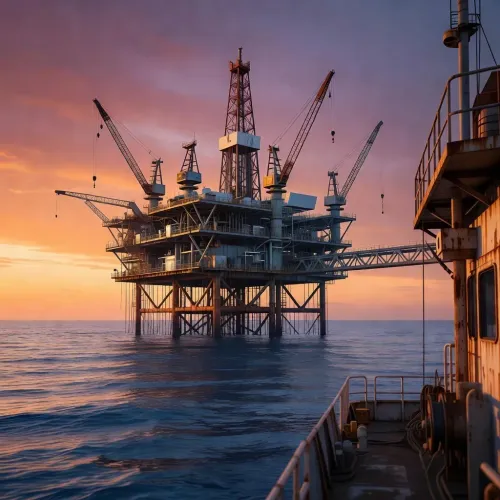
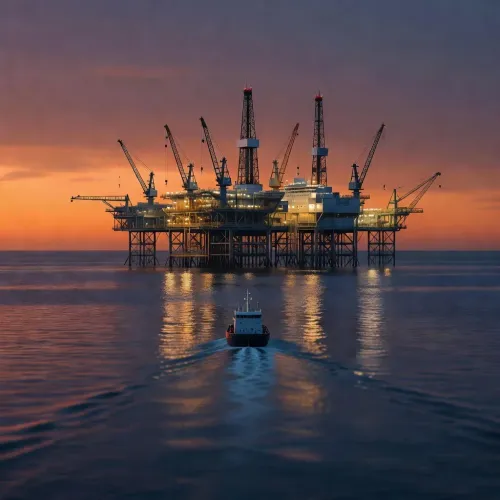
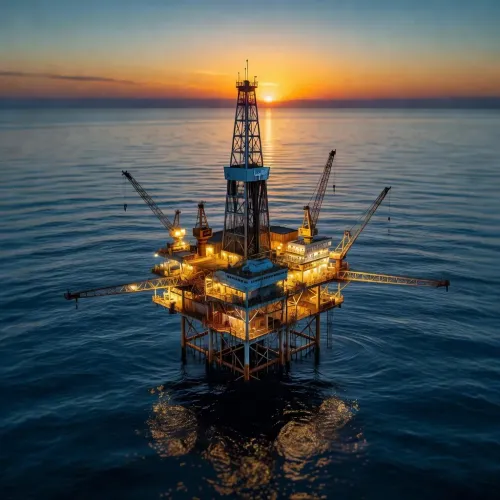
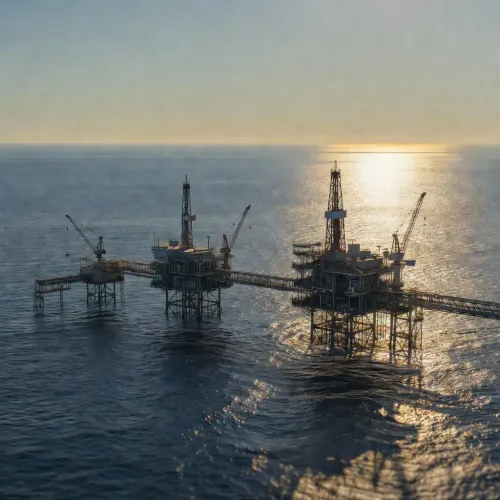
India's offshore hydrocarbon frontier just got a ₹84,084 crore bet placed on it. The Union Cabinet, chaired by Prime Minister Narendra Modi, on Friday, July 31, 2026, approved 'Samudra Manthan' — the National Offshore Exploration Scheme — a landmark initiative designed to unlock India's vast undersea oil and gas reserves and sharpen the country's energy self-reliance through FY 2030–31.
Union Defence Minister Rajnath Singh, announcing the decision on X, called it 'a significant step towards strengthening India's energy security and unlocking our vast offshore potential.' The scheme is built on five pillars: accelerating offshore exploration and production, promoting advanced technologies, generating employment, boosting indigenous manufacturing under Make in India and Aatmanirbhar Bharat, and enhancing self-reliance in the oil and gas sector.
Why India's Seabed Has Never Mattered More
India imports more than 80 percent of its crude oil — a structural vulnerability that has haunted every government since liberalisation. Successive policies, from the New Exploration Licensing Policy to the Hydrocarbon Exploration and Licensing Policy (HELP) introduced in 2016, chipped away at the problem on land and shallow water. Samudra Manthan is the most ambitious push yet into deepwater and ultra-deepwater territory, where geologists believe India's largest untapped reserves sit.
The scheme envisions a 'modern offshore exploration ecosystem' — world-class infrastructure, innovation pipelines, and scientific capabilities that domestic players and global technology partners would plug into. For oil and gas companies and indigenous manufacturers, that means a structured, government-backed runway rather than piecemeal licensing rounds.
Make in India Meets the Ocean Floor
The explicit link to Make in India and Aatmanirbhar Bharat signals that Samudra Manthan is not simply an exploration play — it is an industrial policy instrument. Offshore drilling demands specialised rigs, subsea equipment, and precision engineering. By tying exploration incentives to indigenous manufacturing, the Cabinet is signalling that the supply chain for India's energy future should, over time, be built in India.
Minister Singh framed the approval as integral to the Viksit Bharat vision — the government's overarching goal of a developed India by 2047. 'Samudra Manthan will make a significant contribution towards India's long-term energy security,' he wrote, thanking PM Modi for the decision. What to watch next: bidding rounds, technology partnership announcements, and early production milestones from the Ministry of Petroleum and Natural Gas.
India has named its offshore ambition after the ancient myth of churning the cosmic ocean for hidden treasures. The question now is whether the bureaucratic and industrial machinery can match the scale of that metaphor.
Point of View
Extending a policy arc that began with HELP in 2016 and now reaches into deepwater territory where India's largest untapped reserves are believed to lie. The ₹84,084 crore outlay — tied explicitly to Make in India — signals that energy security and industrial self-sufficiency are being pursued as a single strategy rather than parallel tracks. Rajnath Singh's endorsement, coming from the Defence portfolio rather than Petroleum, underscores how energy independence has been elevated to a national security framing in this government's discourse. Whether the scheme delivers hinges on the pace of bidding rounds and the willingness of global technology majors to partner with domestic manufacturers on the government's terms.
NationPress
15 Sept 2026
Frequently Asked Questions
What is Samudra Manthan scheme India?
'Samudra Manthan' is the National Offshore Exploration Scheme approved by the Union Cabinet on July 31, 2026, with an outlay of ₹84,084 crore through FY 2030–31 to accelerate India's offshore oil and gas exploration and production.
What is the budget of Samudra Manthan?
The Union Cabinet has approved an outlay of ₹84,084 crore for the Samudra Manthan — National Offshore Exploration Scheme — covering the period up to FY 2030–31.
How will Samudra Manthan help India's energy security?
By developing offshore oil and gas reserves, building world-class exploration infrastructure, promoting advanced technologies, and linking production to indigenous manufacturing under Make in India, the scheme aims to reduce India's crude oil import dependence, which currently exceeds 80 percent.
What is India's Hydrocarbon Exploration and Licensing Policy HELP?
HELP, approved in 2016, replaced the earlier New Exploration Licensing Policy to provide a uniform licensing regime for oil and gas exploration and production across India — the policy framework that Samudra Manthan now builds upon for the offshore domain.
What is Viksit Bharat and how does energy fit in?
Viksit Bharat is the Modi government's vision of a fully developed India by 2047. Energy self-reliance — reducing dependence on imported crude oil — is positioned as a foundational requirement of that goal, with Samudra Manthan cited as a direct contributor.