CM Fadnavis meets PM Modi, briefs him on key Maharashtra projects
Synopsis
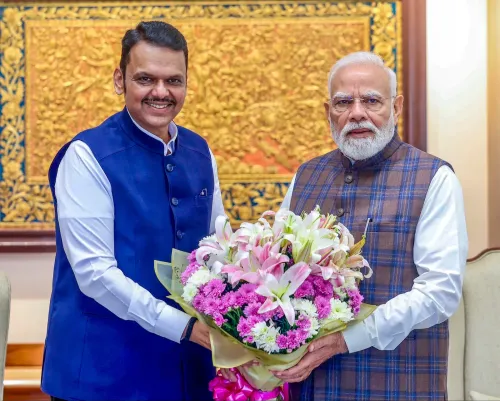
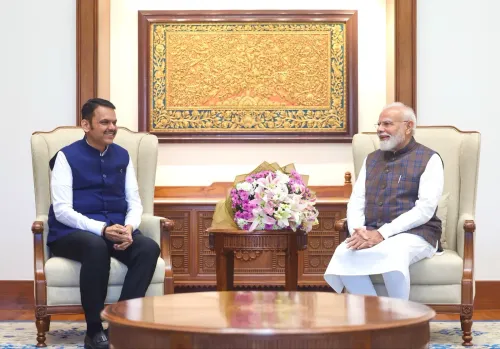
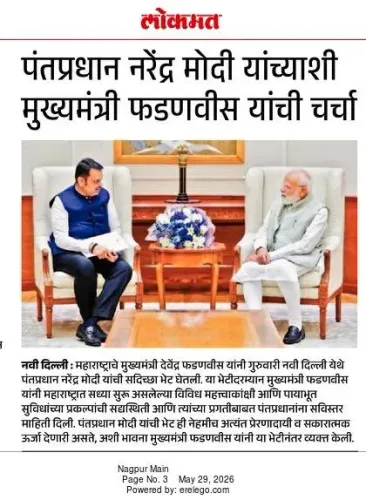
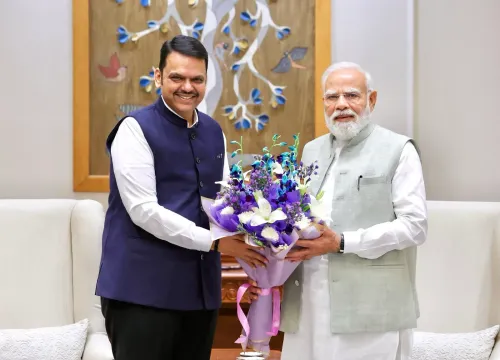
Maharashtra Chief Minister Devendra Fadnavis met Prime Minister Narendra Modi in New Delhi on August 17, 2026, personally briefing him on the state's key projects and holding wide-ranging positive discussions — a meeting that signals active Centre-State coordination on Maharashtra's development agenda.
Key Takeaways
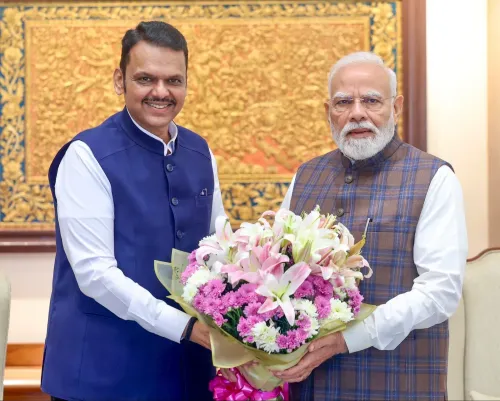
Maharashtra CM Devendra Fadnavis met PM Narendra Modi in New Delhi on August 17, 2026 .
Fadnavis personally briefed the Prime Minister on important ongoing projects in Maharashtra.
The two leaders held 'positive discussions on various subjects,' according to Fadnavis's post.
The meeting was announced by Fadnavis on X in both Marathi and Hindi, signalling a dual state-and-national audience.
The visit reflects the active Centre-State coordination channel that Fadnavis, as a senior BJP leader, maintains with the Prime Minister's Office.
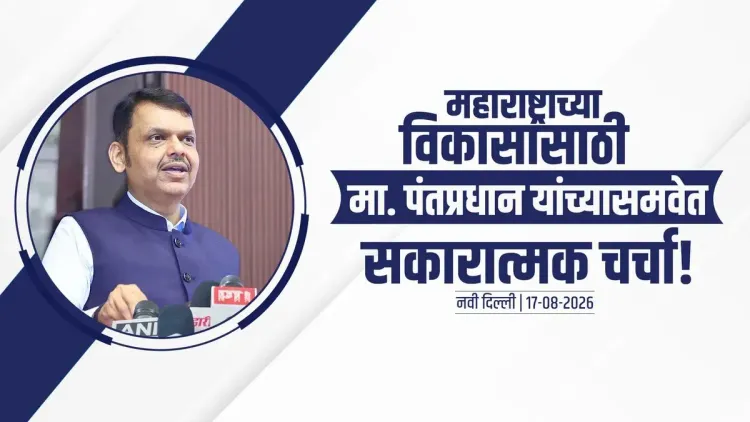
Maharashtra Chief Minister Devendra Fadnavis travelled to New Delhi on Monday, August 17, 2026, for a face-to-face meeting with Prime Minister Narendra Modi — carrying a detailed briefing on the state's most consequential ongoing projects and walking away, by his own account, with productive dialogue on multiple fronts.
Posting on X in both Marathi and Hindi, Fadnavis described the meeting as an opportunity to personally update the Prime Minister on 'राज्यातील महत्त्वाच्या प्रकल्पांची माहिती' ('important projects of the state') and noted that 'विविध विषयांवर सकारात्मक चर्चा झाली' — 'positive discussions took place on various subjects.'
Why a CM makes the trip to Lutyens' Delhi
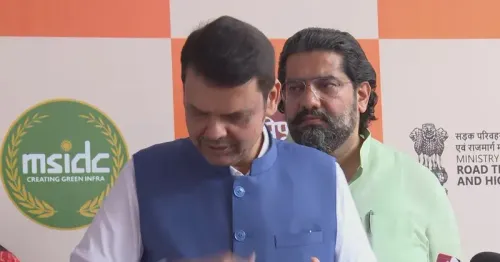
A sitting Chief Minister seeking a personal audience with the Prime Minister is rarely routine. Such meetings typically signal that a project — infrastructure, industrial investment, or a central-funding ask — has reached a stage where political clearance or inter-ministerial coordination at the highest level is needed. Fadnavis, who also holds the Finance portfolio in Maharashtra, has been steering an ambitious infrastructure pipeline that includes the Mumbai Urban Transport expansion, coastal road linkages, and large industrial corridor proposals in the state's hinterland.
The choice to brief Modi in person, rather than through official channels, underscores the weight Fadnavis is placing on accelerating state priorities that require Centre-State alignment — a dynamic that defines how much of India's development spending actually moves from file to ground.
The BJP's Maharashtra-Delhi axis at work
Fadnavis's direct line to 10 Janpath and South Block has long been a structural advantage for Maharashtra within the BJP-led National Democratic Alliance. As the party's most prominent face in the state and a figure with deep roots in the RSS organisational network, he operates with a degree of access to the Prime Minister that most Chief Ministers do not enjoy. That relationship, built over years in opposition and now in government, turns a visit like this into more than a courtesy call — it is a working instrument of state governance.
The post's bilingual framing — Marathi for Maharashtra's electorate, Hindi for a national audience — is itself a signal: Fadnavis is communicating simultaneously to voters at home and to the broader political establishment that Maharashtra's agenda is being championed at the top.
Point of View
The visit reinforces his standing as Maharashtra's primary interlocutor with the Union government, a role that carries real resource implications for the state. The bilingual post — Marathi and Hindi — is a studied political communication choice, simultaneously reassuring Maharashtra's electorate that their CM is fighting for the state and signalling to the national BJP establishment that Maharashtra's agenda is in capable hands. In the broader arc of BJP governance, such visible Centre-State alignment is also a rebuttal to opposition narratives of federal neglect.
NationPress
17 Aug 2026
Frequently Asked Questions
Why did Maharashtra CM Devendra Fadnavis meet PM Modi on August 17, 2026?
Fadnavis met PM Modi in New Delhi to personally brief him on important ongoing projects in Maharashtra and to hold discussions on multiple subjects of state interest.
What was discussed in the Fadnavis-Modi meeting?
Fadnavis stated that he briefed PM Modi on key state projects and that positive discussions took place on various topics, though specific project names were not disclosed in his post.
Where did the Fadnavis-Modi meeting take place?
The meeting took place in New Delhi on August 17, 2026.
What does Devendra Fadnavis's visit to PM Modi signal for Maharashtra?
Such a visit typically signals that Maharashtra is seeking active Centre-State coordination on major infrastructure or development projects that require Union government support or clearance.
Why did Fadnavis post about the meeting in both Marathi and Hindi?
Posting in both languages allowed Fadnavis to communicate directly with Maharashtra's Marathi-speaking electorate while also addressing a broader national Hindi-speaking audience, a common political communication strategy for senior state leaders.