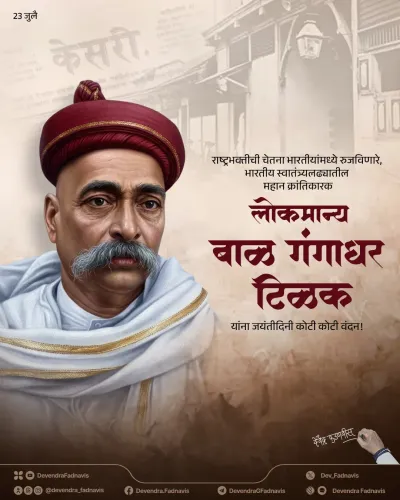
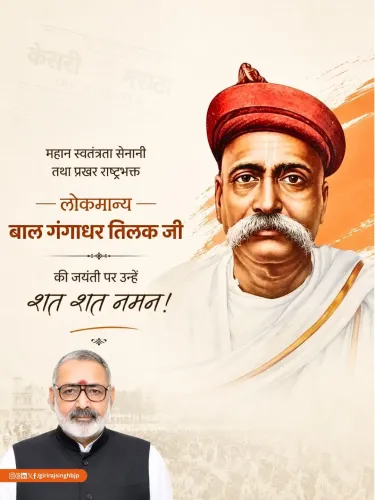
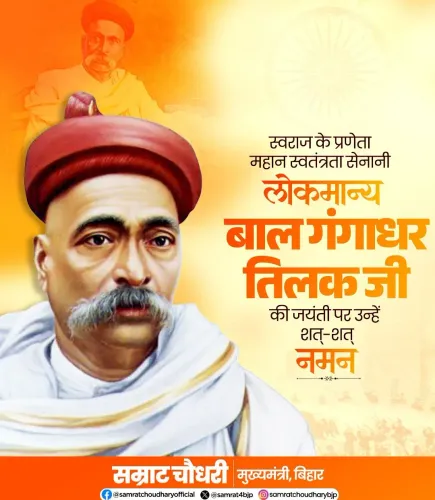
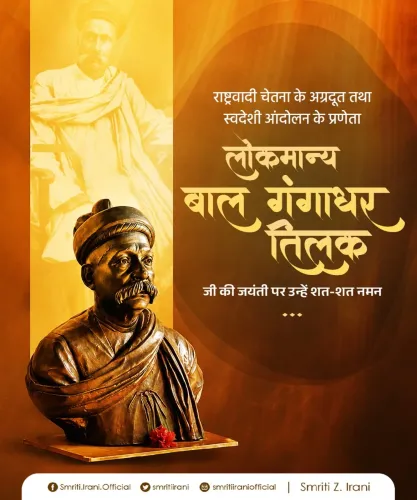
CM Fadnavis pays tribute to Lokmanya Tilak on Smruti Din
Synopsis
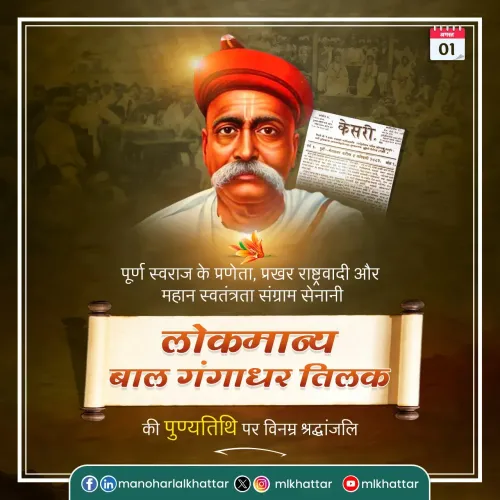
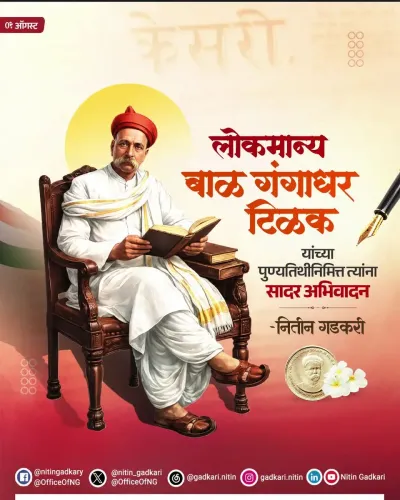
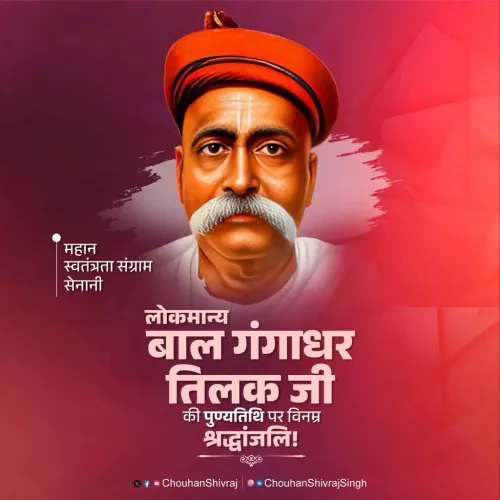
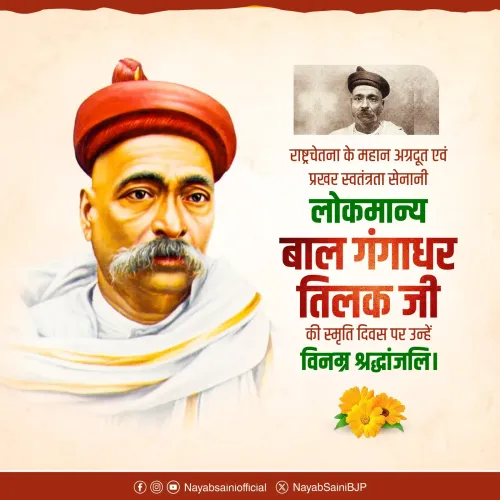
Maharashtra Chief Minister Devendra Fadnavis marked Lokmanya Bal Gangadhar Tilak's Smruti Din on 1 August 2026, honouring the nationalist icon as the 'Father of Indian Unrest' who first ignited the mass demand for Swaraj in India's freedom struggle.
Key Takeaways
Maharashtra CM Devendra Fadnavis posted a tribute to Lokmanya Bal Gangadhar Tilak on his Smruti Din (death anniversary) on 1 August 2026 .
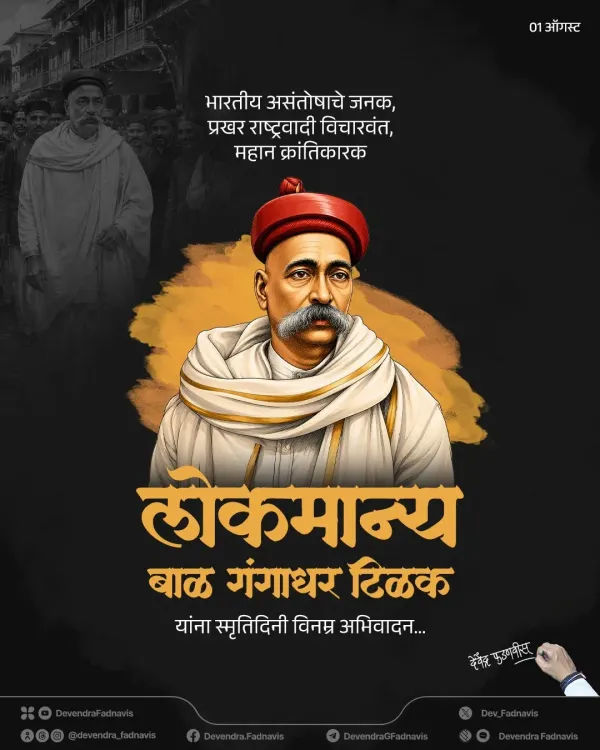
Fadnavis honoured Tilak as a 'great patriot, visionary thinker, and Father of Indian Unrest' in both English and Marathi.
Tilak, born in Ratnagiri and based in Pune , was among the first Indian leaders to make Swaraj a mass political demand.
He used Ganesh Chaturthi and Shivaji Jayanti festivals as tools of mass political mobilisation during the freedom struggle.
The British imprisoned Tilak twice, including a six-year sentence in Mandalay , underscoring how seriously they took his threat to colonial rule.
Annual Smruti Din tributes to Tilak are a defining ritual of Maharashtra's political calendar , reflecting his deep roots in the state's nationalist identity.
On the death anniversary of Lokmanya Bal Gangadhar Tilak, Maharashtra Chief Minister Devendra Fadnavis paid his respects to the man the British once called the 'Father of Indian Unrest' — a title Tilak wore as a badge of honour. The tribute, posted on Saturday, 1 August 2026, invoked Tilak's enduring legacy as the leader who first put Swaraj — self-rule — at the centre of India's freedom struggle.
Fadnavis wrote: 'Humble tributes to a great patriot, visionary thinker, and the Father of Indian Unrest, who lit the first spark of freedom in the hearts of millions.' In Marathi, he added — 'भारतीय असंतोषाचे जनक, प्रखर राष्ट्रवादी विचारवंत, महान क्रांतिकारक लोकमान्य बाळ गंगाधर टिळक यांना स्मृतिदिनी विनम्र अभिवादन' — honouring Tilak as 'the father of Indian unrest, a fierce nationalist thinker, and a great revolutionary.'
The man who made Swaraj a mass demand
Bal Gangadhar Tilak, born in Ratnagiri and shaped by Pune, was among the first Indian leaders to argue that freedom was not a petition to be filed — it was a right to be seized. His declaration, 'Swaraj is my birthright and I shall have it,' became the rallying cry of a generation. He transformed the Ganesh Chaturthi and Shivaji Jayanti festivals into platforms for mass political mobilisation — a masterstroke that brought the freedom movement out of elite drawing rooms and into village squares.
The British colonial establishment branded him dangerous enough to imprison twice, including a six-year sentence in Mandalay. They meant 'Father of Indian Unrest' as an indictment. India received it as a title of glory.
Why Maharashtra's leaders keep invoking Tilak
Annual tributes to Tilak on his Smruti Din — his death anniversary — are a fixture of Maharashtra's political calendar, and not merely ceremonial. Tilak's legacy sits at the intersection of regional pride and national identity in a way few historical figures match. For Maharashtra-based leaders, invoking him signals continuity with a tradition of assertive, mass-rooted nationalism that originates in the state's own soil.
Chief Minister Fadnavis's tribute follows this well-worn but meaningful path — reminding a digital audience that the spark Tilak lit more than a century ago is still the reference point for what political courage looks like.
Point of View
Mass-rooted nationalism. For a BJP leader governing a state where Tilak's legacy is still politically potent, the Smruti Din post is less about history and more about identity. It reinforces the party's ongoing effort to claim the mantle of cultural nationalism in Maharashtra, a state where that lineage is fiercely contested. The bilingual tribute — English and Marathi — also reflects a conscious outreach to both national and regional audiences simultaneously.
NationPress
1 Aug 2026
Frequently Asked Questions
Why is Lokmanya Tilak called the 'Father of Indian Unrest'?
The phrase was coined by the British colonial establishment to describe Tilak's role in radicalising the Indian independence movement. He was among the first leaders to demand Swaraj — self-rule — as a birthright, and used mass public festivals to mobilise ordinary Indians against colonial rule. India adopted the label as a mark of pride.
When is Lokmanya Tilak's Smruti Din observed?
Lokmanya Bal Gangadhar Tilak's Smruti Din — his death anniversary — is observed on 1 August each year. He passed away on 1 August 1920 in Mumbai.
What did CM Devendra Fadnavis say about Lokmanya Tilak?
Fadnavis called Tilak a 'great patriot, visionary thinker, and Father of Indian Unrest' who 'lit the first spark of freedom in the hearts of millions.' He posted the tribute in both English and Marathi on his official X account.
What is Lokmanya Tilak's connection to Maharashtra?
Tilak was born in Ratnagiri and spent much of his political life in Pune , making Maharashtra the cradle of his nationalist work. He transformed the Ganesh Chaturthi festival into a vehicle for mass political organisation, a legacy that remains deeply embedded in the state's culture.
Why do Maharashtra politicians regularly pay tribute to Tilak?
Tilak is the defining figure of Maharashtra's nationalist tradition. His ideas about mass mobilisation and assertive self-rule are reference points across the political spectrum in the state. Annual tributes on his Smruti Din and Jayanti are a way for leaders to connect with that legacy and signal their commitment to Maharashtra's cultural identity.