CM Nayab Saini Pays Tribute to Lokmanya Tilak on Death Anniversary
Synopsis
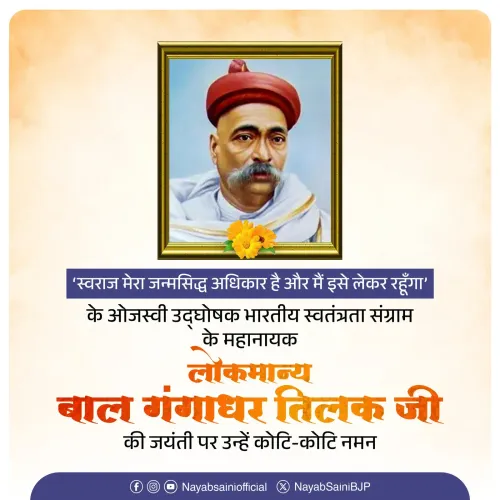
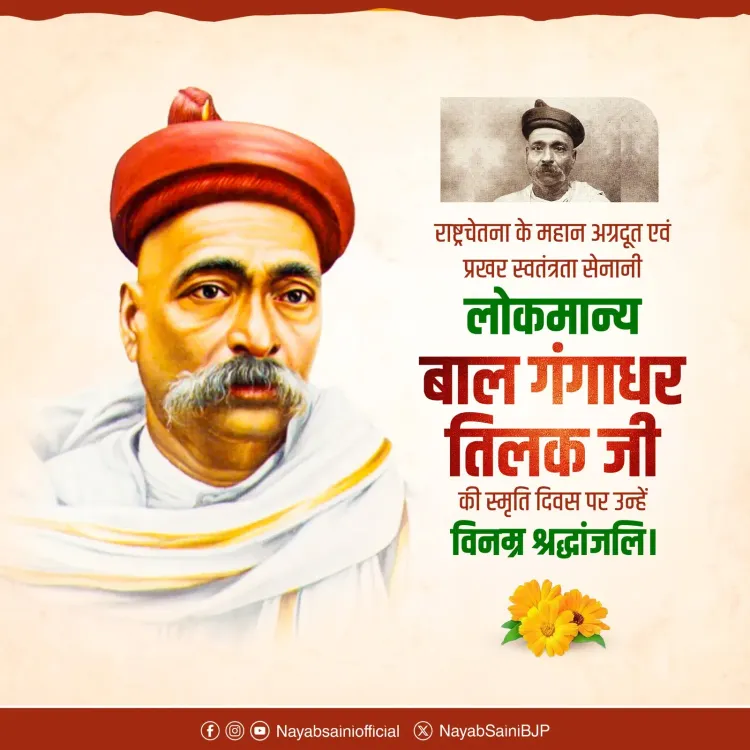
Haryana Chief Minister Nayab Singh Saini paid tribute to Lokmanya Bal Gangadhar Tilak on his death anniversary on 1 August 2026, honouring the freedom fighter's 'Swaraj is my birthright' legacy and his role in igniting India's independence movement.
Key Takeaways
Haryana CM Nayab Singh Saini posted a tribute to Lokmanya Bal Gangadhar Tilak on 1 August 2026 , his death anniversary.
Tilak died on 1 August 1920 , making 2026 the 106th anniversary of his passing.
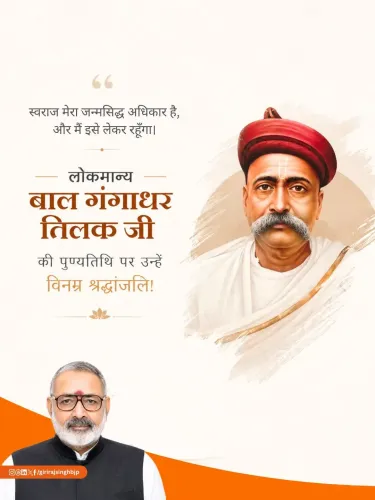
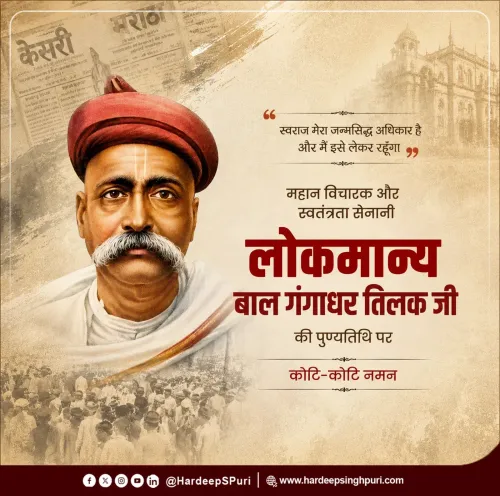
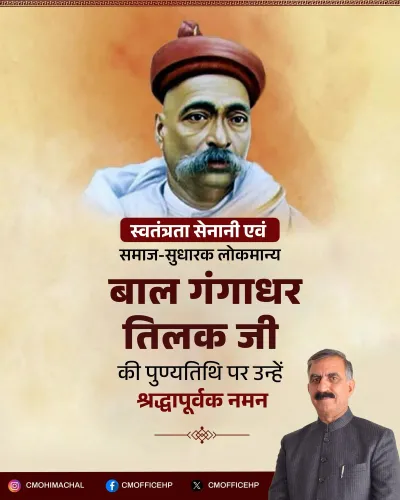
Saini invoked Tilak's iconic slogan: 'Swaraj mera janmasiddh adhikar hai' — 'Swaraj is my birthright.' Tilak was titled Lokmanya and was a pioneer of mass mobilisation through Swadeshi and cultural movements.
Annual tributes to Tilak on 1 August are a cross-party tradition among Indian political leaders.
A century after his passing, the battle cry of Bal Gangadhar Tilak — 'Swaraj mera janmasiddh adhikar hai' ('Swaraj is my birthright') — still echoes across India's political landscape. On 1 August 2026, Haryana Chief Minister Nayab Singh Saini paid solemn tribute to the independence leader on his death anniversary, honouring a man who lit the fire of self-rule more than a century ago.
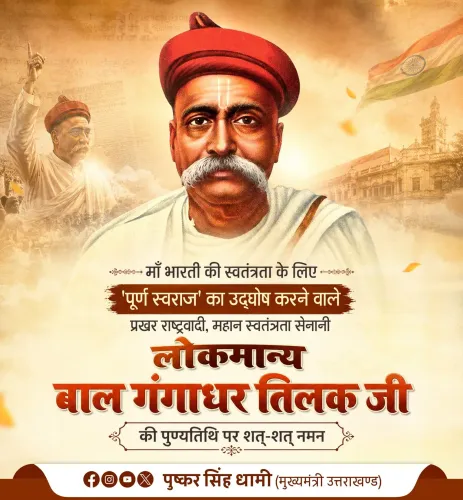
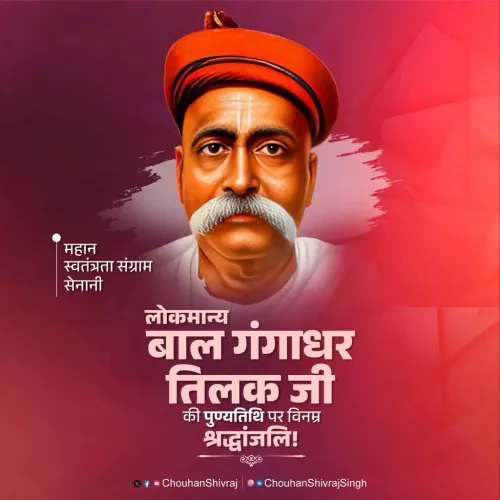
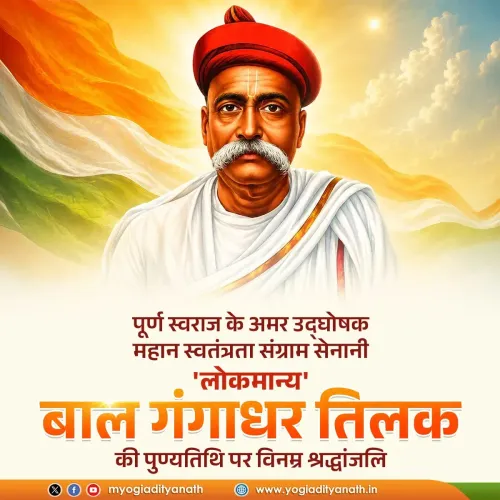
In his post, CM Saini described Tilak as a 'rashtra chetna ke mahan agradoot' — a great harbinger of national consciousness — and a fierce freedom fighter. He recalled how Tilak's immortal declaration ignited in the hearts of Indians a spirit of freedom, self-respect, and patriotism that would outlast the British Raj itself.
The Man Behind the Slogan
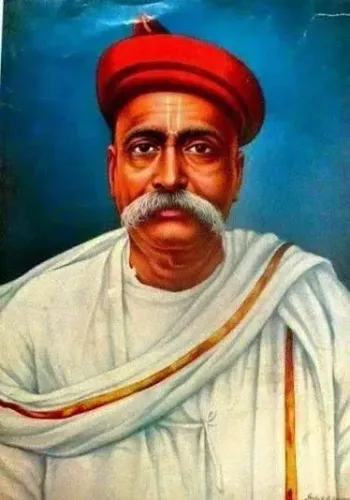
Bal Gangadhar Tilak, conferred the title Lokmanya — 'accepted by the people as their leader' — was among the earliest and most radical voices demanding complete self-rule from British India. His twin tools were mass mobilisation and cultural assertion: he revived the Ganesh Chaturthi festival as a public gathering to build nationalist sentiment and championed the Swadeshi movement alongside calls to boycott British goods. Where moderates sought reform through petition, Tilak demanded nothing less than independence as an inherent right — a position that landed him in prison more than once.
He died on 1 August 1920, leaving behind a movement that would carry India to freedom 27 years later. His slogan became the moral spine of the struggle.
Annual Ritual, Enduring Resonance
Saini's tribute follows a well-established tradition in Indian politics: leaders across the spectrum mark 1 August each year with homage to Tilak, reinforcing a shared nationalist lineage. The gesture signals historical continuity — a reminder that the ideals of swadeshi, self-respect, and public service remain touchstones of governance rhetoric, not just textbook history.
Tilak's life and thought, CM Saini wrote, 'will always continue to inspire service to the nation.' In a political culture that prizes its revolutionary ancestry, that is not a small claim — it is a living standard.
Point of View
Culturally rooted nationalism to draw a lineage between the freedom movement and their own governance philosophy. Tilak's emphasis on mass participation and swadeshi aligns neatly with contemporary 'vocal for local' and Atmanirbhar Bharat messaging. The tribute costs nothing politically and earns historical credibility. Expect similar posts from BJP chief ministers and central ministers on the same date, reinforcing a coordinated memory-politics strategy.
NationPress
15 Sept 2026
Frequently Asked Questions
When is Lokmanya Bal Gangadhar Tilak's death anniversary?
Lokmanya Bal Gangadhar Tilak passed away on 1 August 1920 . His death anniversary is observed every year on 1 August .
What is Lokmanya Tilak famous for?
Tilak is best known for his slogan 'Swaraj mera janmasiddh adhikar hai aur main ise lekar rahunga' — 'Swaraj is my birthright and I shall have it.' He was also a pioneer of mass nationalist mobilisation through the Swadeshi movement and public Ganesh Chaturthi celebrations.
What does 'Lokmanya' mean?
'Lokmanya' is an honorary title meaning 'accepted by the people as their leader.' It was conferred on Bal Gangadhar Tilak in recognition of his mass following and leadership of the Indian independence movement.
What did Haryana CM Nayab Singh Saini say about Tilak?
CM Saini described Tilak as a 'great harbinger of national consciousness' and a fierce freedom fighter, saying Tilak's immortal slogan ignited the spirit of freedom, self-respect, and patriotism among Indians. He added that Tilak's life and thought would always inspire service to the nation.
Why do Indian politicians pay tribute to Tilak every year?
Paying tribute to independence movement figures on their birth and death anniversaries is a long-standing tradition in Indian politics. It signals respect for the nationalist legacy and reinforces historical continuity in public discourse, with leaders across party lines participating each year on 1 August .