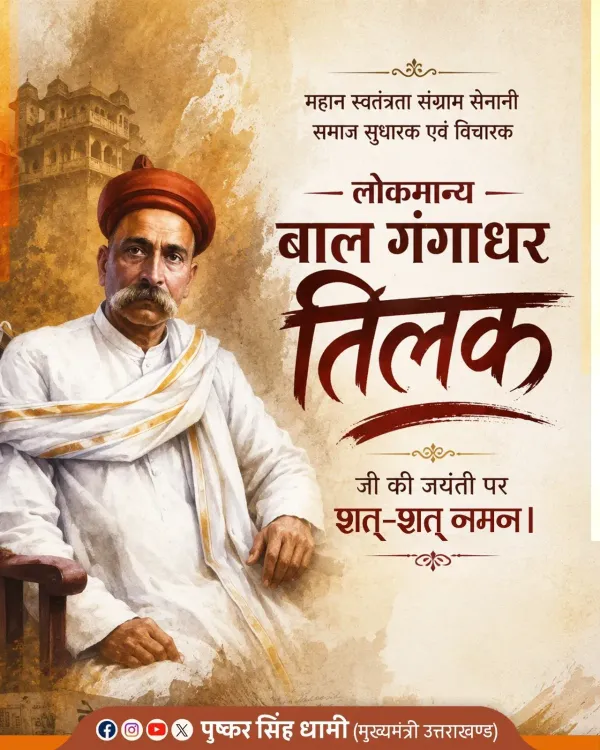
CM Dhami Pays Tribute to Lokmanya Tilak on Birth Anniversary
Synopsis
Uttarakhand Chief Minister Pushkar Singh Dhami marked the birth anniversary of freedom fighter Lokmanya Bal Gangadhar Tilak on 23 July 2026, saluting his nationalist vision, call for Purna Swaraj, and enduring legacy as an inspiration for the nation.
Key Takeaways
CM Pushkar Singh Dhami paid tribute to Lokmanya Bal Gangadhar Tilak on his birth anniversary on 23 July 2026 .
Dhami hailed Tilak as a champion of national self-respect, mass awakening, and Purna Swaraj (complete independence).
Bal Gangadhar Tilak was born on 23 July 1856 in Ratnagiri, Maharashtra and is famous for the slogan 'Swaraj is my birthright.' Tilak's ideas influenced the formal Purna Swaraj Resolution passed by the Indian National Congress at Lahore in 1930 .
BJP leaders regularly invoke Tilak's legacy to connect contemporary governance with India's nationalist freedom movement tradition.
The tribute comes weeks before Independence Day on 15 August , a period of heightened nationalist commemoration across Indian states.
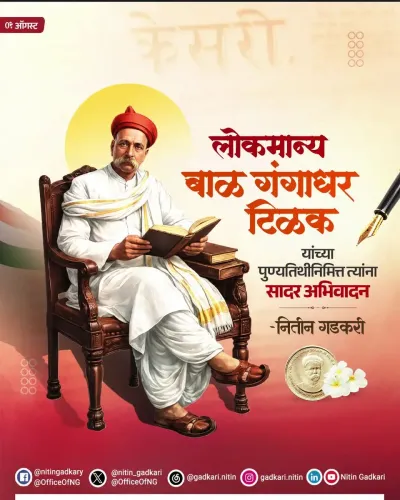
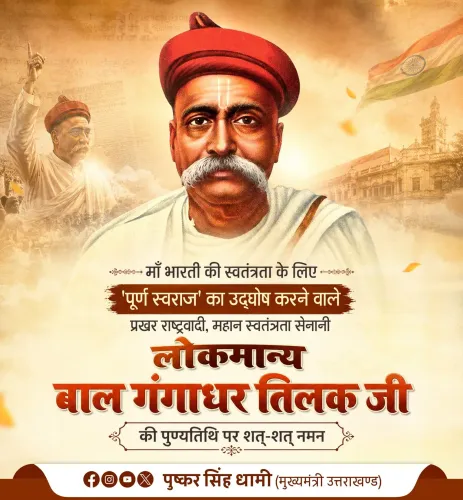
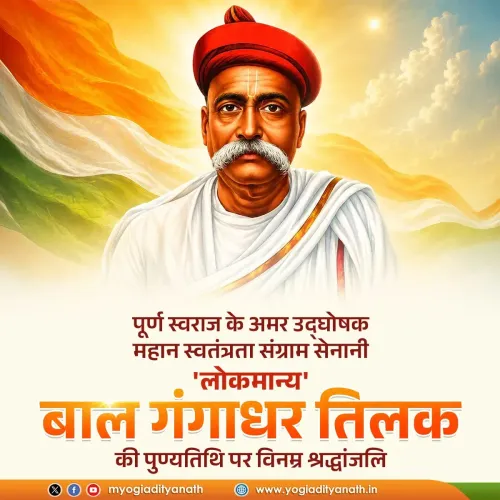
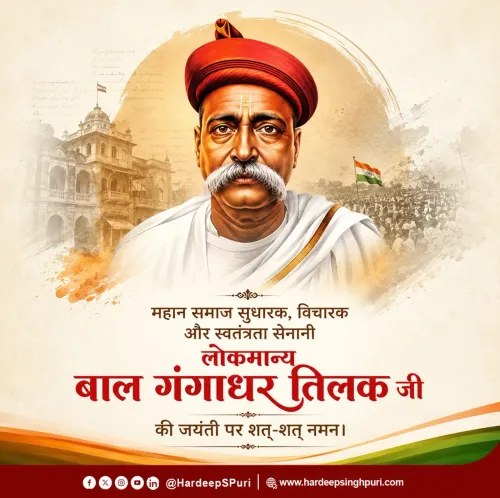
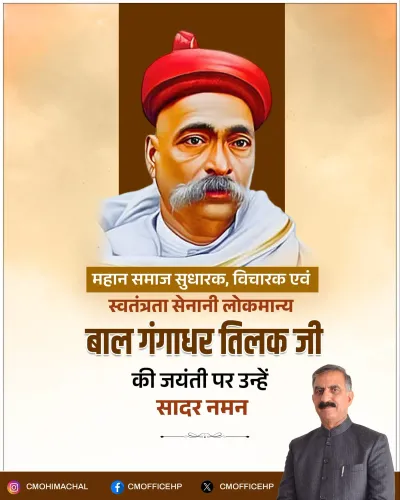
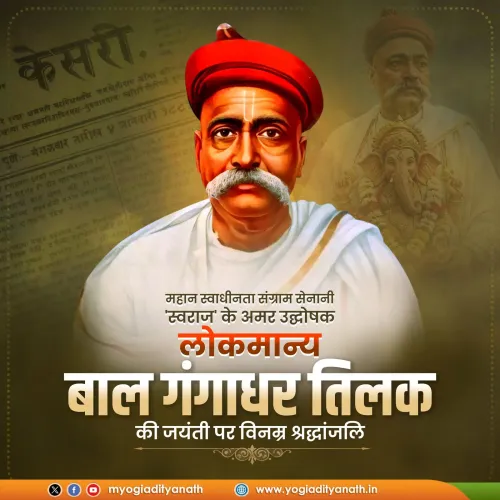
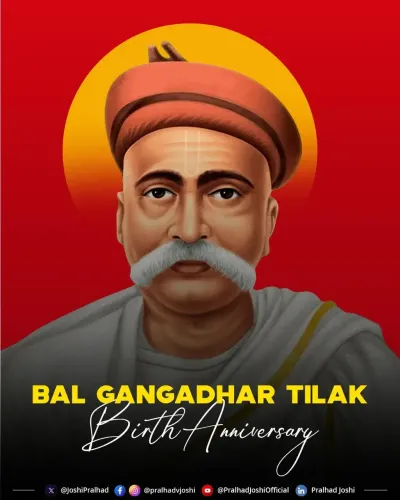
Uttarakhand Chief Minister Pushkar Singh Dhami on Thursday, 23 July 2026, paid tribute to freedom fighter Lokmanya Bal Gangadhar Tilak on his birth anniversary, hailing him as a powerful voice for national self-respect, mass awakening, and complete self-rule.
Context
In his post, CM Dhami offered kotishaḥ naman (salutations in the millions) to Tilak, describing him as a 'rashtriya swabhiman, janjagran aur Purna Swaraj ke prabal udghoṣhak' — a fierce champion of national self-respect, public awakening, and complete independence. He credited Tilak's 'unparalleled leadership and nationalist ideas' with giving the freedom movement a new direction, and called his sacrifice and devotion to the nation 'an eternal source of inspiration for all of us.'
Bal Gangadhar Tilak was born on 23 July 1856 in Ratnagiri, Maharashtra. He became one of the foremost architects of mass political mobilisation against British colonial rule, famously declaring 'Swaraj is my birthright, and I shall have it.'
Policy Backdrop
Tilak's concept of Purna Swaraj — complete independence — laid the ideological groundwork for the formal Purna Swaraj Resolution adopted by the Indian National Congress at its Lahore session in 1930, decades after Tilak had first articulated the demand. He championed the use of mass festivals such as Ganesh Chaturthi and Shivaji Jayanti as platforms for political mobilisation, transforming them into vehicles of nationalist sentiment.
Tilak also popularised the boycott of British goods as a tool of resistance, making him one of the earliest proponents of economic nationalism in India's independence movement. His newspaper Kesari became a rallying point for anti-colonial opinion across Maharashtra and beyond.
Stakeholders and Impact
Across the political spectrum, Indian leaders mark Tilak's birth anniversary each year, but BJP functionaries have been particularly consistent in invoking his legacy to frame contemporary governance within a longer arc of assertive national self-assertion. CM Dhami's tribute follows this established pattern, connecting Uttarakhand's ruling administration to a broader nationalist lineage.
For ordinary citizens, especially students and young voters, such commemorations serve as reminders of the ideological roots of modern Indian political thought. State governments often use these occasions to announce curriculum updates or local commemorative events in the run-up to Independence Day on 15 August.
What's Next
With Independence Day less than a month away, Tilak's birth anniversary typically marks the beginning of a period of heightened nationalist commemoration across Indian states. Observers will watch whether Uttarakhand announces any state-level events, school programmes, or curriculum initiatives referencing Tilak's legacy in the coming weeks. CM Dhami's public tribute signals that the Uttarakhand government intends to keep the freedom movement's early architects visible in public discourse as the nation approaches another anniversary of independence.
Point of View
One that BJP leaders across the country have refined into a consistent pattern of invoking early-20th-century nationalist icons. By emphasising Tilak's calls for 'Purna Swaraj' and mass awakening, Dhami aligns Uttarakhand's administration with an assertive nationalist lineage that predates the Congress-led mainstream of the freedom movement. The timing — less than a month before Independence Day — amplifies the resonance of such tributes. Over time, these commemorations cumulatively shape public memory and reinforce the party's self-positioning as the inheritor of a deeper, older nationalist tradition.
NationPress
21 Oct 2026
Frequently Asked Questions
When is Lokmanya Bal Gangadhar Tilak's birth anniversary?
Lokmanya Bal Gangadhar Tilak was born on 23 July 1856 in Ratnagiri, Maharashtra, and his birth anniversary is observed every year on 23 July.
What is Purna Swaraj and what was Tilak's role in it?
Purna Swaraj means complete independence from British rule. Tilak was one of the earliest and most forceful advocates of this demand, laying the ideological groundwork for the formal Purna Swaraj Resolution adopted by the Indian National Congress at Lahore in 1930 .
What did CM Pushkar Singh Dhami say about Tilak?
CM Dhami called Tilak a powerful champion of national self-respect, mass awakening, and Purna Swaraj, crediting his 'unparalleled leadership and nationalist ideas' with giving the freedom movement a new direction and describing his legacy as an eternal source of inspiration.
Why do BJP leaders frequently pay tribute to Lokmanya Tilak?
BJP leaders consistently invoke Tilak's legacy to connect contemporary governance with India's assertive nationalist tradition, framing the party as an inheritor of a long arc of national self-assertion that predates the later phases of the freedom movement.
What is Lokmanya Tilak famous for?
Tilak is famous for the declaration 'Swaraj is my birthright, and I shall have it,' for popularising Ganesh Chaturthi and Shivaji Jayanti as platforms for political mobilisation, and for championing the boycott of British goods during India's independence struggle.