Puri pays tribute to Lokmanya Tilak on death anniversary
Synopsis
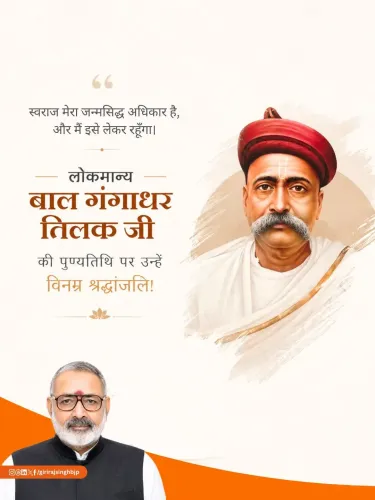
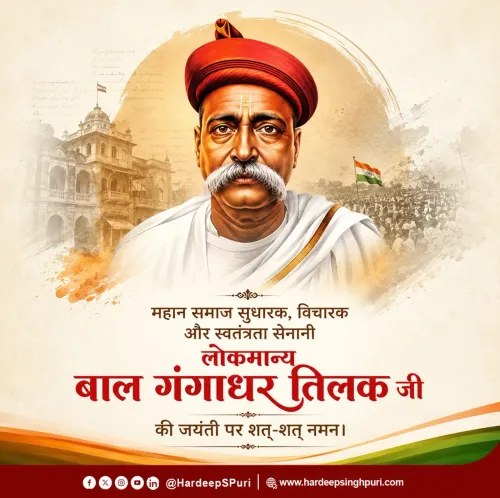
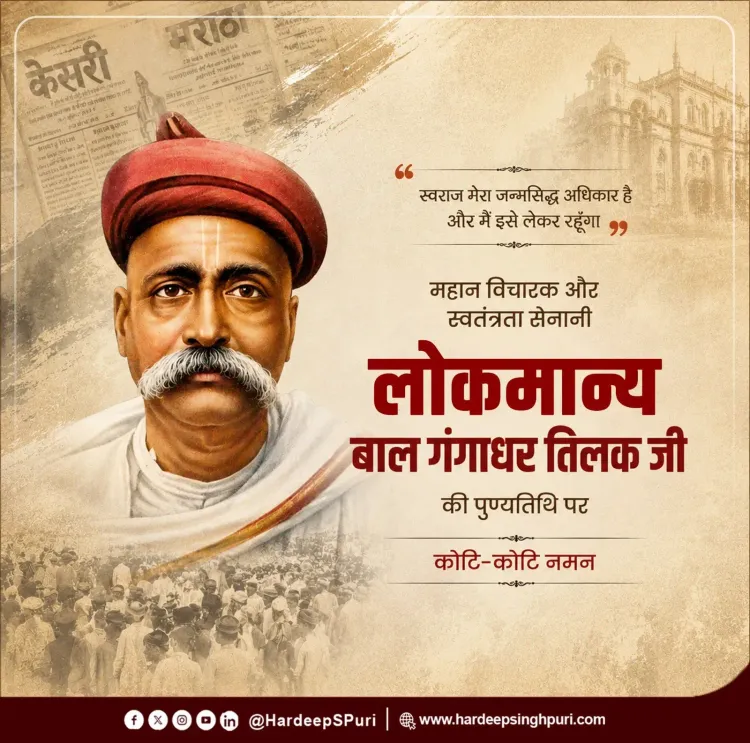
Union Petroleum Minister Hardeep Singh Puri marked the 106th death anniversary of Lokmanya Bal Gangadhar Tilak on 1 August 2026, honouring the freedom fighter's iconic Swaraj declaration and his legacy of mass awakening and national service.
Key Takeaways
Hardeep Singh Puri paid tribute to Lokmanya Bal Gangadhar Tilak on his death anniversary, 1 August 2026 .
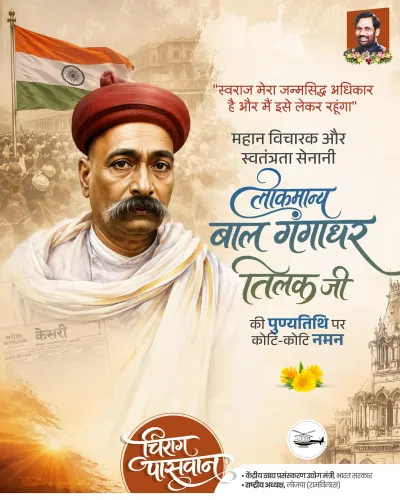
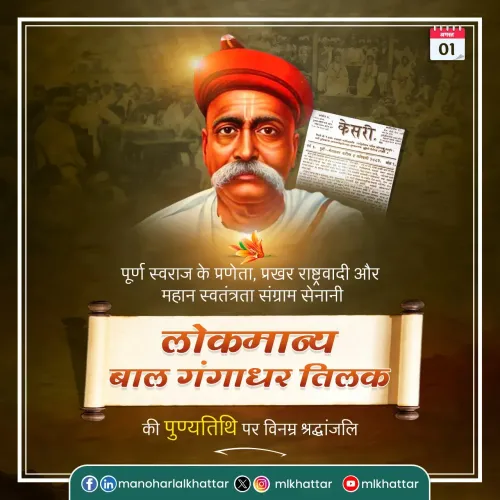
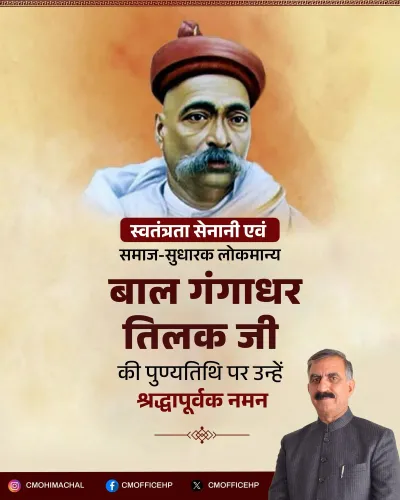
Puri invoked Tilak's iconic slogan: 'Swaraj is my birthright and I shall have it.' Bal Gangadhar Tilak died on 1 August 1920 , making this his 106th death anniversary .
Tilak championed Swadeshi, boycott of British goods, and national education as pillars of the freedom struggle.
Puri credited Tilak with giving the independence movement 'new consciousness and new direction.' BJP ministers routinely mark Tilak's anniversary, connecting historical sacrifice to contemporary calls for national service.
A century after his death, the battle cry of Bal Gangadhar Tilak still echoes through India's public life. On 1 August 2026 — the 106th death anniversary of the freedom movement's firebrand — Union Petroleum Minister Hardeep Singh Puri paid tribute to the leader who gave the independence struggle its most enduring slogan.
Puri invoked Tilak's immortal declaration — 'Swaraj mera janmasiddh adhikar hai, aur main ise lekar rahunga' ('Swaraj is my birthright and I shall have it') — calling it a rallying cry that gave the Indian freedom struggle 'new consciousness and new direction.' He added that Tilak's 'indomitable courage, patriotism and message of mass awakening continues to inspire every Indian toward national service.'
The man who made 'Swaraj' a mass movement
Bal Gangadhar Tilak, revered as Lokmanya ('accepted by the people'), was among the first nationalist leaders to argue that independence was not a petition to be granted but a right to be seized. He championed Swadeshi, the boycott of British goods, and national education as the three pillars of organised resistance — decades before these ideas became mainstream Congress policy.
Tilak died on 1 August 1920, leaving behind a transformed political landscape. His legacy is inseparable from the mass character of India's independence movement: it was Tilak who took the freedom struggle out of English-speaking drawing rooms and into village squares.
A recurring ritual of nationalist memory
Tributes to Tilak on his death anniversary are a fixture of Indian political life, cutting across party lines. For BJP ministers like Puri, invoking Tilak carries particular weight — the leader's emphasis on cultural nationalism, mass mobilisation, and an assertive demand for self-rule aligns closely with the ideological vocabulary the party has long cultivated.
The pattern is deliberate: by connecting historical sacrifice to contemporary calls for national service, these tributes serve as both remembrance and exhortation — reminding citizens that the obligations of freedom did not end in 1947.
Tilak's slogan, coined in a courtroom and forged in colonial jails, still carries enough charge to open a speech, close a rally, or anchor a social media post more than a century later. That is the measure of the man.
Point of View
Assertive nationalism, and Tilak — who demanded Swaraj as a birthright rather than a concession — fits that lineage more naturally than many Congress-era figures. Invoking him on the anniversary reinforces a narrative thread connecting colonial-era sacrifice to present-day governance. The broader pattern of such tributes by senior ministers signals that historical memory remains an active instrument of political identity, not merely ceremonial courtesy.
NationPress
16 Sept 2026
Frequently Asked Questions
When did Bal Gangadhar Tilak die?
Bal Gangadhar Tilak died on 1 August 1920 . His death anniversary, known as his punyatithi, is observed annually across India with tributes from political leaders and public institutions.
What is the full quote of Tilak's Swaraj slogan?
The full slogan is 'Swaraj is my birthright and I shall have it' — in Hindi, 'Swaraj mera janmasiddh adhikar hai, aur main ise lekar rahunga.' Tilak coined it to assert that independence was a right, not a favour to be granted by British rulers.
Why is Bal Gangadhar Tilak called Lokmanya?
'Lokmanya' means 'accepted by the people' or 'respected by the masses.' The title was conferred on Tilak in recognition of his extraordinary popular following and his success in taking the independence movement beyond elite circles into the broader public.
What did Hardeep Singh Puri say about Lokmanya Tilak?
Union Petroleum Minister Hardeep Singh Puri said Tilak gave the Indian freedom struggle 'new consciousness and new direction,' and that his 'indomitable courage, patriotism and message of mass awakening continues to inspire every Indian toward national service.'
What were Bal Gangadhar Tilak's key contributions to India's freedom movement?
Tilak championed three main pillars of resistance: Swadeshi (use of Indian goods), boycott of British products, and national education. He was among the first leaders to argue for outright independence rather than gradual reform, and he popularised the freedom struggle through mass mobilisation.