CM Fadnavis Pays Tribute to Nanaji Deshmukh on Birth Anniversary
Synopsis
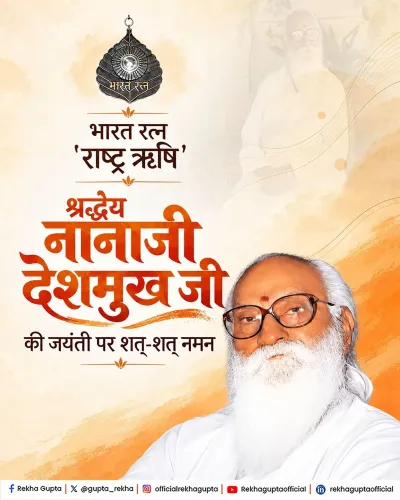
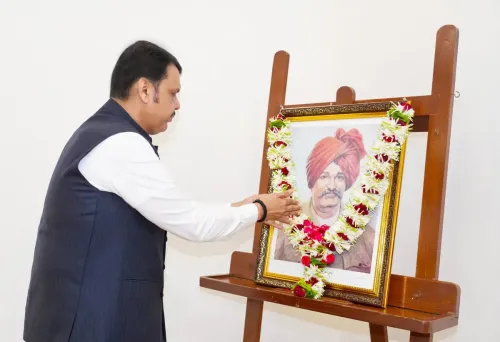
Maharashtra Chief Minister Devendra Fadnavis marked the birth anniversary of Bharat Ratna Nanaji Deshmukh on 11 October 2026, honouring the RSS organiser and rural development pioneer who transformed 500 villages around Chitrakoot and declined cabinet office to serve grassroots India.
Key Takeaways
CM Devendra Fadnavis paid tribute to Bharat Ratna Nanaji Deshmukh on his birth anniversary, 11 October 2026 .
Deshmukh was born on 11 October 1916 in Hingoli district, Maharashtra .
He declined a cabinet post in the 1977 Janata Party government to focus on grassroots rural work.
His Deendayal Research Institute ran an integrated rural development programme across 500 villages in the Chitrakoot region.
He received the Padma Vibhushan in 1999 and the Bharat Ratna in 2019 (posthumous).
Deshmukh passed away on 27 February 2010 and remains a guiding philosophical figure for the BJP and RSS ecosystem.
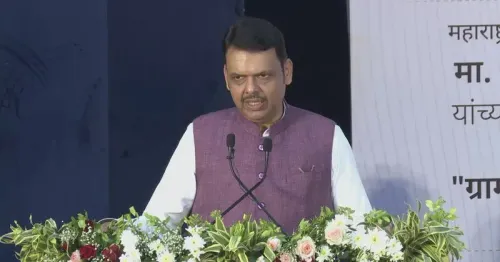
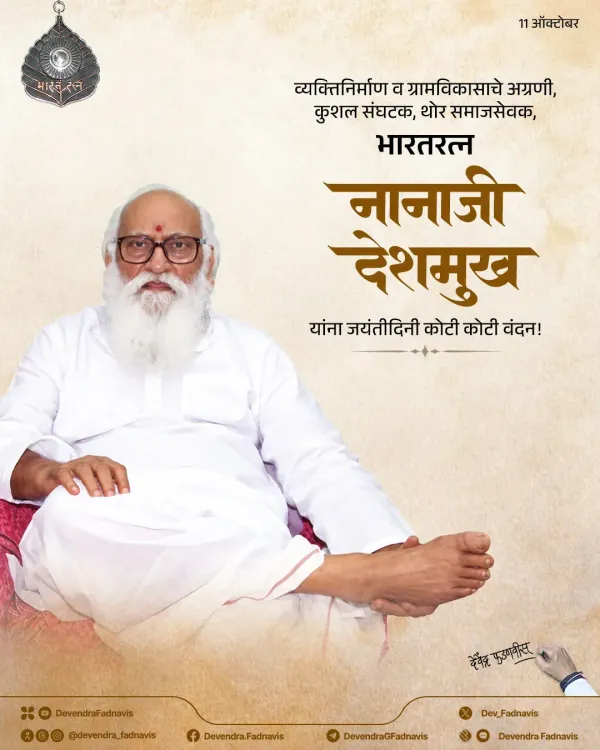
A life spent in dusty villages, building schools, reviving livelihoods, and refusing every government post offered — Bharat Ratna Nanaji Deshmukh remains one of independent India's most quietly consequential social reformers. On his birth anniversary, Maharashtra Chief Minister Devendra Fadnavis took to X on Sunday, 11 October 2026, to honour the man he called a Karmayogi — a term reserved for those who serve without ego or expectation of reward.
Fadnavis wrote in English and Marathi: 'Remembering a visionary social reformer who devoted his life to rural development, self-reliance, and the upliftment of society, Karmayogi Bharat Ratna Nanaji Deshmukh, on his Birth Anniversary!' In Marathi, he added: 'व्यक्तिनिर्माण व ग्रामविकासाचे अग्रणी, कुशल संघटक, थोर समाजसेवक, भारतरत्न नानाजी देशमुख यांना जयंतीदिनी कोटी कोटी वंदन!' — 'Countless salutations to Nanaji Deshmukh, pioneer of individual development and rural upliftment, a skilled organiser and great social servant, on his birth anniversary!'
Who Was Nanaji Deshmukh?
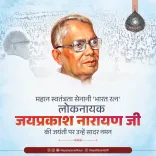
Nanaji Deshmukh, born 11 October 1916 in Hingoli district of present-day Maharashtra, rose from humble origins to become one of the founding pillars of the Rashtriya Swayamsevak Sangh (RSS)'s social work wing and later a key organiser of the Bharatiya Jana Sangh. He was a close associate of Deendayal Upadhyaya and helped establish the Saraswati Shishu Mandir school network across Uttar Pradesh in the 1950s — a grassroots education initiative that predated many government schemes.
After decades in political organisation, Deshmukh made a defining break: he declined a cabinet berth in the Janata Party government of 1977 and eventually stepped away from electoral politics entirely. His chosen arena became Chitrakoot, a rural cluster straddling Uttar Pradesh and Madhya Pradesh, where he built an integrated rural development model centred on self-sufficiency, water conservation, and participatory village governance.
The Chitrakoot Experiment and Its Legacy
Through the Deendayal Research Institute, Deshmukh's teams worked across 500 villages in the Chitrakoot region, demonstrating that rural poverty could be addressed without dependency on state doles — through watershed management, organic farming, women's self-help groups, and village-level health workers. The model attracted attention from development economists and policymakers as a replicable template for India's hinterland.
The Government of India awarded him the Padma Vibhushan in 1999 and the nation's highest civilian honour, the Bharat Ratna, in 2019 — the award was conferred posthumously, as Deshmukh had passed away on 27 February 2010. He was also a nominated member of the Rajya Sabha from 1999 to 2005.
For Maharashtra's ruling establishment, Deshmukh is more than a historical figure — he is a philosophical anchor. His insistence that political workers must eventually subordinate personal ambition to community service remains a touchstone the BJP and the broader Sangh ecosystem invoke regularly, particularly on his birth and death anniversaries.
Point of View
But Nanaji Deshmukh's legacy carries real ideological weight — he is the movement's proof-of-concept that political workers can renounce power and still drive measurable social change. Invoking him on his birth anniversary reinforces the ruling party's self-image as a cadre-based, service-oriented organisation at a time when it governs India's wealthiest state. The Chitrakoot model also offers the Maharashtra government a ready philosophical template as it pushes rural development and self-reliance schemes, lending the tribute a quietly policy-relevant undertone beyond mere ceremonial respect.
NationPress
11 Oct 2026
Frequently Asked Questions
When is Nanaji Deshmukh's birth anniversary?
Nanaji Deshmukh was born on 11 October 1916, and his birth anniversary is observed every year on 11 October.
Why did Nanaji Deshmukh receive the Bharat Ratna?
Nanaji Deshmukh received the Bharat Ratna in 2019, posthumously, for his lifelong contributions to rural development, education, and social upliftment, particularly through his work in the Chitrakoot region.
What is Nanaji Deshmukh famous for?
He is famous for building an integrated rural development model across 500 villages in Chitrakoot, founding Saraswati Shishu Mandir schools, and declining a cabinet post in 1977 to dedicate himself entirely to grassroots service.
What did CM Devendra Fadnavis say about Nanaji Deshmukh?
CM Fadnavis called Deshmukh a 'Karmayogi' and 'visionary social reformer' who devoted his life to rural development, self-reliance, and the upliftment of society.
When did Nanaji Deshmukh pass away?
Nanaji Deshmukh passed away on 27 February 2010.