CM Fadnavis backs people-tech model for village growth
Synopsis
Chief Minister Devendra Fadnavis presided over the Gram Vikas Puraskar-2026 in Nagpur on 29 May 2026, honouring gram panchayats and institutions while championing people's participation, the Jalayukt Shivar Yojana's success, and the new AI-powered Maha-Vistar app for farmers.
Key Takeaways
CM Devendra Fadnavis presided over the Gram Vikas Puraskar-2026 in Nagpur on 29 May 2026 , organised by the R.D.
The event honoured gram panchayats, schools, and health centres for village-level development contributions.
Fadnavis credited the success of the Jalayukt Shivar Yojana to community participation, with many covered villages now harvesting three crop cycles per year.
The central government's Viksit Bharat-Ji Ram Ji scheme is deploying Jaltara structures to water-proof dryland areas across Maharashtra.
The Maharashtra government has launched the Maha-Vistar app , providing AI-powered agricultural guidance to farmers.
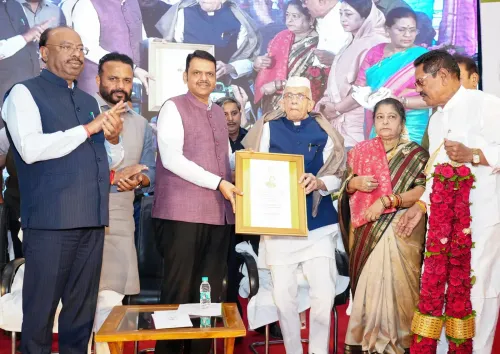
Former minister Ranjit Deshmukh was honoured on his 80th birthday for decades of work in water conservation, education, and rural development in Vidarbha.
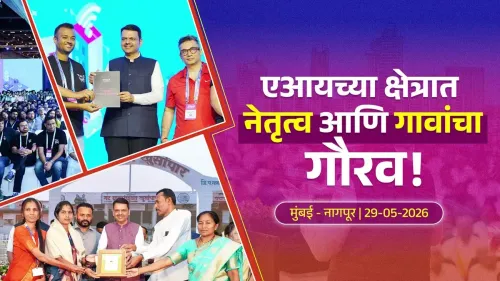
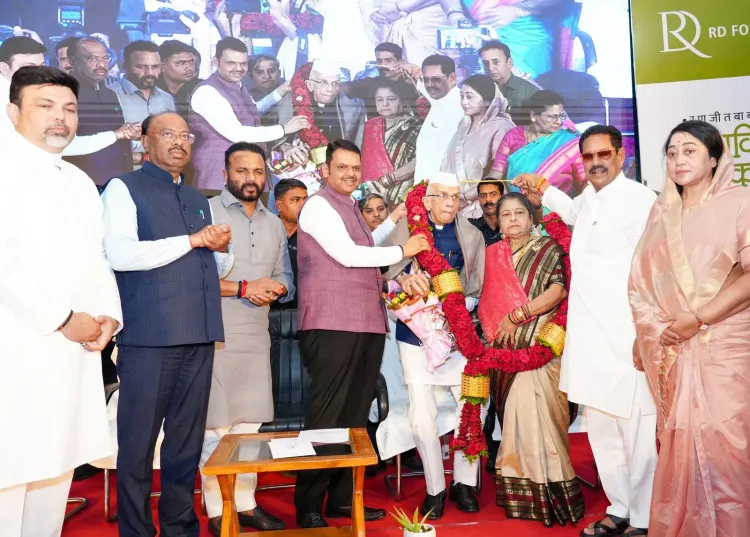
The Chief Minister's Office of Maharashtra announced on Friday, 29 May 2026 that Chief Minister Devendra Fadnavis presided over the 'Gram Vikas Puraskar-2026' ceremony in Nagpur, organised by the R.D. Foundation on the occasion of former minister Ranjitbabu Deshmukh's 80th birthday.
Context
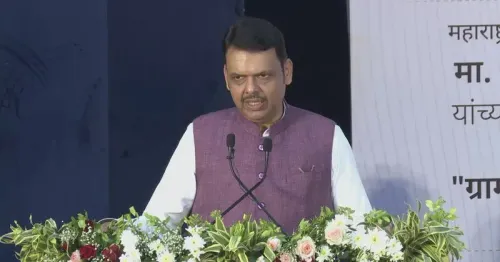
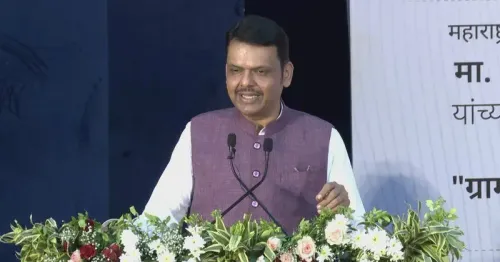
The awards ceremony honoured gram panchayats, schools, health centres and other institutions for outstanding contributions to village development. Speaking at the event, CM Fadnavis described it as a moment of pride, saying, 'गावांच्या सर्वांगीण विकासासाठी लोकसहभाग हा सर्वात महत्त्वाचा घटक आहे' ('People's participation is the most important element for the all-round development of villages'). He added that if communities commit to transforming their villages, neither funds nor facilities from central and state government schemes will fall short.
Ranjit Deshmukh, the founder of the R.D. Foundation, served as a rural development minister and built a distinct identity for himself across Maharashtra, Vidarbha, and Nagpur through work in water conservation, education, and cooperative sectors. CM Fadnavis praised him for taking bold decisions throughout his political career without calculating partisan gain or loss.
Policy Backdrop
A centrepiece of the CM's address was the Jalayukt Shivar Yojana, Maharashtra's flagship water conservation programme launched in 2015 to drought-proof villages through community-driven earthworks and conservation structures. Fadnavis credited the scheme's success entirely to public participation, noting that villagers contributed voluntary labour (shramdan) to make several villages water-secure and drought-free. He highlighted that many villages covered under the programme are now able to take three crop cycles per year.
The CM also referenced a central government scheme described as 'Viksit Bharat-Ji Ram Ji', under which special emphasis is being placed on water conservation using Jaltara structures to bring water security even to rain-fed, dryland areas. He underlined that every drop of rainfall must be absorbed into the ground to raise groundwater levels and prevent any region from remaining drought-prone.
Technology and Agriculture
Beyond water conservation, Fadnavis outlined the state government's push to deploy technology across agriculture and rural development. He announced that the Maharashtra government has launched the 'Maha-Vistar' app, which uses artificial intelligence to provide farmers with guidance and information related to farming. The CM said the state is actively working to deliver quality services by making effective use of technology across agriculture, rural development, and other sectors.
This digital thrust aligns with a broader pattern in Maharashtra's governance approach, where successive administrations have layered AI-based advisory tools on top of community-participation models to improve agricultural productivity and service delivery in rural areas.
Stakeholders and Impact
The immediate beneficiaries of the schemes discussed are gram panchayats, farming communities, and rural households across Maharashtra, particularly in drought-prone Vidarbha. The Gram Vikas Puraskar itself serves as an incentive mechanism, publicly recognising village-level institutions that have driven measurable development outcomes. Ministers Chandrashekar Bawankule and Jaykumar Gore, along with MLA Dr. Ashish Deshmukh and other dignitaries, were present at the ceremony.
What's Next
The state government's ongoing campaigns aim to inspire more villages to take up sanitation, water conservation, and agricultural improvement initiatives. The key indicators to watch will be the adoption rate of the Maha-Vistar app among farmers, measurable groundwater level improvements in villages under active conservation campaigns, and the pace at which dryland areas are brought under water-secure cultivation through new Jaltara structures.
Point of View
Reinforcing his administration's outreach to the politically sensitive eastern Maharashtra belt. By weaving together the legacy of Jalayukt Shivar, a new central scheme, and the AI-driven Maha-Vistar app in a single address, the CM is constructing a continuity narrative that positions his government as both the custodian of proven community models and the driver of next-generation agricultural modernisation. The emphasis on 'people's participation' as the primary variable in rural transformation also serves to distribute credit and accountability to communities, a framing that is useful ahead of any local-body electoral cycle. Whether the Maha-Vistar app achieves meaningful farmer adoption at scale will be the real test of this technology-plus-participation thesis.
NationPress
13 Oct 2026
Frequently Asked Questions
What is the Gram Vikas Puraskar 2026?
The Gram Vikas Puraskar-2026 is an award instituted by the R.D. Foundation to recognise outstanding contributions to village development by gram panchayats, schools, health centres, and other rural institutions in Maharashtra.
What is the Jalayukt Shivar Yojana?
Jalayukt Shivar Yojana is a Maharashtra government water conservation scheme launched in 2015 that aims to drought-proof villages by building community-driven water retention structures, with voluntary community labour as a core component.
What is the Maha-Vistar app?
Maha-Vistar is a mobile application launched by the Maharashtra government that uses artificial intelligence to provide farmers with agricultural information, guidance, and advisories.
Who is Ranjit Deshmukh and why was he honoured?
Ranjit Deshmukh is a former Maharashtra minister known for his work in rural development, water conservation, education, and the cooperative sector in the Vidarbha region. He was honoured by the R.D. Foundation on the occasion of his 80th birthday.
What did CM Fadnavis say about drought-proofing Maharashtra villages?
CM Fadnavis said that every drop of rainfall must be absorbed into the ground to raise groundwater levels, and that through schemes like Jalayukt Shivar and the central government's Jaltara structures initiative, no region in Maharashtra needs to remain drought-prone.