CM Fadnavis Backs Rural Growth via Gram Vikas Puraskar 2026
Synopsis
The Chief Minister's Office of Maharashtra invoked 'jan sahayog' — public cooperation — to frame CM Devendra Fadnavis's rural development agenda, spotlighting the Gram Vikas Puraskar 2026 awards cycle that recognises outstanding village-level progress across the state.
Key Takeaways
The Chief Minister's Office of Maharashtra posted on 30 May 2026 about rural development under CM Devendra Fadnavis .
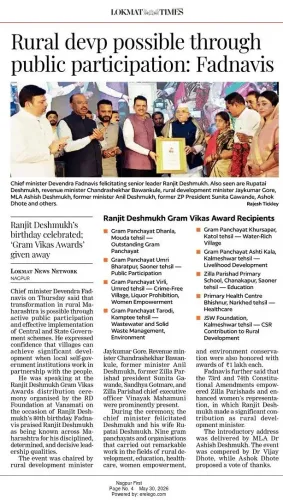
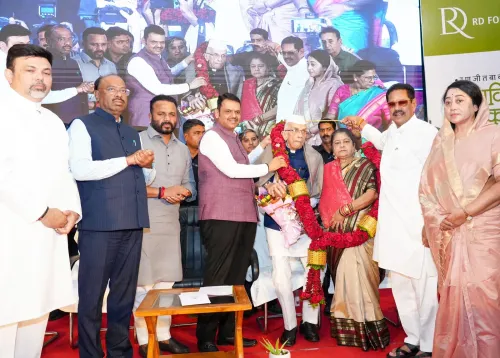
The post centred on Gram Vikas Puraskar 2026 , a state-level award recognising community-driven village development.
The phrase 'jan sahayog' (public cooperation) was used to describe the foundation of rural progress in Maharashtra.
Fadnavis 's earlier 2014-2019 tenure saw similar community-focused schemes, including the Gaon Tanta Mukta Abhiyan .
Maharashtra's 28,000-plus gram panchayats are the primary stakeholders in such recognition and development programmes.
The award cycle's selection process and any related 2026-27 budget announcements on rural schemes remain key items to watch.
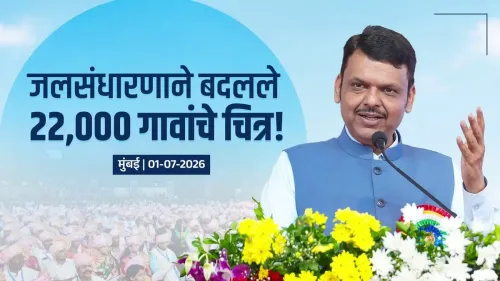
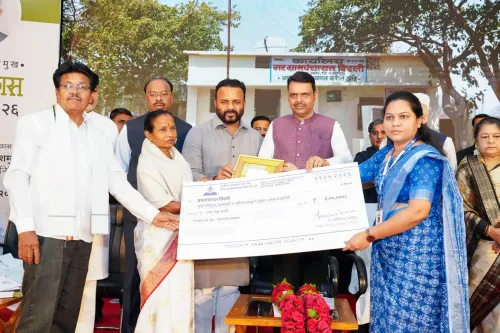
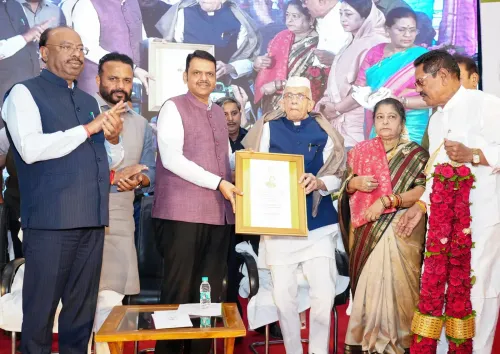
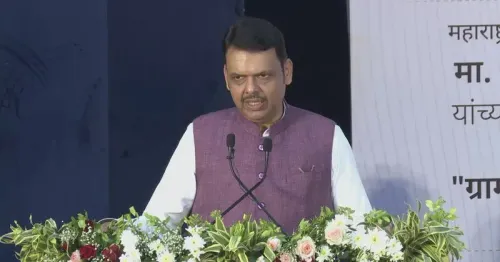
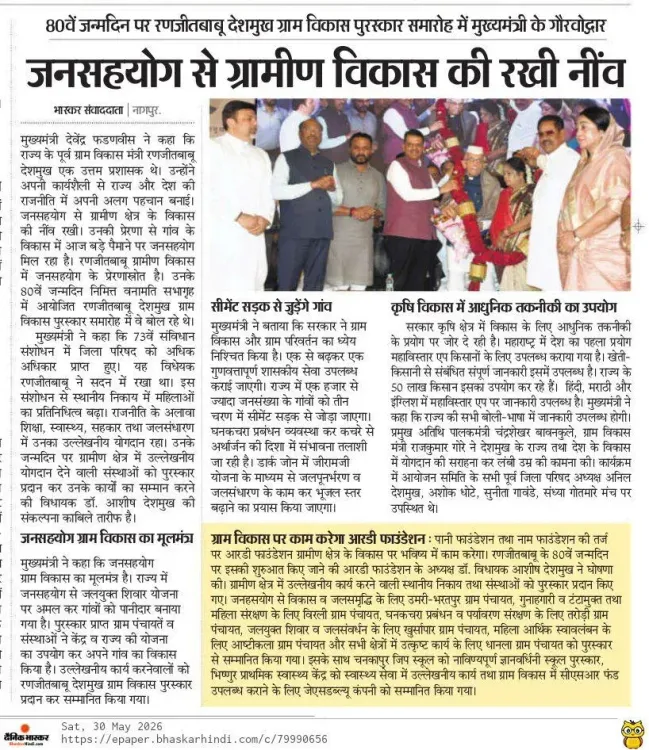
The Chief Minister's Office of Maharashtra on Saturday, 30 May 2026 highlighted Chief Minister Devendra Fadnavis's commitment to community-driven rural development, sharing a post under the hashtag #GramVikasPuraskar2026 that declared the foundation of village progress has been laid through public cooperation — jan sahayog se gramin vikas ki rakhi neev ('the foundation of rural development has been laid through public cooperation').
Context
The post, issued from the official CMO Maharashtra handle, uses the phrase jan sahayog — meaning public or community cooperation — to frame the state's rural development agenda. The reference to Gram Vikas Puraskar 2026 signals an active state-level awards cycle recognising outstanding achievements in village-level development. Such awards are typically conferred on gram panchayats, self-help groups, or community collectives that have demonstrated measurable progress in infrastructure, sanitation, water supply, or livelihood generation.
Chief Minister Devendra Fadnavis, who has led Maharashtra since returning to power, has consistently positioned participatory governance as a cornerstone of his administration's rural strategy. The invocation of community partnership mirrors the language of the 73rd Constitutional Amendment, which mandates decentralised governance through panchayati raj institutions.
Policy Backdrop
During Fadnavis's earlier tenure from 2014 to 2019, Maharashtra expanded schemes such as the Gaon Tanta Mukta Abhiyan, a programme promoting community-driven dispute resolution and cohesive village development. That initiative was positioned as a model for grassroots governance, encouraging residents to resolve local disputes and collectively plan infrastructure improvements without relying solely on state machinery.
The current Gram Vikas Puraskar 2026 continues this policy lineage by institutionalising recognition for villages that embody the jan sahayog principle. Across multiple Indian states, chief ministers have used such recognition programmes to spotlight grassroots implementation of development goals, reinforcing the narrative that sustainable rural progress requires active citizen participation alongside government funding.
Stakeholders and Impact
Maharashtra has a substantial rural population spread across its 28,000-plus gram panchayats. Awards programmes like the Gram Vikas Puraskar directly affect these local bodies, which compete for recognition and the associated visibility, potential grant support, and policy priority that state-level acknowledgement can bring. Winning panchayats often gain leverage in accessing subsequent budget allocations for roads, water, and housing schemes.
Self-help groups, village-level committees, and elected ward members are among the primary stakeholders whose work is evaluated under such frameworks. For rural communities, the award cycle also serves as an accountability mechanism, encouraging local leaders to demonstrate tangible outcomes before the next selection round.
What's Next
Attention will now turn to the selection process and award distribution for Gram Vikas Puraskar 2026, including the eligibility criteria, evaluation parameters, and the timeline for the formal ceremony. Any accompanying announcements in the Maharashtra state budget for 2026-27 related to rural infrastructure or panchayat financing would provide further context for how the government plans to sustain the momentum the award programme is meant to recognise. The Fadnavis administration's framing of rural development as a partnership between the state and its citizens will continue to be tested by ground-level outcomes in villages across the state.
Point of View
The messaging draws a direct line from constitutional panchayati raj principles to the current government's programme delivery, positioning the state as a facilitator rather than a top-down actor. This framing serves a dual purpose: it credits local communities while keeping the Chief Minister's name central to the narrative. The Gram Vikas Puraskar cycle also functions as a soft accountability tool, nudging gram panchayats across Maharashtra to demonstrate measurable outcomes — a pattern increasingly common among state governments seeking to show rural welfare momentum without large new fiscal commitments.
NationPress
14 Oct 2026
Frequently Asked Questions
What is Gram Vikas Puraskar 2026?
Gram Vikas Puraskar 2026 is a Maharashtra state-level awards programme that recognises gram panchayats and rural communities for outstanding achievements in village development through community participation.
What does 'jan sahayog' mean in the context of Maharashtra's rural policy?
'Jan sahayog' means public or community cooperation. The Fadnavis administration uses the term to describe a governance model where citizens actively partner with the state in driving rural infrastructure and welfare outcomes.
What is Devendra Fadnavis's record on rural development in Maharashtra?
During his earlier tenure from 2014 to 2019, Fadnavis expanded programmes such as the Gaon Tanta Mukta Abhiyan, which promoted community-driven village development and dispute resolution across Maharashtra.
How does Gram Vikas Puraskar benefit gram panchayats?
Recognised gram panchayats gain state-level visibility, potential access to additional grant support, and policy priority, which can help them secure future budget allocations for roads, water, housing, and other rural infrastructure.
What should we watch for after the Gram Vikas Puraskar 2026 announcement?
Key things to watch include the official selection criteria, evaluation parameters, the award distribution ceremony timeline, and any related rural scheme announcements in Maharashtra's state budget for 2026-27.