CM Fadnavis attends Sahakar Gaurav Award on Cooperatives Day
Synopsis
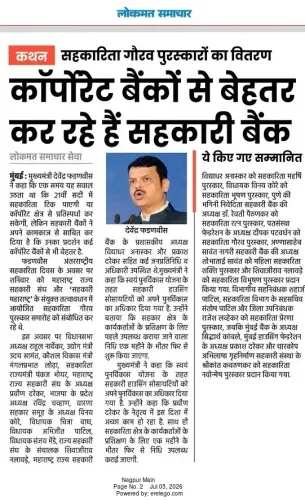
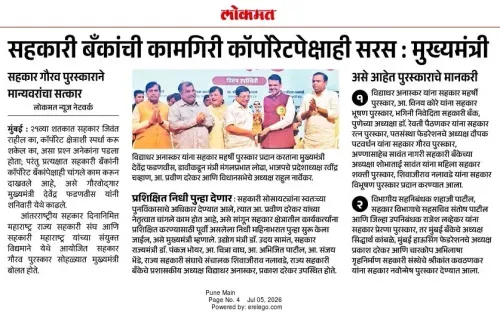
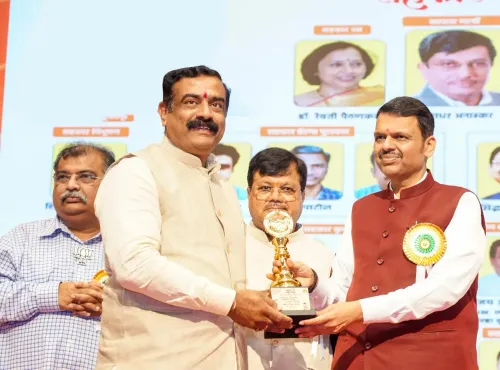
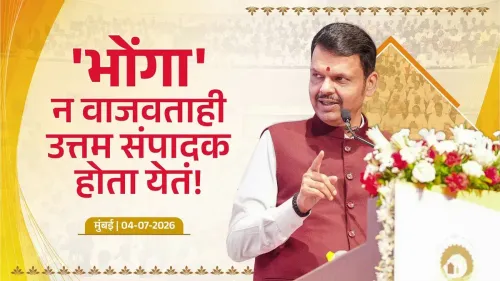
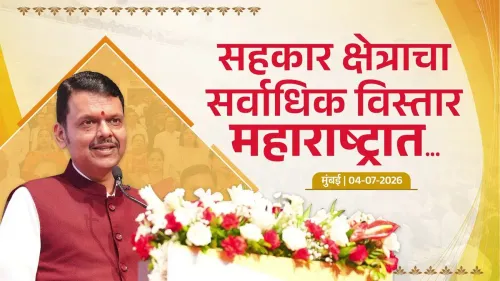
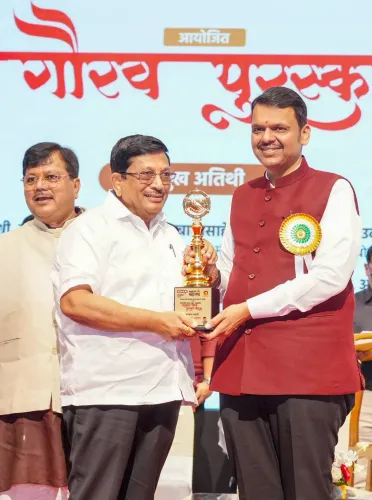
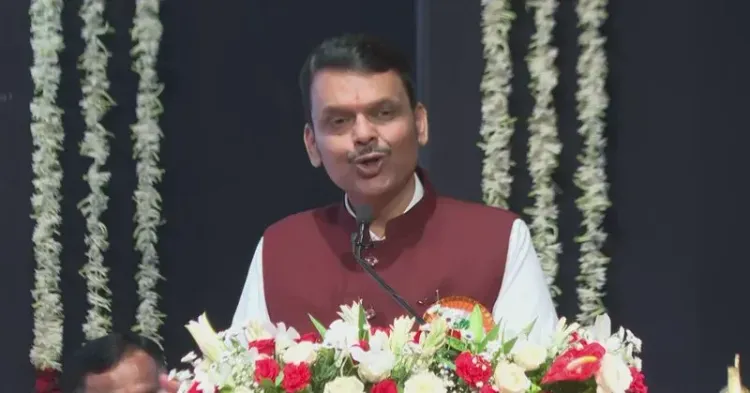
Chief Minister Devendra Fadnavis attended the Sahakar Gaurav Puraskar Sohala on International Cooperatives Day, hosted by the Maharashtra State Cooperative Federation and Sahakari Maharashtra, spotlighting the state's vast rural cooperative network.
Key Takeaways
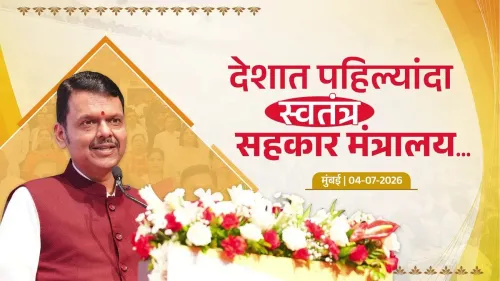
CM Devendra Fadnavis was the chief guest at the Sahakar Gaurav Puraskar Sohala on 4 July 2026 .
The event was jointly organised by the Maharashtra State Cooperative Federation and Sahakari Maharashtra .
The ceremony marked International Cooperatives Day , observed globally on the first Saturday of July each year.
Maharashtra operates one of India's largest cooperative networks, spanning sugar, dairy, credit, and agro-processing sectors.
The state's cooperative framework is governed by the Maharashtra Cooperative Societies Act, 1960 .
Possible follow-up policy moves include cooperative digitisation, credit linkage schemes, or amendments to state cooperative law.
The Chief Minister's Office of Maharashtra announced on Saturday, 4 July 2026 that Chief Minister Devendra Fadnavis was the chief guest at the 'Sahakar Gaurav Puraskar Sohala' — a cooperative honours ceremony — organised jointly by the Maharashtra State Cooperative Federation and Sahakari Maharashtra on the occasion of International Cooperatives Day.
Context
International Cooperatives Day is observed every year on the first Saturday of July, a tradition established by the International Cooperative Alliance (ICA) to recognise the social and economic contributions of the cooperative movement worldwide. This year it falls on 5 July 2026, with Maharashtra's state-level ceremony held a day prior. The event, the 'Sahakar Gaurav Puraskar Sohala' (Cooperative Pride Awards Ceremony), brought together cooperative institutions from across the state to celebrate outstanding performance in the sector.
Chief Minister Devendra Fadnavis has held the office of Maharashtra's Chief Minister across multiple terms and has consistently emphasised rural economic reform and institutional strengthening. His presence at the ceremony signals the state government's continued commitment to the cooperative sector as a pillar of Maharashtra's rural economy.
Policy Backdrop
Maharashtra has one of India's most extensive cooperative networks, active in sectors including sugar processing, dairy, agricultural credit, and agro-processing. The legal backbone of this network is the Maharashtra Cooperative Societies Act, 1960, which governs the registration, regulation, and functioning of cooperative bodies across the state. The National Cooperative Policy, 2002, further reinforced the principle of cooperatives as autonomous, member-driven institutions.
At the national level, the creation of a dedicated Ministry of Cooperation in 2021 underscored the central government's intent to revitalise and coordinate the cooperative movement across India. Maharashtra's award ceremonies and public engagements in this space reflect a broader pattern of using institutional recognition to signal policy continuity and encourage performance within the sector.
Stakeholders and Impact
The primary beneficiaries of a robust cooperative ecosystem in Maharashtra are rural farmers and the millions of members enrolled in cooperative credit societies, dairy unions, and sugar cooperatives. These institutions collectively serve as a critical channel for rural credit, produce aggregation, and income support in the state's agrarian districts.
The Maharashtra State Cooperative Federation, as the apex body coordinating cooperative activity statewide, plays a central role in organising such recognition events. Award ceremonies of this nature serve both to honour high-performing institutions and to create public accountability benchmarks for the broader cooperative network.
What's Next
Observers and cooperative sector stakeholders will watch for possible follow-up announcements from the state government on cooperative digitisation initiatives, expanded credit linkage schemes, or proposed amendments to the state cooperative law in the upcoming assembly session. CM Fadnavis's participation at a high-visibility event on International Cooperatives Day may also precede broader policy communication from Mantralaya, Maharashtra's seat of government in Mumbai.
With Maharashtra's cooperative sector forming the backbone of its rural economy, the government's visible engagement on this occasion reinforces that cooperative reform and recognition remain active priorities on the state's governance agenda.
Point of View
Dairy, and credit institutions — is not merely economic infrastructure but a politically significant constituency, particularly in western Maharashtra's sugar belt. The event follows the pattern set by the central government's 2021 creation of a Ministry of Cooperation, suggesting state-level governments are keen to mirror that visibility. Whether this translates into substantive legislative or financial action in the next assembly session will determine whether the occasion is ceremonial or a genuine policy inflection point.
NationPress
2 Oct 2026
Frequently Asked Questions
What is the Sahakar Gaurav Puraskar Sohala in Maharashtra?
The Sahakar Gaurav Puraskar Sohala is a cooperative honours ceremony organised by the Maharashtra State Cooperative Federation and Sahakari Maharashtra to recognise outstanding cooperative institutions across the state, held annually around International Cooperatives Day.
When is International Cooperatives Day celebrated?
International Cooperatives Day is observed on the first Saturday of July every year, a tradition established by the International Cooperative Alliance to highlight the global cooperative movement's social and economic contributions.
Why did CM Devendra Fadnavis attend the cooperative awards event?
CM Devendra Fadnavis attended as chief guest at the invitation of the Maharashtra State Cooperative Federation and Sahakari Maharashtra, underscoring the state government's commitment to the cooperative sector as a core part of Maharashtra's rural economy.
What is the Maharashtra State Cooperative Federation?
The Maharashtra State Cooperative Federation is the apex body that represents and coordinates cooperative institutions across Maharashtra, covering sectors such as sugar, dairy, credit, and agro-processing.
What policy changes could follow Maharashtra's International Cooperatives Day event?
Stakeholders are watching for potential state government announcements on cooperative digitisation, expanded rural credit linkage schemes, or amendments to the Maharashtra Cooperative Societies Act, 1960, in the upcoming assembly session.