CM Fadnavis: Rural development needs public participation
Synopsis
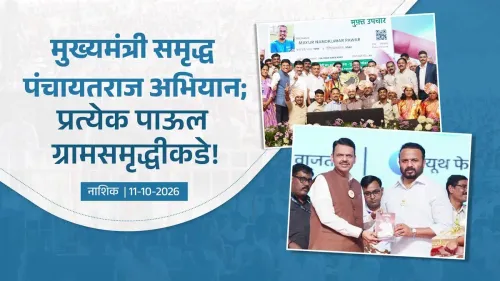
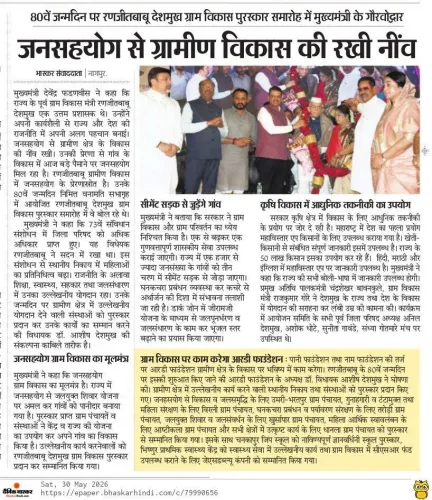
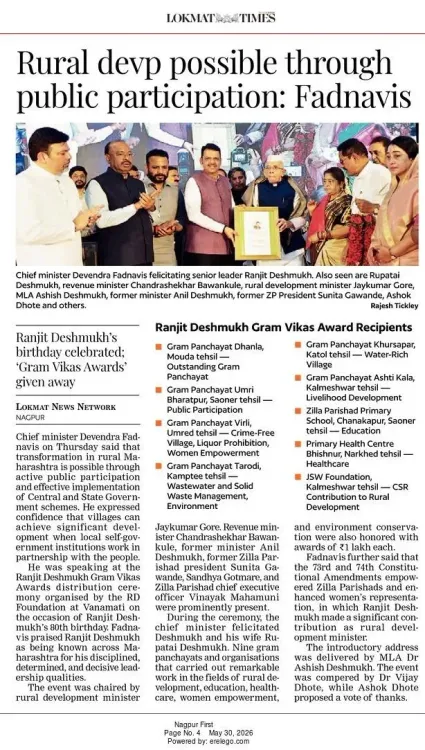
Chief Minister Devendra Fadnavis declared that rural development is achievable only through public participation, speaking at the Gram Vikas Puraskar 2026 event. The state-level awards recognise outstanding village-level development, continuing Maharashtra's long-standing emphasis on decentralised, community-led governance under the Panchayati Raj framework.
Key Takeaways
CM Devendra Fadnavis stated that 'rural development is possible through public participation' at the Gram Vikas Puraskar 2026 event on 30 May 2026 .
The Gram Vikas Puraskar is a state-level award recognising outstanding achievement by village panchayats in development and community-led initiatives.
Maharashtra has operated a decentralised planning framework under the 73rd Constitutional Amendment of 1993 , institutionalising Panchayati Raj bodies.
Similar recognition schemes were run during Fadnavis' earlier term from 2014 to 2019 , promoting village self-governance.
The event signals that community participation remains a core metric in Maharashtra's rural development evaluation framework.
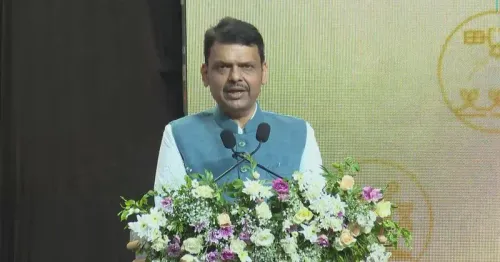
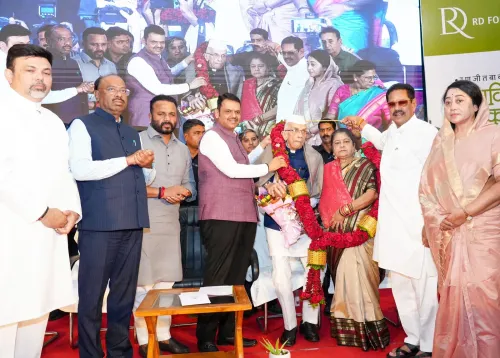
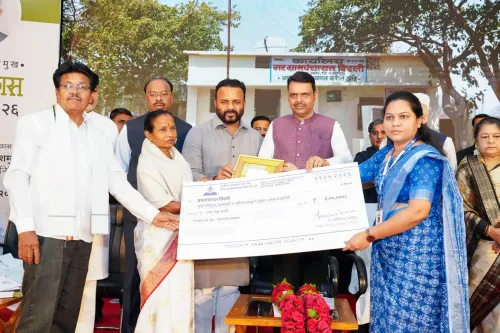
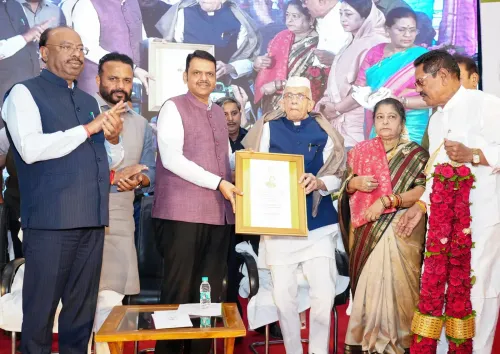
The Chief Minister's Office of Maharashtra on Saturday, 30 May 2026, shared remarks by Chief Minister Devendra Fadnavis underscoring that rural development is achievable only through active public participation, in the context of the Gram Vikas Puraskar 2026 awards.
Context
Speaking at what appears to be the Gram Vikas Puraskar 2026 ceremony, CM Fadnavis stated that 'rural development is possible through public participation.' The remark was amplified by the official CMO Maharashtra handle, signalling the government's intent to position community involvement as the cornerstone of its village development agenda.
The Gram Vikas Puraskar is a state-level recognition awarded to villages and panchayats that demonstrate outstanding achievements in development, infrastructure, sanitation, and community-led initiatives. The awards serve as both an acknowledgement of past work and an incentive for broader replication across Maharashtra's districts.
Policy Backdrop
Maharashtra has long operated within the framework of the 73rd Constitutional Amendment of 1993, which institutionalised decentralised planning through Panchayati Raj bodies. The state has consistently built upon this foundation with successive schemes encouraging gram sabhas and local bodies to take ownership of development projects.
During Fadnavis' earlier term from 2014 to 2019, similar recognition initiatives were used to promote village self-governance and highlight models that could be scaled. The current iteration of the Gram Vikas Puraskar continues that lineage, embedding public participation as a measurable criterion for state-level acknowledgement.
Stakeholders and Impact
Village panchayats and rural communities across Maharashtra are the primary stakeholders. For elected gram panchayat representatives, the award functions as formal state validation of ground-level governance work, which can carry weight in local political credibility and resource allocation discussions.
The broader signal from CM Fadnavis is directed at district and taluka administration as well — framing top-down delivery as insufficient and placing the onus on mobilising communities. This aligns with national Panchayati Raj frameworks that evaluate village-level participation as a development metric in its own right.
What's Next
The emphasis on public participation at the Gram Vikas Puraskar 2026 event is likely to inform the next cycle of evaluation criteria for village-level awards and may feed into updated state rural development guidelines. Observers will watch whether the Maharashtra government follows the ceremony with policy directives that institutionalise community participation benchmarks more formally across its rural schemes.
Point of View
The Chief Minister reinforces a political narrative that positions Maharashtra's rural policy as participatory rather than bureaucratic. This also serves a practical function: shifting accountability to local bodies makes district-level failures harder to pin on the state government. The consistency of this messaging across years suggests it is now a structural feature of Maharashtra's rural governance branding, not a one-off remark.
NationPress
13 Oct 2026
Frequently Asked Questions
What is the Gram Vikas Puraskar in Maharashtra?
The Gram Vikas Puraskar is a Maharashtra state government award that recognises villages and gram panchayats for outstanding achievements in rural development, infrastructure, sanitation, and community participation. It is used to highlight successful models and encourage replication across the state's districts.
What did CM Devendra Fadnavis say about rural development?
CM Devendra Fadnavis said that rural development is possible through public participation, making the statement in the context of the Gram Vikas Puraskar 2026 ceremony on 30 May 2026.
What is the 73rd Constitutional Amendment and how does it relate to Maharashtra?
The 73rd Constitutional Amendment of 1993 institutionalised Panchayati Raj in India, mandating decentralised planning through elected village bodies. Maharashtra has built its rural development framework around this amendment, using gram sabhas and local panchayats as the primary units of delivery.
How does the Gram Vikas Puraskar 2026 connect to Fadnavis' earlier governance record?
During Fadnavis' first term from 2014 to 2019, similar village recognition initiatives were launched to promote self-governance. The 2026 edition continues that policy lineage, with community participation remaining a central evaluation criterion.
Which stakeholders benefit from the Gram Vikas Puraskar awards?
Village panchayats and rural communities are the primary beneficiaries, gaining formal state recognition for development work. District and taluka administrations are also indirectly targeted, as the awards reinforce a message that community mobilisation — not just top-down administration — drives rural progress.