CM Fadnavis Performs Bhoomipujan of BJP Jalna Office, Flags Farm Relief Push
Synopsis
Maharashtra CM Devendra Fadnavis visited Jalna on 14 August 2026 to inaugurate the BJP district office, received a farmer felicitation for the state loan waiver scheme covering 56 lakh beneficiaries, and outlined inter-basin water diversion plans and the 'Triple S' industrial vision for Jalna.
Key Takeaways
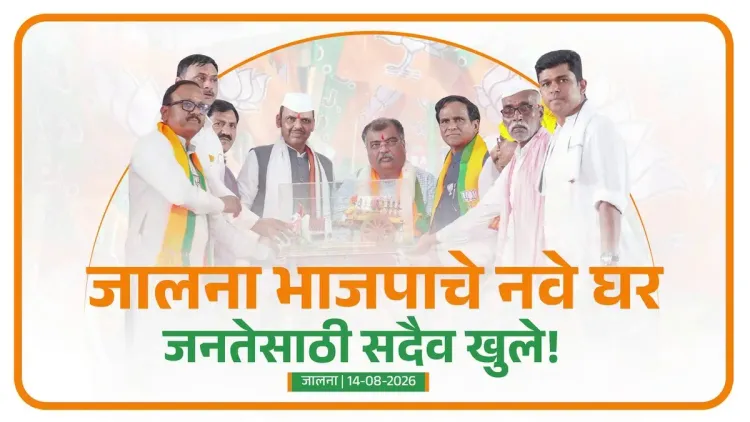
Bhoomipujan of the new BJP Jalna District Office was performed by CM Devendra Fadnavis on 14 August 2026 .
The Punyashlok Ahilyadevi Holkar Shetkari Karjmukti Yojana 2026 is stated to have benefited 56 lakh farmers , with electricity bill waivers included.
The NaMo Shetkari Mahasamman Nidhi Yojana provides an additional ₹6,000 annually to eligible farmers, stacked on top of the central PM-KISAN scheme.
Fadnavis announced plans to divert floodwater from Kolhapur-Sangli to Marathwada via Ujjani Dam and to redirect west-flowing Konkan rivers toward the Godavari basin .
Jalna is being positioned as a ' Triple S ' hub — Steel, Silk, and Seed — alongside Chhatrapati Sambhajinagar as an interior industrial anchor for Maharashtra.
A district office foundation stone, a felicitation from farmers, and a blueprint for remaking one of Maharashtra's most water-stressed regions — Maharashtra Chief Minister Devendra Fadnavis packed all three into a single visit to Jalna on 14 August 2026, using the occasion to articulate a sweeping vision for Marathwada's agrarian and industrial future.
A New Office, a Farmer Felicitation, and What They Signal
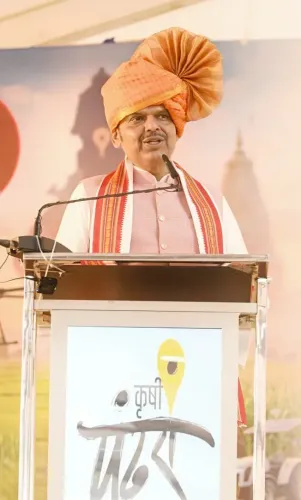
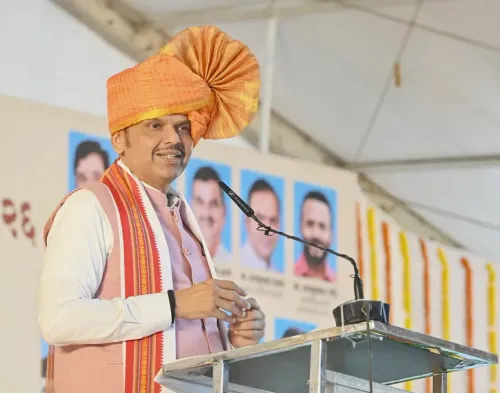
Fadnavis performed the bhoomipujan (ground-breaking ceremony) of the new BJP Jalna District Office, dedicating the building, in his words, 'to the people of the district and to serve those in need.' The ceremony doubled as a felicitation by local farmers — a pointed political optic — honouring the state government's twin relief measures: the Punyashlok Ahilyadevi Holkar Shetkari Karjmukti Yojana 2026 loan waiver and the waiver of electricity bills for eligible cultivators.
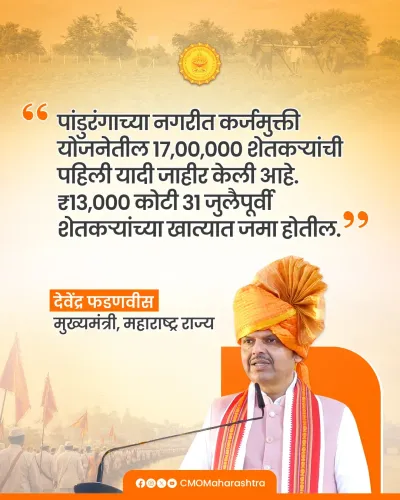
The loan waiver scheme, named after the 18th-century Maratha queen Ahilyadevi Holkar, is reported to have reached 56 lakh farmers across Maharashtra. The figure, cited by the Chief Minister, underscores the scale at which the state is attempting to address agrarian distress — though full verification of implementation status is ongoing.
The NaMo Shetkari Scheme and the PM-KISAN Stack
Fadnavis also highlighted the NaMo Shetkari Mahasamman Nidhi Yojana, under which the Maharashtra government provides eligible farmers an additional ₹6,000 annually — mirroring the structure of the central government's PM-KISAN scheme launched in 2019. Together, the two schemes stack direct cash transfers, effectively doubling the income-support floor for qualifying farmers in the state.
Maharashtra governments have historically combined such direct-transfer programmes with longer-horizon infrastructure commitments to address agrarian distress in Marathwada — a drought-prone belt that has repeatedly tested successive administrations.
Marathwada's Water Gambit: Ujjani, Konkan, and the Godavari Basin
The most consequential announcement from the Jalna visit concerns water. Fadnavis outlined two inter-basin diversion proposals: channelling surplus floodwater from the Kolhapur-Sangli region to Marathwada via Ujjani Dam in Solapur district, and redirecting west-flowing rivers from Konkan toward Marathwada and the Godavari basin.
If executed, these projects would represent a structural answer to Marathwada's chronic water deficit — one that seasonal relief and loan waivers alone cannot fix. Statutory clearances and funding allocations for both diversions remain the critical milestones to watch.
Jalna as the 'Triple S' Industrial Hub
Beyond agriculture, Fadnavis reaffirmed the state's ambition to transform Jalna and Chhatrapati Sambhajinagar into industrial anchors for Maharashtra's interior. He branded Jalna the 'Triple S' district — Steel, Silk, and Seed — positioning it as a complement to the established Mumbai-Pune industrial corridor rather than an afterthought to it.
'We had envisioned Jalna and Chhatrapati Sambhajinagar as industrial magnets of Maharashtra, and today, that vision is becoming a reality,' Fadnavis said. The event was attended by BJP State President MLA Ravindra Chavan, Minister Pankajatai Munde, Minister Sanjay Sawkare, MP Ramrao Wadkute, and MP Dr. Ajeet Gopchade, alongside members of the state legislature.
For a region that has long felt bypassed by Maharashtra's economic boom, the 'Triple S' framing is both a development promise and a political one — and Fadnavis knows the difference between the two depends entirely on what gets built.
Point of View
Long-deferred water infrastructure, and industrial decentralisation. The 'Triple S' branding for Jalna is a deliberate attempt to give Marathwada an identity beyond agrarian distress — politically useful ahead of any electoral cycle, but only credible if the Ujjani and Konkan diversion projects clear their regulatory and funding hurdles. The stacking of state and central farm-support schemes signals a competitive federalism dynamic, where Maharashtra seeks credit for amplifying New Delhi's PM-KISAN framework rather than replacing it. Whether 56 lakh loan-waiver beneficiaries translates into durable rural goodwill will depend on how smoothly disbursements reach the last-mile farmer.
NationPress
14 Aug 2026
Frequently Asked Questions
What is the Punyashlok Ahilyadevi Holkar Shetkari Karjmukti Yojana?
It is a Maharashtra state farmer loan waiver scheme named after the 18th-century Maratha queen Ahilyadevi Holkar. CM Fadnavis stated that 56 lakh farmers have benefited under the scheme, which also includes a waiver of electricity bills for eligible cultivators.
What is the NaMo Shetkari Mahasamman Nidhi Yojana?
It is a Maharashtra state scheme that provides eligible farmers ₹6,000 annually, mirroring the structure of the central PM-KISAN programme. Together, the two schemes stack income support for qualifying farmers in the state.
What is Jalna's 'Triple S' vision?
CM Fadnavis has branded Jalna the 'Triple S' district, standing for Steel, Silk, and Seed, positioning it alongside Chhatrapati Sambhajinagar as an interior industrial hub to diversify Maharashtra's economic growth beyond the Mumbai-Pune corridor.
What are the Marathwada water diversion plans announced by Fadnavis?
Fadnavis outlined two proposals: diverting surplus floodwater from the Kolhapur-Sangli region to Marathwada via Ujjani Dam in Solapur district, and redirecting west-flowing rivers from Konkan toward Marathwada and the Godavari basin to address the region's chronic drought problem.
Who attended the Jalna BJP office bhoomipujan event?
The event was attended by BJP State President MLA Ravindra Chavan, Minister Pankajatai Munde, Minister Sanjay Sawkare, MP Ramrao Wadkute, MP Dr. Ajeet Gopchade, and members of the state legislature.