CM Fadnavis thanks PM Modi for youth-focused decisions
Synopsis
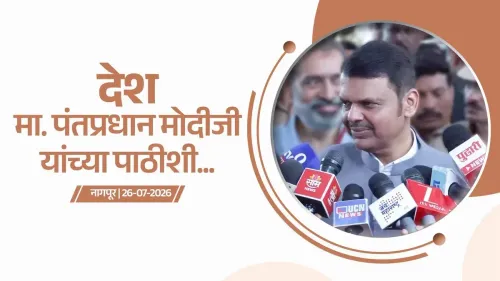
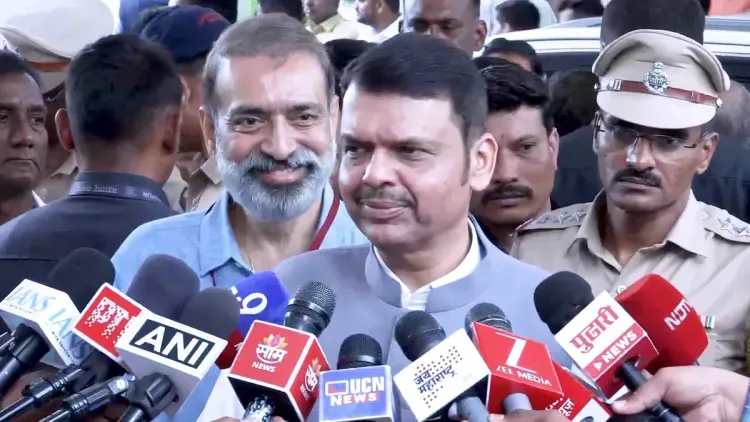
Maharashtra Chief Minister Devendra Fadnavis publicly thanked Prime Minister Narendra Modi on 26 July 2026 for 'sensitive decisions' taken in the national interest and for securing the future of India's youth, posting bilingually in Marathi and Hindi from Nagpur.
Key Takeaways
Maharashtra Chief Minister Devendra Fadnavis posted a public thank-you to Prime Minister Narendra Modi on 26 July 2026 from Nagpur .
The post, written in both Marathi and Hindi , praised what Fadnavis called 'sensitive decisions' taken in the national interest and for the future of youth.
The specific central decisions referenced were not named in the post.
The statement fits a broader pattern of BJP chief ministers issuing coordinated public endorsements of prime ministerial policy moves.
Nagpur , Maharashtra's winter capital and a BJP stronghold, was cited as the location of the post.
Follow-up state-level action on youth employment and education in Maharashtra will be a key indicator of policy follow-through.
Maharashtra Chief Minister Devendra Fadnavis on Sunday, 26 July 2026, publicly expressed gratitude to Prime Minister Narendra Modi for what he described as 'sensitive decisions' taken in the national interest and with a view to securing the future of the country's youth, posting his remarks from Nagpur.
Context
In a bilingual post in Marathi and Hindi, Fadnavis wrote — 'देशहित आणि तरुणाईच्या भविष्याचा विचार करून... संवेदनशील निर्णयांबद्दल... मनःपूर्वक आभार' — translated: 'Keeping in mind the national interest and the future of the youth, I sincerely thank the honourable Prime Minister Narendra Modi for the sensitive decisions he has taken.' The post was tagged to Nagpur and dated 26-7-2026, and was addressed directly to @narendramodi.
The Chief Minister did not name the specific decisions he was referencing. The post used the hashtags #Maharashtra and #Nagpur, anchoring the statement to the state's political and administrative context.
Policy Backdrop
The framing of 'national interest' and 'youth futures' in the post aligns with a cluster of central government initiatives that have shaped governance discourse in recent years. The National Education Policy 2020 introduced sweeping structural changes to school and higher education, with an emphasis on skills and employability for young Indians. The Skill India Mission, launched in 2015, has similarly sought to provide vocational training and improve job readiness across states, including Maharashtra.
While the specific central decisions referenced by Fadnavis were not identified in the post, the language of 'sensitive decisions' in the context of youth signals engagement with policy areas such as education, employment, or defence recruitment — all of which have seen active central attention in recent legislative and budgetary cycles.
Stakeholders and Impact
The statement speaks directly to Maharashtra's large youth demographic, which includes millions of students and young job-seekers who are primary beneficiaries of central schemes on education and skill development. Nagpur, the state's winter capital and a stronghold of the BJP, serves as a politically resonant location for such an endorsement.
Ruling-party chief ministers issuing public affirmations of prime ministerial decisions is a well-established pattern of coordinated messaging within the BJP-led central-state governance structure, particularly on policies framed around national interest or youth welfare. Such statements reinforce alignment between New Delhi and state capitals on sensitive policy matters.
What's Next
Attention will now turn to whether Maharashtra announces complementary state-level schemes or budgetary allocations that dovetail with the central decisions Fadnavis has endorsed. Legislative or administrative follow-through in the state assembly — particularly on youth employment and education — will be the clearest indicator of how the central policy intent translates to ground-level implementation in Maharashtra.
Point of View
Where state leaders amplify prime ministerial decisions to consolidate political credit on emotive issues like youth welfare. The deliberate vagueness about the specific decisions leaves room for the statement to resonate across multiple policy domains, from education to employment to defence recruitment. Coming from Nagpur, the ideological heartland of the RSS and a city central to BJP's Maharashtra identity, the post carries symbolic weight beyond a routine thank-you. It signals that whatever the central decision was, Maharashtra's leadership is publicly invested in its success and is positioning itself as a delivery partner.
NationPress
26 Jul 2026
Frequently Asked Questions
Why did Devendra Fadnavis thank PM Modi on 26 July 2026?
Fadnavis thanked PM Modi for what he described as 'sensitive decisions' taken in the national interest and with a focus on the future of India's youth. He did not specify which decisions he was referring to in his post.
What did Fadnavis say about PM Modi's decisions for youth?
Fadnavis said, in both Marathi and Hindi, that PM Modi had taken sensitive decisions keeping in mind the national interest and the future of young people, and he expressed his heartfelt gratitude for the same.
Where was Devendra Fadnavis when he posted this message?
Fadnavis posted the message from Nagpur, Maharashtra's winter capital and a major BJP stronghold, on 26 July 2026.
What are PM Modi's key policies for youth in India?
Key central government initiatives for youth include the National Education Policy 2020, which reformed school and higher education with a skills focus, and the Skill India Mission launched in 2015 to provide vocational training and improve employment readiness.
Is it common for BJP chief ministers to publicly endorse PM Modi's decisions?
Yes, ruling-party chief ministers routinely issue public endorsements of prime ministerial decisions, particularly on issues framed around national interest or youth welfare. This reflects coordinated messaging within the BJP-led central-state governance structure.