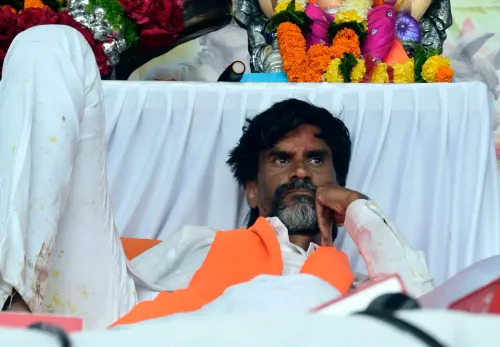
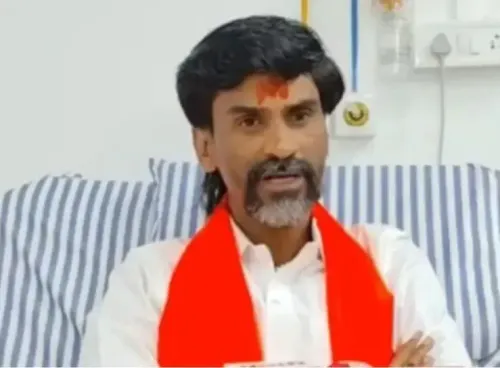
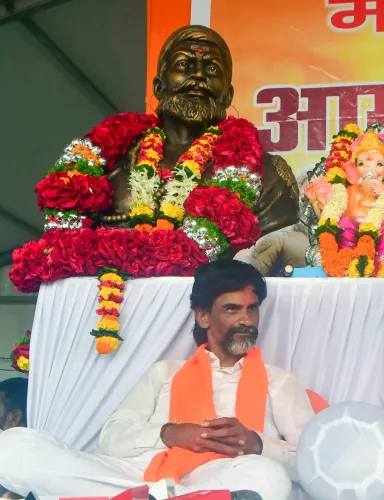
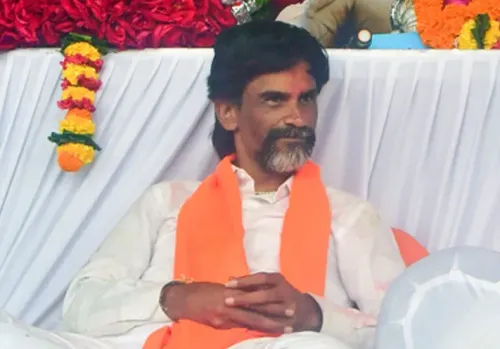
Fadnavis urges Jarange Patil to drop Ganeshotsav protest, cites court limits

Synopsis
With Manoj Jarange Patil threatening an indefinite fast-unto-death at Azad Maidan from 19 September, CM Devendra Fadnavis is urging restraint — invoking Ganeshotsav inconvenience and constitutional limits. The government claims 58 lakh Kunbi records processed; Jarange Patil calls it delay and is marching anyway.
Key Takeaways
CM Devendra Fadnavis on 14 September 2026 urged Maratha activist Manoj Jarange Patil to drop his planned hunger strike during Ganeshotsav .
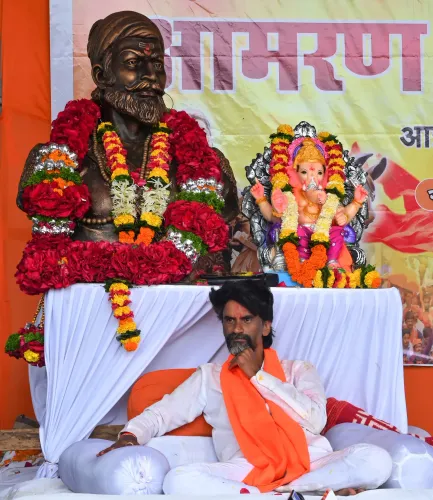
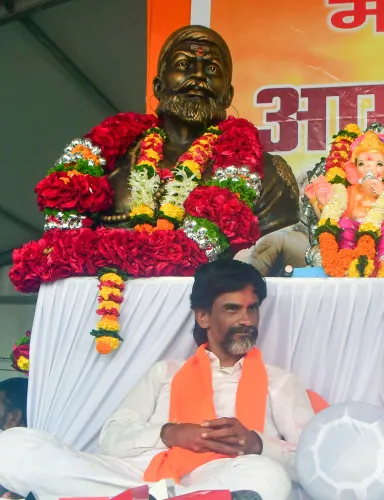
Jarange Patil has announced a march from 15 September and an indefinite fast-unto-death at Azad Maidan, Mumbai from 19 September if demands are unmet.
The state government cited processing of over 58 lakh Kunbi records and ongoing gazette notifications as proof of progress.
Fadnavis stated that demands outside the Constitution or court-sanctioned frameworks 'cannot be granted directly.' Jarange Patil accused minister Radhakrishna Vikhe Patil and the sub-committee of delay tactics over Satara and Hyderabad gazette implementations.
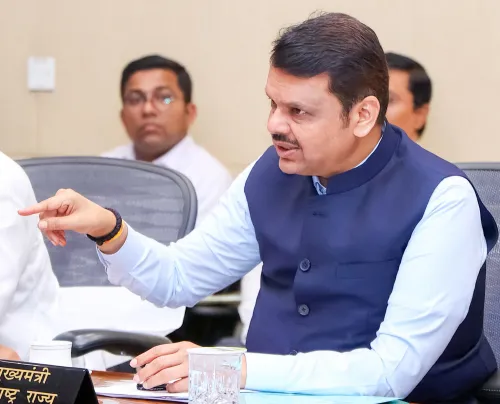
Maharashtra Chief Minister Devendra Fadnavis on Monday, 14 September 2026 appealed to Maratha quota activist Manoj Jarange Patil to reconsider staging a hunger strike in Mumbai during the ongoing Ganeshotsav festival, arguing the timing would inconvenience lakhs of devotees. Fadnavis maintained that the state government has fulfilled nearly all actionable demands, with outstanding ones constrained by judicial and constitutional processes.
What the Chief Minister Said
Responding to Jarange Patil's announced plan to begin his march on 15 September and launch an indefinite hunger strike at Azad Maidan, Mumbai from 19 September, Fadnavis said the government had reached the limits of what it could do outside court-sanctioned or constitutionally permissible frameworks.
'Almost all demands have been fulfilled. Certain issues are currently before the courts or in various administrative stages. We have communicated that demands outside the framework set by the Constitution or the courts cannot be granted directly,' Fadnavis said.
He added: 'Staging a protest in Mumbai during the ongoing Ganeshotsav festival will cause inconvenience to devotees, which is not ideal for anyone. This decision should be reconsidered.'
Cabinet Panel's Defence of Progress
Water Resources Minister and Cabinet sub-committee Chairman on Maratha quota Radhakrishna Vikhe Patil stated that the state government had done 'everything possible,' pointing to the processing of over 58 lakh Kunbi records and the issuance of certificates as concrete deliverables. He said implementation mechanisms — including gazette notifications, Kunbi certificate distribution across districts, and allocations for the Annasaheb Patil Economic Development Corporation — are already underway. Vikhe Patil also echoed the Chief Minister's appeal, urging Jarange Patil to avoid disrupting the festive period in Mumbai.
Jarange Patil's Counter and Ultimatum
Rejecting the government's assurances outright, Jarange Patil set a firm deadline of 19 September for an indefinite fast-unto-death at Azad Maidan if all core demands are not fully met. He heavily criticised Vikhe Patil, accusing the minister and the Cabinet sub-committee of delay tactics with respect to the implementation of the Satara and Hyderabad gazettes, and of misleading the Maratha community. Jarange Patil made clear he would move the protest directly to Mumbai if full implementation was not achieved within the stipulated timeframe.
Background and Stakes
The Maratha reservation agitation has intermittently roiled Maharashtra politics for over a decade. The community's demand for Other Backward Class (OBC) status — which would open government job and education quotas — has repeatedly run into Supreme Court rulings on reservation caps. The Fadnavis government's strategy of processing Kunbi lineage records as a route to reservations is designed to work within those judicial constraints, but critics within the movement argue this approach is too slow and excludes large sections of the community. Notably, the renewed agitation comes as Ganeshotsav draws millions of visitors to Mumbai, amplifying both the political pressure and the logistical stakes of a potential Azad Maidan protest.
What Happens Next
With 19 September set as Jarange Patil's deadline, the state government faces a narrow window to either demonstrate credible progress on gazette implementation or broker fresh talks. A prolonged fast by a prominent community leader during one of Maharashtra's most high-profile festive periods could intensify political pressure on the ruling alliance ahead of the next electoral cycle.
Point of View
However confrontational, is deliberate; a fast during Ganeshotsav maximises visibility at minimum organisational cost. The real accountability gap lies in gazette implementation — specifically the Satara and Hyderabad records — where neither side has produced a clear timeline. Until that lacuna is closed with verifiable milestones, government assurances will continue to be dismissed as procedural cover.
NationPress
14 Sept 2026
Frequently Asked Questions
Why is Manoj Jarange Patil planning a hunger strike in Mumbai?
Jarange Patil has announced an indefinite fast-unto-death at Azad Maidan, Mumbai from 19 September 2026 to press the Maharashtra government for full implementation of Maratha reservation demands, including gazette notifications for Kunbi certificates covering the Satara and Hyderabad records. He rejected the government's assurances as inadequate and accused the Cabinet sub-committee of delay tactics.
What has the Maharashtra government offered on Maratha reservation?
The government says it has processed over 58 lakh Kunbi lineage records and begun issuing certificates, while gazette notifications and allocations for the Annasaheb Patil Economic Development Corporation are underway. CM Fadnavis stated that demands beyond what the Constitution or courts permit cannot be directly granted.
Why is CM Fadnavis asking Jarange Patil to reconsider the protest timing?
Fadnavis argued that staging a hunger strike at Azad Maidan during the ongoing Ganeshotsav festival would cause inconvenience to lakhs of devotees visiting Mumbai, which he called 'not ideal for anyone.' He appealed for dialogue instead.
What is the Maratha reservation agitation about?
The Maratha community has long sought inclusion in the Other Backward Class (OBC) category to access government job and education reservation quotas. The agitation has persisted for over a decade, repeatedly constrained by Supreme Court rulings on reservation caps. The Fadnavis government is pursuing Kunbi lineage certification as a constitutionally viable route.
What happens if demands are not met by 19 September?
Jarange Patil has stated he will commence an indefinite fast-unto-death at Azad Maidan, Mumbai on 19 September 2026 if full implementation of core demands is not achieved. He also confirmed the march from his base begins on 15 September regardless of government response.