Brent crude surges to $110 as Saudi pipeline shutdown deepens supply fears
Synopsis
Brent crude has broken $110 a barrel after Saudi Arabia's 1,200-km East-West pipeline — capable of moving 7 million barrels a day — was knocked offline by drone strikes from Iraqi territory. With Saudi output already at a 36-year low, the Strait of Hormuz clogged by conflict, and Iran-Gulf diplomacy stalled, this is a multi-front supply shock with few policy cushions left.
Key Takeaways
Brent crude surged to $110 a barrel on 14 September , rising nearly 5% in a single session.
Saudi Arabia's East-West pipeline ( 1,200 km , capacity 7 million bpd ) was shut after drone strikes from Iraqi territory .
Repairs are estimated to take 3–5 weeks , though partial operations may resume sooner.
Saudi Arabia's crude output fell to 6.238 million bpd in August — reportedly the lowest since 1990 — per OPEC data.
Iran-Gulf diplomacy talks in Oman were postponed, removing a key near-term relief valve.
The US Strategic Petroleum Reserve is near historically low levels, limiting emergency buffer capacity.
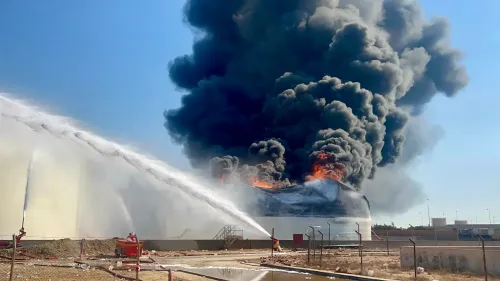
Brent crude prices surged to around $110 a barrel on Monday, 14 September, rising nearly 5% after reports that Saudi Arabia's East-West pipeline could remain out of service for several weeks, intensifying global oil supply concerns amid the ongoing Iran war.
What triggered the rally
The immediate catalyst was Saudi Arabia's decision to shut its 1,200-km East-West pipeline following drone strikes launched from Iraqi territory that damaged the critical oil route. The pipeline has the capacity to transport up to 7 million barrels of crude per day and serves as Saudi Arabia's key alternative to the Strait of Hormuz, enabling shipments to reach the Red Sea without transiting the strategically sensitive strait.
How long the outage could last
Repairs are expected to take between three and five weeks, according to reports, although partial operations may resume earlier. The prolonged disruption has further strained an already tight oil market, with tanker traffic through the Strait of Hormuz remaining well below normal levels due to the ongoing conflict.
Diplomatic setback compounds supply anxiety
The supply shock has coincided with a diplomatic setback. A planned meeting between Iran and Gulf states in Oman on Monday was postponed, dashing near-term hopes of an agreement that could have helped restore smoother shipping through the Strait of Hormuz. The postponement has left traders with few near-term policy levers to price in.
Saudi output already at multi-decade low
The pipeline disruption compounds an already critical production picture. Data from OPEC showed that Saudi Arabia's crude output fell by 1.9 million barrels per day in August to 6.238 million bpd — reportedly its lowest level since 1990 — further tightening the global supply outlook.
Demand pressures add to the strain
China stepped up crude purchases in August as its inventories declined, adding to demand-side pressure at the worst possible time. Meanwhile, the US Strategic Petroleum Reserve remains close to historically low levels, limiting the buffer available to absorb a prolonged disruption. With both major Gulf export routes facing simultaneous constraints, traders are increasingly focused on whether existing inventories can absorb the shock. A prolonged pipeline shutdown combined with continued Strait of Hormuz restrictions could leave global markets increasingly exposed to further supply shortfalls.
Point of View
This is no ordinary supply spike — it is a structural stress test. The postponement of Oman diplomacy is the detail markets should watch most closely: without a de-escalation pathway on the Strait of Hormuz, the pipeline repair timeline becomes almost irrelevant. India, which sources over 18% of its crude from the Gulf, faces an immediate import bill shock and, by extension, renewed pressure on inflation and the current account deficit — both of which the Reserve Bank of India has limited room to absorb after a prolonged tightening cycle.
NationPress
14 Sept 2026
Frequently Asked Questions
Why did Brent crude surge to $110 a barrel?
Brent crude rose nearly 5% to $110 a barrel after Saudi Arabia shut its East-West pipeline following drone strikes from Iraqi territory, deepening concerns about global oil supply already strained by the Iran war. The pipeline can carry up to 7 million barrels per day and is Saudi Arabia's primary bypass route around the Strait of Hormuz.
How long will the Saudi East-West pipeline remain shut?
Repairs are expected to take between three and five weeks, according to reports, though partial operations may resume earlier. The extended outage is adding to an already tight global oil market.
What is Saudi Arabia's current crude output?
According to OPEC data, Saudi Arabia's crude production fell by 1.9 million barrels per day in August to 6.238 million bpd — reportedly its lowest level since 1990. The pipeline shutdown is expected to put further downward pressure on the kingdom's export capacity.
What happened to Iran-Gulf diplomacy talks?
A planned meeting between Iran and Gulf states in Oman on Monday was postponed, removing a near-term diplomatic avenue to ease oil shipping disruptions through the Strait of Hormuz. The delay has reduced market hopes for a quick resolution to tanker traffic restrictions.
How does the US Strategic Petroleum Reserve factor in?
The US Strategic Petroleum Reserve is currently near historically low levels, meaning the United States has limited emergency crude available to release and cushion a prolonged supply disruption. Combined with rising Chinese demand and the Saudi pipeline outage, this significantly reduces the global buffer against further price spikes.