Brent crude surges past $107 as Middle East tensions choke oil supply
Synopsis
Brent crude has surged more than 30 per cent from its August lows to top $107 a barrel — driven by a near-simultaneous shutdown of Saudi Arabia's East-West pipeline, a ship strike in the Strait of Hormuz, Iran's tightening grip on that waterway, and Saudi output crashing to a 2026 low of 6.2 million barrels per day. For India, which imports 85 per cent of its crude needs, the stakes could not be higher.
Key Takeaways
Brent crude surged 3.20 per cent to $107.82 a barrel on 14 September 2026 , while WTI rose to $103.20 .
Saudi Arabia's East-West pipeline was temporarily shut after drone attacks; a merchant vessel was struck in the Strait of Hormuz , killing one person and injuring three .
Iran is requiring vessels to seek transit permission through the Strait of Hormuz and is considering service fees on shipping.
Saudi Arabia produced 6.2 million barrels per day in August — a 23 per cent drop from July and the lowest monthly output in 2026 .
Brent prices have risen more than 30 per cent from early- August lows after a US-Iran ceasefire effort collapsed.
Oman postponed diplomatic talks between Iran and Gulf states on the future of the Strait of Hormuz .
Brent crude surged above $107 a barrel on Monday, 14 September 2026, as escalating Middle East tensions — spanning the Strait of Hormuz, the Red Sea, and Saudi Arabia's pipeline network — stoked acute fears over global energy supply security. The rally marks a more than 30 per cent recovery from the lows recorded in early August 2026.
Key Developments Driving the Surge
Brent crude for November delivery gained 3.20 per cent to $107.82 a barrel, while the US West Texas Intermediate (WTI) benchmark for October climbed an identical 3.20 per cent to $103.20, extending the previous week's rally that had already pushed both contracts back above the $100 mark.
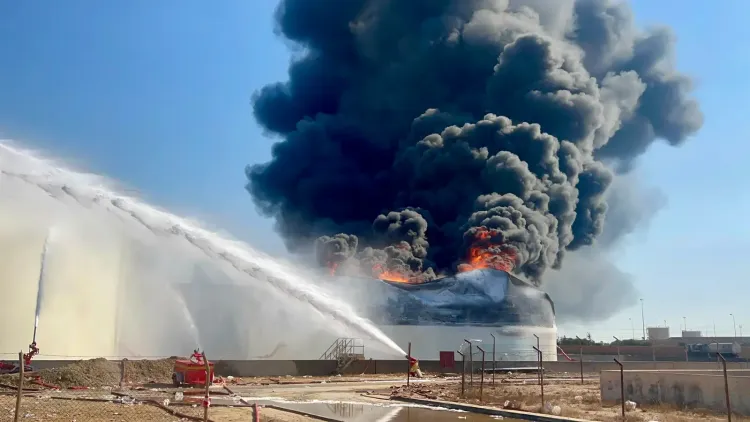
The latest spike was triggered by a confluence of alarming developments: reports that Saudi Arabia temporarily shut its strategically vital East-West pipeline following drone attacks, and that a merchant vessel was struck in the Strait of Hormuz on Sunday, killing one person and injuring three, according to Iranian authorities.
Iran Tightens Grip on the Strait of Hormuz
Iran has tightened its control over the Strait of Hormuz, reportedly requiring vessels to seek transit permission and considering a mechanism to impose service fees on shipping. Non-compliant ships have, according to reports, faced strikes. The United States also carried out strikes on the Iranian coastline to contest Tehran's effective control of the strait.
Separately, Oman postponed diplomatic talks between Iran and Gulf states on the waterway's future, removing a near-term diplomatic pressure valve from a situation already close to boiling point. The strait handles an estimated 20 per cent of globally traded oil, making any disruption there a direct shock to world energy markets.
Saudi Arabia's Output Hits 2026 Low
Supply concerns have been compounded by a steep fall in Saudi Arabia's oil production. Riyadh reported to OPEC that it pumped 6.2 million barrels per day in August — the lowest monthly figure recorded in 2026 and a dramatic 23 per cent below July levels. The decline follows threats from Iran-backed Houthi rebels in Yemen against oil shipments from Saudi Arabia's west coast.
Meanwhile, Houthi forces have seized key ports in the Red Sea shipping lanes, causing severe disruptions to a corridor that underpins a large share of global seaborne oil trade. This is the latest in a series of escalations that have made the Red Sea one of the world's most fraught maritime passages since late 2025.
Context: A Fragile Ceasefire That Never Held
The current price spike traces back to a failed diplomatic moment. Efforts to secure a permanent US-Iran agreement halting attacks in the region fell apart in early August, when both contracts were trading near their year-lows. Fighting resumed in late August, and oil has rallied sharply since — posting gains of over 30 per cent in roughly six weeks. This pattern echoes past episodes in 2019 and 2022 when Gulf infrastructure attacks sent prices spiking before temporary de-escalation brought them back down.
Impact on India and Global Markets
India, which imports roughly 85 per cent of its crude oil requirements, is acutely exposed to any sustained price surge. A prolonged stay above $100 a barrel threatens to widen the trade deficit, pressure the rupee, and push retail fuel prices higher — with downstream consequences for inflation and household budgets. Energy economists warn that if the Strait of Hormuz disruptions persist, market prices could test multi-year highs in the weeks ahead.
Point of View
Making a swift de-escalation less likely. For India, the rupee and fiscal deficit math deteriorates fast above $100 — a fact that will test the government's ability to shield consumers without blowing the subsidy bill.
NationPress
14 Sept 2026
Frequently Asked Questions
Why did Brent crude rise above $107 on 14 September 2026?
Brent crude surged past $107 a barrel on 14 September 2026 due to a combination of escalating Middle East tensions, including drone attacks that temporarily shut Saudi Arabia's East-West pipeline, a merchant vessel strike in the Strait of Hormuz, and Iran tightening control over that critical waterway. These developments raised acute fears about disruptions to global oil supply.
What happened to Saudi Arabia's oil production in August 2026?
Saudi Arabia reported to OPEC that it produced 6.2 million barrels per day in August 2026 — the lowest monthly output of the year and a 23 per cent decline from July levels. The drop followed threats from Iran-backed Houthi rebels against oil shipments from Saudi Arabia's west coast.
What is Iran doing in the Strait of Hormuz?
Iran has tightened control over the Strait of Hormuz, reportedly requiring vessels to seek permission before transiting and considering imposing service fees on shipping. Ships that have not complied have reportedly faced strikes. The United States has responded by striking the Iranian coastline to contest Tehran's control of the strait.
How much have oil prices risen since August 2026?
Brent crude prices have climbed more than 30 per cent from the lows recorded in early August 2026. The recovery accelerated after efforts to negotiate a permanent US-Iran agreement to halt attacks in the region collapsed, with fighting resuming in late August.
How does the oil price surge affect India?
India imports approximately 85 per cent of its crude oil requirements, making it highly sensitive to sustained price spikes above $100 a barrel. Prolonged elevated prices could widen India's trade deficit, pressure the rupee, and push retail fuel prices and broader inflation higher, squeezing household budgets and government finances.