CM Rekha Gupta Rallies Delhi for Har Ghar Tiranga 2026
Synopsis
Delhi Chief Minister Rekha Gupta has called on residents to participate in the Har Ghar Tiranga campaign from 9 to 17 August 2026, urging families to hoist the tricolour, share photos, and teach children about the sacrifices behind India's national flag.
Key Takeaways
Delhi Chief Minister Rekha Gupta on 8 August 2026 called for mass participation in the Har Ghar Tiranga campaign.
The campaign window runs from 9 to 17 August , centred on Independence Day on 15 August .
Citizens are urged to hoist the tricolour, photograph themselves with it, and share images on social media.
Gupta specifically asked parents to explain to children the sacrifices of past generations for the national flag.
The initiative was first launched in 2022 under Azadi Ka Amrit Mahotsav and has since become an annual Independence Day tradition.
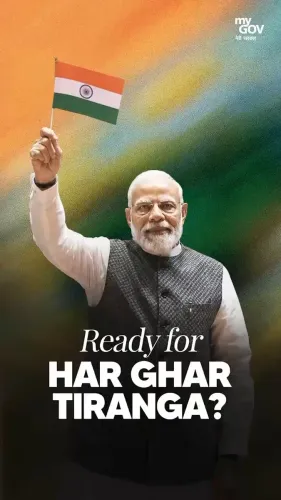
The campaign is backed by Prime Minister Narendra Modi 's appeal for nationwide participation.
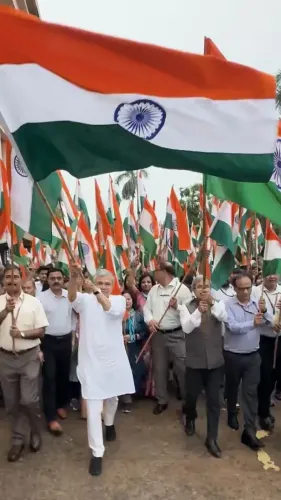
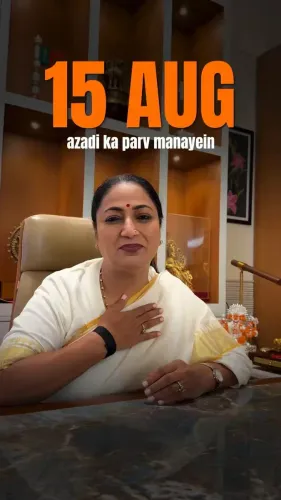
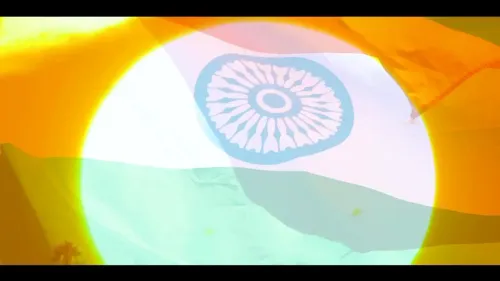
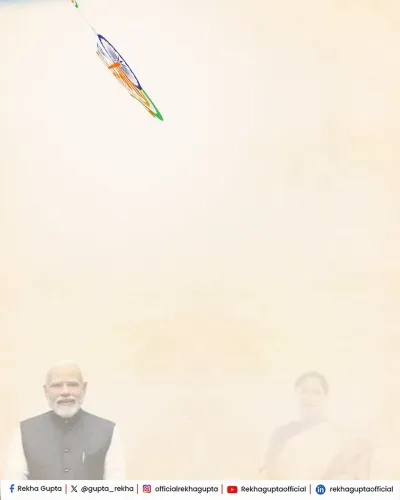
Every rooftop, every balcony, every doorstep — Delhi Chief Minister Rekha Gupta wants the tricolour flying at all of them between 9 and 17 August. Answering Prime Minister Narendra Modi's call, Gupta on Saturday, 8 August 2026 urged citizens to turn the Har Ghar Tiranga campaign into a mass people's celebration — and to make sure children understand exactly what the flag cost.
Writing in Hindi, Gupta asked people to hoist the flag, share photographs with the tricolour, and pass on the history behind it: 'is tiranga ke liye hamari kitni peedhiyon ne tap, tyaag aur balidaan kiya hai' — 'how many generations sacrificed and gave their lives for this flag.' The message closed with the rallying cry: 'Har Ghar Tiranga, Har Man Tiranga!'
A Campaign Born from 75 Years of Freedom
The Har Ghar Tiranga initiative was first launched in 2022 by the Ministry of Culture as the centrepiece of Azadi Ka Amrit Mahotsav — the government's sweeping commemoration of 75 years of Indian independence that began in 2021. The idea was straightforward but deliberate: make the national flag personal, not just ceremonial, by bringing it down from government buildings and into ordinary homes.
What started as a milestone-year gesture has since become an annual Independence Day ritual. Senior leaders across parties and states amplify the call each August, and social media participation — selfies with the tricolour, profile-picture overlays — has become a measurable barometer of the campaign's reach.
Why the Children Angle Matters
Gupta's specific appeal to parents and guardians to educate children about the flag's history adds a generational dimension that goes beyond a social media trend. The pitch — that the tricolour represents generations of tap, tyaag aur balidaan (penance, sacrifice, and martyrdom) — frames Independence Day not as a public holiday but as an inheritance that must be consciously handed down.
With Independence Day falling on 15 August, the nine-day window gives households, schools, and resident welfare associations time to organise, source flags, and participate in the social media wave the campaign traditionally generates.
When every home flies the tricolour, Gupta wrote, 'the world will see India's unity, India's confidence, and India's strength.' That line is as much outward signal as inward motivation — a reminder that symbolic acts, at sufficient scale, carry real diplomatic and cultural weight.
Point of View
And state leaders amplifying it serve both patriotic and political branding goals simultaneously. The real metric to watch is whether Delhi's social media participation and on-ground flag displays show meaningful year-on-year growth.
NationPress
22 Sept 2026
Frequently Asked Questions
What is the Har Ghar Tiranga campaign 2026?
Har Ghar Tiranga is a nationwide campaign that urges every Indian household to display the national flag at home around Independence Day, running from 9 to 17 August 2026 as called by Prime Minister Narendra Modi.
When did the Har Ghar Tiranga campaign start?
The campaign was first launched in 2022 by the Ministry of Culture as part of Azadi Ka Amrit Mahotsav, the government's commemoration of 75 years of Indian independence.
What did Delhi CM Rekha Gupta say about Har Ghar Tiranga?
Rekha Gupta urged Delhi residents to hoist the tricolour between 9 and 17 August, share photos with the flag, and educate children about the generations of sacrifice that the tricolour represents.
How can I participate in Har Ghar Tiranga 2026?
Citizens are encouraged to display the Indian tricolour at their homes, share photographs with the flag on social media, and involve children in discussions about India's independence struggle.
Why is Har Ghar Tiranga observed from 9 to 17 August?
The window is centred on Independence Day, which falls on 15 August, giving households and schools several days before and after to participate in the flag-hoisting and social media campaign.