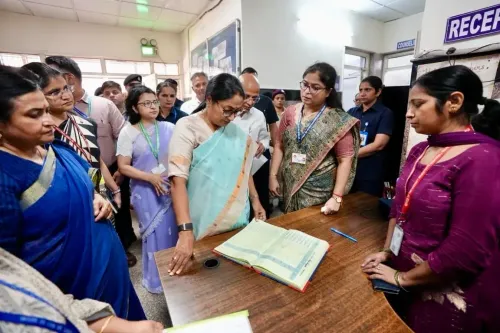
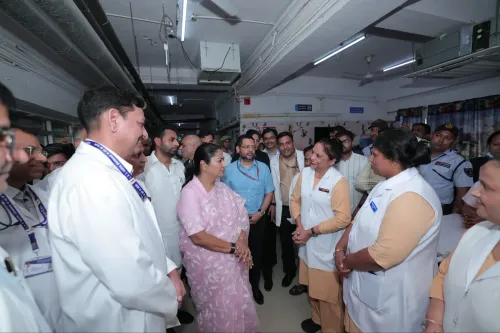
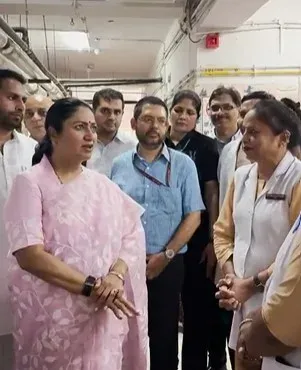
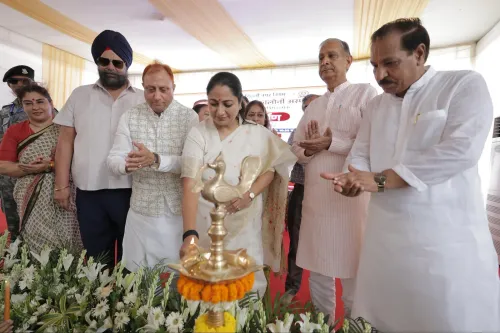
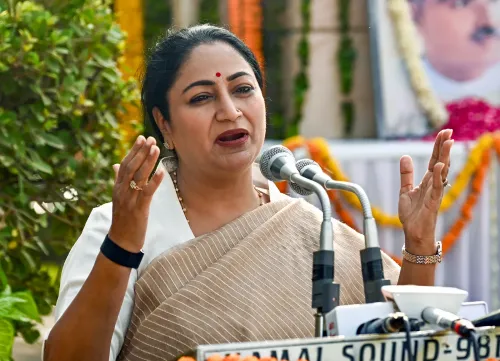
CM Rekha Gupta inspects Sakhi One Stop Centre at Lok Nayak Hospital
Synopsis
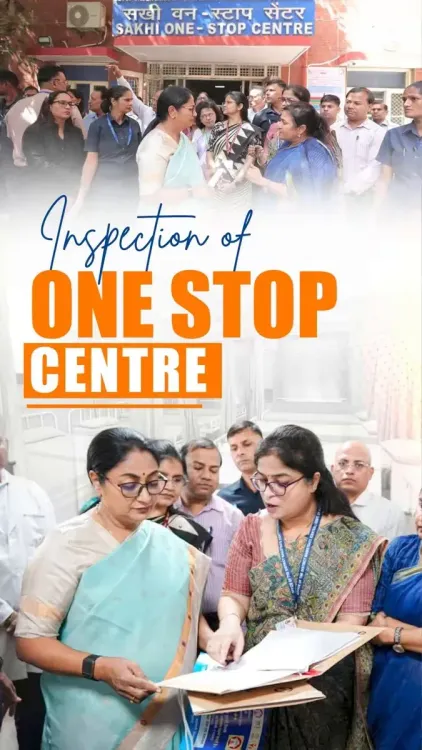
Delhi Chief Minister Rekha Gupta personally inspected the Sakhi One Stop Centre at Lok Nayak Hospital on October 5, 2026, reviewing support services and safety measures, and directed officials to ensure immediate, dignified assistance for women in distress under her #ViksitDelhi agenda.
Key Takeaways
Delhi CM Rekha Gupta conducted an on-site inspection of the Sakhi One Stop Centre at Lok Nayak Hospital on October 5, 2026 .
The review covered support services, safety measures, and the grievance redressal system for women in distress.
CM Gupta directed officials to ensure immediate assistance, dignified treatment, and timely resolution for every woman seeking help.
Sakhi One Stop Centres are a Union Government initiative offering medical, legal, police, and counselling support under one roof on a 24x7 basis.
The visit was framed under the #ViksitDelhi governance banner, positioning women's safety as a development priority for the capital.
A surprise visit to one of Delhi's most critical women's safety facilities — and a set of pointed directives that followed. Delhi Chief Minister Rekha Gupta on Monday, October 5, 2026, personally inspected the Sakhi One Stop Centre at Lok Nayak Hospital in New Delhi, reviewing its support services, safety protocols, and grievance redressal systems for women in distress.
Posting on X, CM Gupta wrote: 'Inspected the Sakhi One Stop Centre at Lok Nayak Hospital and reviewed the support services, safety measures and grievance redressal system for women in distress. Directed officials to ensure immediate assistance, dignified treatment and timely resolution for every woman seeking help.'
What Sakhi One Stop Centres do — and why Lok Nayak matters
Sakhi One Stop Centres are a Union Government initiative that brings together emergency medical care, police assistance, legal aid, psychosocial counselling, and temporary shelter under a single roof for women facing violence, abuse, or distress. Operating on a 24x7 basis, they are designed to remove the maze of offices a survivor would otherwise navigate alone. Lok Nayak Hospital — one of Delhi's largest public hospitals — is a natural anchor point for such a centre given its volume of emergency cases and its accessibility to residents across the capital.
The Chief Minister's in-person review signals that the facility's on-ground delivery, not just its existence, is under scrutiny. Directing officials to guarantee 'immediate assistance, dignified treatment and timely resolution' suggests the inspection was substantive — checking whether the centre's promise holds up in practice for a woman who walks in without resources or connections.
The '#ViksitDelhi' frame and what the directive signals
CM Gupta tagged the visit under #ViksitDelhi, her administration's broader governance banner, positioning women's safety infrastructure as a pillar of Delhi's development agenda. The choice of language — 'dignified treatment' in particular — points toward a quality-of-service standard beyond mere procedural compliance, asking whether women are treated with respect alongside being processed for assistance.
For a centre embedded in a busy government hospital, that standard is non-trivial. Overcrowding, staff shortages, and documentation backlogs are common pressure points in such facilities. By visiting personally and issuing specific directives, the Chief Minister creates a direct accountability trail between the top office and frontline service staff.
How those directives translate into measurable improvements at the centre — faster case referrals, staffing reinforcements, technology upgrades for case tracking — will be the real test of Monday's visit.
Point of View
One that places accountability for service quality directly on the office of the top executive. The emphasis on 'dignified treatment' elevates the standard beyond procedural box-ticking toward a qualitative, rights-based benchmark that is harder to game on paper. Within Delhi's competitive political landscape, where women's safety has been a recurring flashpoint, such inspections also carry electoral messaging: that the current administration is hands-on where previous ones were not. The real test, however, is whether Monday's directives are followed by structural changes — staffing, technology, or case-tracking reforms — that outlast the news cycle.
NationPress
6 Oct 2026
Frequently Asked Questions
What is a Sakhi One Stop Centre?
A Sakhi One Stop Centre is a Union Government initiative that provides women facing violence or distress with medical care, police assistance, legal aid, psychological counselling, and temporary shelter all under one roof, operating round the clock.
Where is the Sakhi One Stop Centre that CM Rekha Gupta inspected?
CM Rekha Gupta inspected the Sakhi One Stop Centre located at Lok Nayak Hospital in New Delhi on October 5, 2026.
What did Delhi CM Rekha Gupta direct officials during her inspection?
She directed officials to ensure immediate assistance, dignified treatment, and timely resolution for every woman who comes to the centre seeking help.
What is #ViksitDelhi?
#ViksitDelhi is the governance and development banner used by Delhi Chief Minister Rekha Gupta's administration to frame policy and infrastructure initiatives for the capital.
Why is Lok Nayak Hospital significant for women's safety services in Delhi?
Lok Nayak Hospital is one of Delhi's largest public hospitals, handling a high volume of emergency cases, making it a strategically important location for a 24x7 crisis support centre for women in distress.