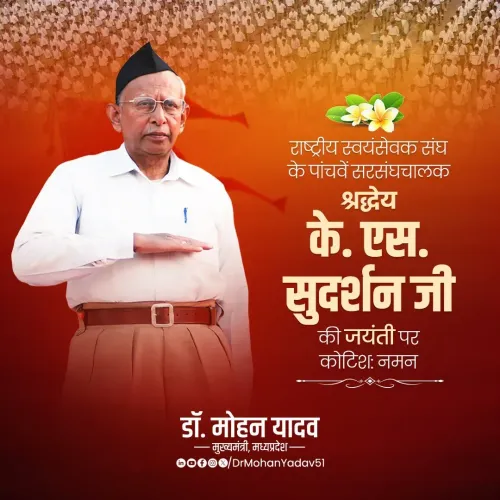
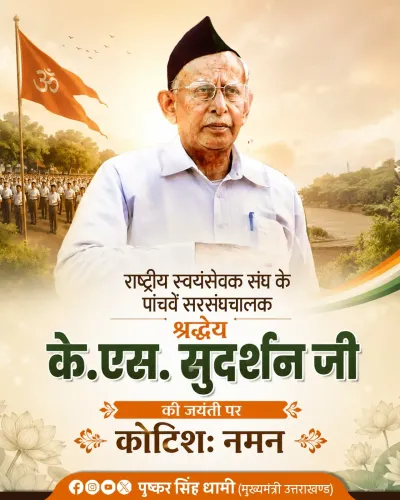
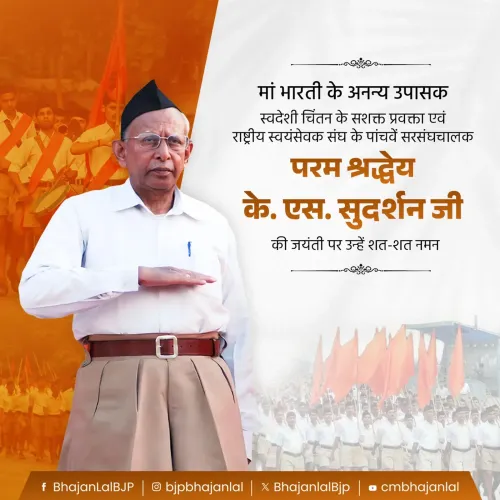
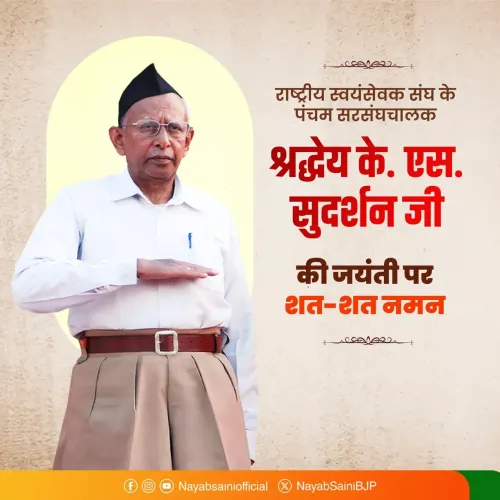
CM Rekha Gupta Pays Tribute to RSS Chief K.S. Sudarshan on Birth Anniversary
Synopsis
Delhi Chief Minister Rekha Gupta marked the birth anniversary of K.S. Sudarshan, the RSS's fifth Sarsanghchalak, praising his vision of swadeshi economics and the harmony of Sanatan tradition with modern science. Senior BJP leaders routinely honour past RSS chiefs in a practice that links governance rhetoric to Sangh ideology.
Key Takeaways
Delhi Chief Minister Rekha Gupta paid tribute to K.S.
Sudarshan on his birth anniversary on 18 June 2026 .
Sudarshan served as the fifth Sarsanghchalak of the RSS from 2000 to 2009 , succeeded by Mohan Bhagwat .
The Chief Minister highlighted Sudarshan's advocacy of swadeshi economic philosophy and the integration of Sanatan tradition with modern science.
The RSS , founded in 1925 , is the ideological parent body of the BJP and emphasises cultural nationalism and civilisational continuity.
Senior BJP figures routinely mark RSS leaders' anniversaries, reinforcing the ideological and organisational bond between the party and the Sangh.
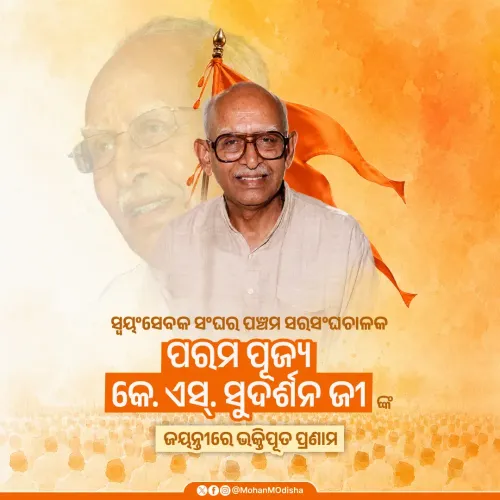
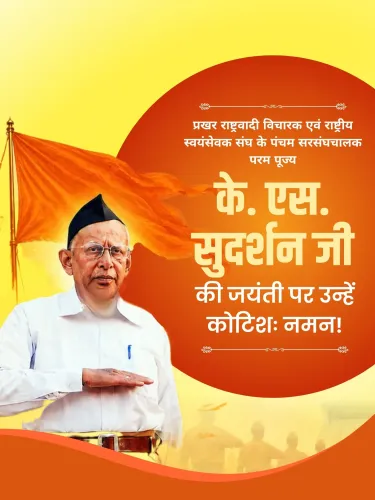
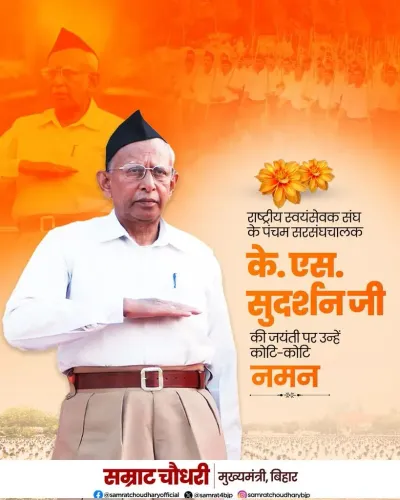
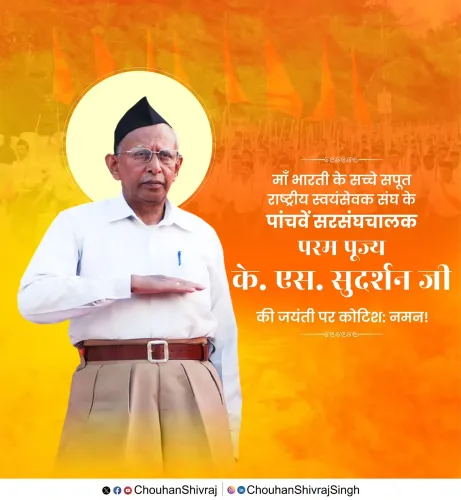
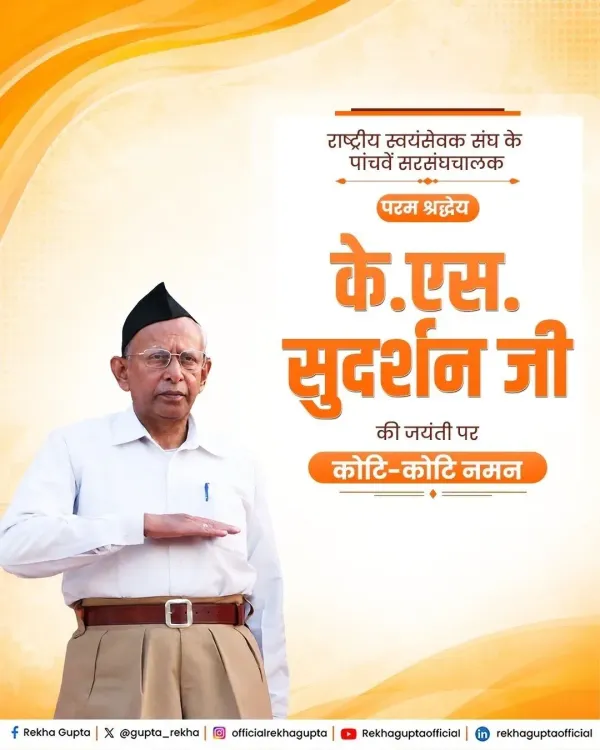
Delhi Chief Minister Rekha Gupta on Thursday, 18 June 2026, paid tribute to K.S. Sudarshan, the fifth Sarsanghchalak of the Rashtriya Swayamsevak Sangh (RSS), on his birth anniversary, hailing him as a towering figure of national thought and organisational expansion.
Posting on X in Hindi, the Chief Minister wrote: 'राष्ट्रीय स्वयंसेवक संघ के पाँचवें सरसंघचालक, परम पूज्य के.एस. सुदर्शन जी की जयंती पर उन्हें कोटि-कोटि नमन' — translated as 'Heartfelt salutations to the revered K.S. Sudarshan Ji, the fifth Sarsanghchalak of the RSS, on his birth anniversary.' She added that his life was dedicated to national contemplation and the expansion of the organisation, and that his ideas on the harmony of Sanatan tradition with modern science, and his advocacy of a swadeshi economic philosophy, remain a continuous source of inspiration.
Context
K.S. Sudarshan served as the fifth Sarsanghchalak of the RSS from 2000 to 2009, when he was succeeded by the current chief, Mohan Bhagwat. During his tenure, Sudarshan was widely recognised for articulating a vision that sought to reconcile classical Hindu civilisational values with the demands of a modern, technology-driven economy. His advocacy of swadeshi — economic self-reliance rooted in indigenous production — placed him at the centre of debates around India's post-liberalisation development model.
The RSS, founded in 1925, functions as the ideological parent body to the Bharatiya Janata Party (BJP) and emphasises cultural nationalism, disciplined volunteerism, and the idea of civilisational continuity. Birth anniversaries of its past leaders are occasions that the broader Sangh Parivar marks with public remembrance across the country.
Policy Backdrop
Sudarshan's intellectual legacy rests on two pillars that Chief Minister Gupta explicitly invoked: the integration of Sanatan tradition with modern science, and a swadeshi economic philosophy. Both themes have found renewed prominence in mainstream BJP governance discourse — from campaigns promoting domestic manufacturing to policy frameworks that foreground India's civilisational heritage as a source of policy inspiration.
Rekha Gupta, a BJP leader with longstanding alignment with the RSS, has since assuming office as Delhi's Chief Minister emphasised themes of cultural pride and indigenous development. Her tribute on this occasion is consistent with a pattern in which senior BJP figures publicly link their governance rhetoric to Sangh ideological traditions on national anniversaries.
Stakeholders and Impact
The tribute carries significance for RSS workers and BJP cadres across Delhi and nationally, for whom Sudarshan's legacy represents an ideological touchstone. Public acknowledgements of this kind by sitting chief ministers reinforce the organisational bond between the BJP's elected leadership and the RSS's volunteer network — a relationship that has historically been central to the party's electoral mobilisation.
For citizens and observers tracking the Delhi government's policy direction, the Chief Minister's emphasis on Sudarshan's swadeshi economic philosophy may also signal a rhetorical frame for upcoming budget or governance priorities, even as no specific policy announcement was made in the post.
What's Next
The RSS marks its own foundation day in October each year with large-scale events that draw participation from BJP leaders across states, including Delhi. Observers will watch whether the Delhi government incorporates swadeshi economic priorities — such as support for local manufacturing or indigenous enterprise — into upcoming budget proposals or policy statements, following the ideological emphasis articulated in Chief Minister Gupta's tribute today.
Point of View
Gupta does more than pay personal respects — she signals continuity between Sangh thought and her government's policy orientation. This practice has grown more visible as BJP chief ministers increasingly use social media to perform Sangh-aligned ideological positioning. The tribute also arrives at a moment when swadeshi rhetoric is being actively woven into central and state-level governance frameworks, giving ceremonial remembrance a policy subtext.
NationPress
19 Sept 2026
Frequently Asked Questions
Who was K.S. Sudarshan of the RSS?
K.S. Sudarshan was the fifth Sarsanghchalak (chief) of the Rashtriya Swayamsevak Sangh, serving from 2000 to 2009. He was known for advocating swadeshi economic self-reliance and the integration of Sanatan Hindu traditions with modern science. He was succeeded by Mohan Bhagwat in March 2009.
Why did Delhi CM Rekha Gupta pay tribute to K.S. Sudarshan?
Delhi Chief Minister Rekha Gupta paid tribute to K.S. Sudarshan on his birth anniversary on 18 June 2026, honouring his legacy of national thought, organisational expansion, and swadeshi philosophy. As a BJP leader with RSS alignment, such tributes are a regular practice among senior party figures.
What is the RSS and its connection to the BJP?
The Rashtriya Swayamsevak Sangh (RSS) is a Hindu nationalist volunteer organisation founded in 1925. It functions as the ideological parent body of the BJP, sharing themes of cultural nationalism, civilisational continuity, and indigenous development. Most senior BJP leaders have organisational roots in the RSS.
What is swadeshi economic philosophy?
Swadeshi economic philosophy emphasises economic self-reliance through the promotion of indigenous production, local enterprise, and reduced dependence on foreign goods and capital. K.S. Sudarshan was a prominent advocate of this approach, linking it to India's civilisational heritage.
Who is the current Sarsanghchalak of the RSS?
Mohan Bhagwat is the current and sixth Sarsanghchalak of the RSS. He assumed the position in March 2009 after K.S. Sudarshan stepped down following a decade-long tenure.