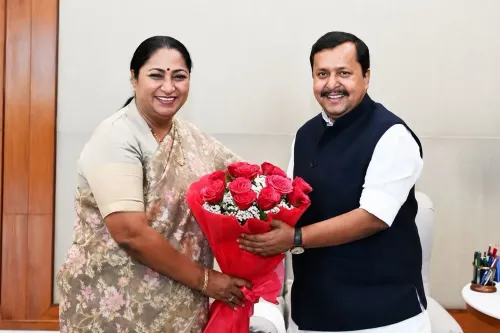
CM Rekha Gupta shares BJP chief Nitin Nabin's defence of Sanatan traditions
Synopsis
Delhi Chief Minister Rekha Gupta amplified BJP National President Nitin Nabin's forceful defence of Sanatan traditions on 12 November 2026, citing past questioning of Lord Ram's existence and asserting that Ganga, Yamuna, and Chhathi Maiya represent faith and devotion — not merely water.
Key Takeaways
BJP National President Nitin Nabin issued a statement defending Sanatan traditions and criticising those who have questioned them.
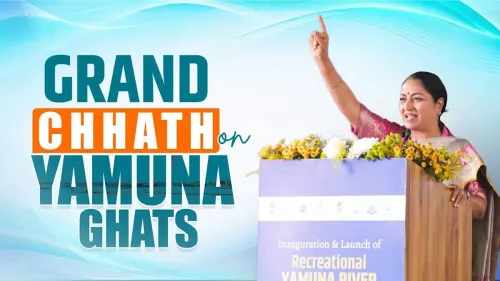
Delhi CM Rekha Gupta shared the statement on X on 12 November 2026 , amplifying it to her following.
Nabin specifically referenced past public debate over Lord Shri Ram's historical existence as an example of cultural scepticism.
The statement invokes Ganga, Yamuna, and Chhathi Maiya as symbols of faith and devotion, contrasting that view with a rationalist framing.
The post fits a consistent BJP pattern of positioning the party as the defender of Sanatan Dharma in Indian political discourse.
The reference to Chhathi Maiya connects to the widely observed Chhath Puja tradition, signalling broad cultural outreach across North India.
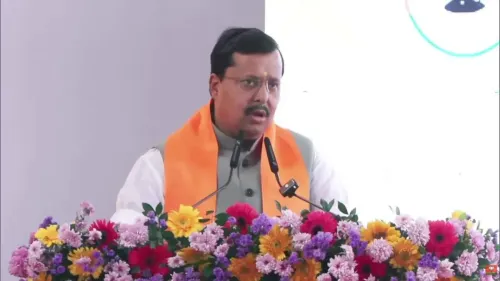
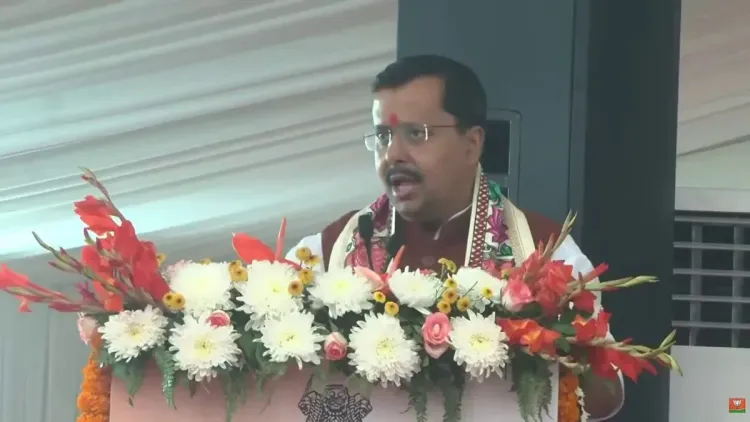
A sharp defence of India's Sanatan cultural heritage — and a pointed rebuke of those who have questioned it — emerged from the BJP's top ranks on Thursday, 12 November 2026, when Delhi Chief Minister Rekha Gupta shared a charged statement by BJP National President Nitin Nabin on X, centering the debate on faith, rivers, and the contested place of religious identity in Indian public life.
What Nitin Nabin said — and what it signals
The quoted statement, shared by CM Gupta, opens with a pointed historical charge: 'Ek samay tha, jab Bharatiya Sanatan paramparaon aur sanskriti par sawaal uthaye jaate the' — 'There was a time when Indian Sanatan traditions and culture were questioned.' Nabin goes further, referencing the public debate over Lord Shri Ram's historical existence as emblematic of that scepticism.
The statement then pivots to rivers. 'What will such people understand of the glory of Ganga Maiya, Yamuna Maiya, and Chhathi Maiya?' Nabin asks. 'For them, these may be merely river water and a pond — but for us, these are matters of faith, worship, and devotion.' The framing is deliberate: faith versus rationalism, the sacred versus the mundane.
Rivers as political and spiritual terrain
The Ganga and Yamuna are not simply rhetorical props in Indian politics — they carry enormous civilisational and legal weight. The Yamuna flows directly through Delhi, making its condition a live political issue in the capital CM Gupta governs. The invocation of Chhathi Maiya connects to the Chhath Puja festival, one of the most widely observed folk traditions across North India and the diaspora, in which devotees stand in river waters to offer prayers to the sun.
To frame Ganga, Yamuna, and Chhathi Maiya in one breath is to invoke not just religion but a layered cultural identity that cuts across caste and region — a deliberately broad coalition signal.
BJP's recurring Sanatan positioning
This statement fits a well-worn groove in BJP political communication. Senior party figures have consistently cast themselves as guardians of Sanatan Dharma — a term encompassing the eternal principles of Hindu tradition — particularly in contrast to what they describe as a rationalist or secular dismissal of those traditions by political opponents.
The reference to questioning of Lord Ram's existence echoes a long-running political flashpoint in India: legal and academic debates over Ram's historicity became intensely charged during the decades-long Ram Janmabhoomi dispute, culminating in the Supreme Court's 2019 verdict and the consecration of the Ram Mandir in Ayodhya in January 2024. For the BJP, that arc — from doubt to shrine — is itself a vindication narrative, and Nabin's words sit squarely within it.
That the statement comes from the party's national president, amplified by Delhi's chief minister, gives it organisational weight beyond a routine cultural post. Watch for whether it precedes any cultural or river-related policy announcement from the Delhi government — or whether it is simply staking ground ahead of a festival or civic moment.
Point of View
CM Rekha Gupta performs a dual role: reinforcing the BJP's Sanatan cultural identity at the national level while keeping that messaging active in Delhi, where the Yamuna's condition and Chhath Puja observances are tangible civic concerns. The invocation of the Ram-existence debate is a callback to a grievance narrative the party has successfully mobilised before — connecting a moment of past cultural contestation to a present posture of vindication. Whether this is pre-festival positioning, a response to an opposition provocation, or an organisational signal from the new national president's tenure, it underscores how thoroughly the BJP has made Sanatan Dharma a first-order political identity — not merely a religious one.
NationPress
12 Nov 2026
Frequently Asked Questions
What did BJP National President Nitin Nabin say about Sanatan traditions?
Nitin Nabin stated that there was a time when Indian Sanatan traditions and culture were questioned — including the existence of Lord Shri Ram — and argued that those who hold such views cannot understand the spiritual significance of rivers like Ganga and Yamuna, which BJP and Hindu devotees regard as objects of faith and worship, not merely bodies of water.
Why did Delhi CM Rekha Gupta share this statement?
CM Rekha Gupta shared Nitin Nabin's statement on X on 12 November 2026 as part of the BJP's broader communication strategy of defending Sanatan Dharma and Hindu cultural identity in public discourse.
What is the significance of Ganga, Yamuna, and Chhathi Maiya in this context?
Ganga and Yamuna are among India's most sacred rivers in Hindu tradition, while Chhathi Maiya is the deity central to the Chhath Puja festival in which devotees offer prayers while standing in river waters. Nabin's statement invokes all three to argue that rivers hold deep spiritual meaning for Hindus, beyond their physical existence.
What was the debate about Lord Shri Ram's existence?
India has seen prolonged legal and political debate — particularly during the Ram Janmabhoomi dispute — over whether Lord Ram was a historical figure, with rationalist and academic voices questioning his literal existence. The Supreme Court delivered its verdict on the Ayodhya land dispute in 2019, and the Ram Mandir was consecrated in January 2024.
What is Sanatan Dharma and why is it politically significant in India?
Sanatan Dharma refers to the eternal principles underlying Hindu tradition and is used as a broad cultural and religious identity marker. It has become a central term in Indian political discourse, with the BJP consistently positioning itself as the protector of Sanatan values against what it characterises as rationalist or secular dismissal.