CM Rekha Gupta Warns of Strict Action on Illegal Constructions
Synopsis
Delhi Chief Minister Rekha Gupta has warned that strict action will be taken against all unauthorised constructions in the capital, with accountability to be fixed at every level — from builders to officials and regulatory authorities. The statement signals a push for systemic enforcement reform in a city long marked by illegal building cycles.
Key Takeaways
CM Rekha Gupta declared on 31 May 2026 that strict action will be taken against all unauthorised constructions in Delhi .
Accountability will be fixed for negligence at every level, explicitly including builders, officials, and regulatory authorities.
The MCD and DDA are the primary agencies responsible for building-bylaw enforcement and land-use regulation in the capital.
In 2019 , the Union government regularised 1,731 unauthorised colonies in Delhi, highlighting the scale of the city's illegal construction challenge.
The Supreme Court of India has repeatedly directed civic agencies to remove illegal structures and uphold planning norms.
Coordination between the Delhi government, MCD, and DDA on a concrete enforcement plan will be the key indicator of follow-through.
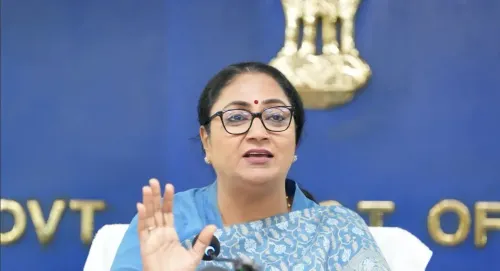
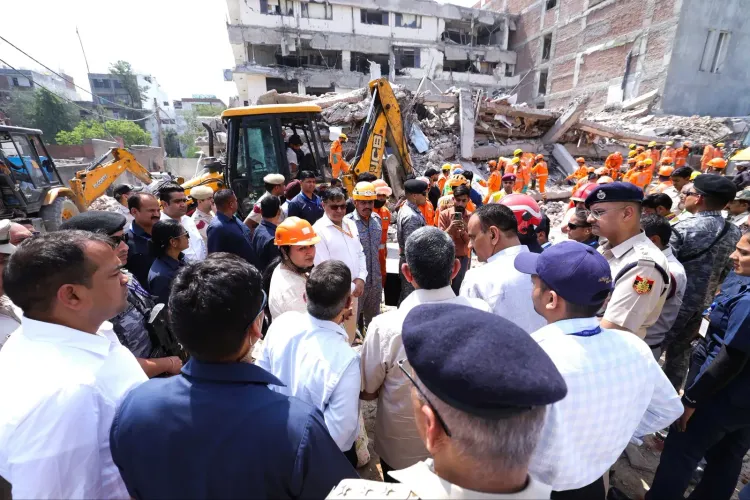
Delhi Chief Minister Rekha Gupta on Sunday, 31 May 2026 issued a firm public warning that all unauthorised constructions in the capital will face strict legal action, and that accountability will be fixed at every level of administration — from builders to officials and regulatory authorities.
Context
Posting on X, CM Gupta stated: 'Strict action will be taken against all unauthorised constructions. Accountability will be fixed for negligence at every level. No builder, official, or authority is above the law. Violations will not be tolerated.' She added that the Delhi Government stands committed to 'justice, accountability, and public safety.'
The statement is notable for its explicit inclusion of officials and authorities alongside builders — signalling that the crackdown is intended to address systemic enforcement failures, not merely individual violations by private actors.
Policy Backdrop
Delhi has long grappled with a cycle of rapid urbanisation, illegal construction, and uneven enforcement. The Municipal Corporation of Delhi (MCD) is the primary civic body responsible for enforcing building bylaws and carrying out demolitions, while the Delhi Development Authority (DDA) regulates land use and development permissions under the Delhi Master Plan.
In 2019, the Union government notified a policy to regularise 1,731 unauthorised colonies across Delhi — a move that provided relief to lakhs of residents but also underscored the scale of the city's informal construction problem. The Supreme Court of India has issued multiple directives over the years instructing civic agencies to remove illegal structures and uphold planning norms, including those encroaching on flood plains.
Civic agencies have periodically launched anti-encroachment drives in response to court and National Green Tribunal (NGT) orders, but critics have long argued that enforcement remains selective and politically driven. Successive governments have oscillated between demolition drives and regularisation schemes depending on prevailing legal and political pressures.
Stakeholders and Impact
The warning directly implicates three groups: real estate developers who construct without valid permissions, civic officials who may have overlooked or enabled violations, and regulatory bodies such as the MCD and DDA whose oversight is now under scrutiny. For residents of unauthorised colonies — estimated to number in the millions across Delhi — the statement carries significant implications for housing security.
While the Chief Minister's post does not specify a triggering incident, the framing — emphasising official negligence and multi-level accountability — suggests the government is signalling a systemic response rather than a one-off demolition drive. The inclusion of 'authority' alongside builders and officials broadens the scope of potential accountability measures.
What's Next
Attention will now turn to whether the Delhi Government, the MCD, and the DDA will coordinate on a concrete demolition schedule, revised building-permission rules, or formal accountability mechanisms for errant officials. Any follow-up action — such as show-cause notices to officials, fresh demolition orders, or new building-regulation amendments — will test whether the statement translates into sustained enforcement or remains a declaratory posture.
With the Supreme Court continuing to monitor illegal construction cases in the capital, the government's next steps will be closely watched by residents, developers, and civic bodies alike.
Point of View
The BJP-led Delhi government is attempting to distinguish itself from the enforcement failures of previous administrations. The move fits a broader national pattern of BJP-governed states using anti-encroachment rhetoric to project strong governance, though the real test lies in sustained, non-selective enforcement. With the Supreme Court's continued oversight and millions of residents living in unauthorised colonies, the government faces a delicate balance between demolition-driven accountability and the political cost of mass displacement.
NationPress
16 Oct 2026
Frequently Asked Questions
What did Delhi CM Rekha Gupta say about illegal constructions?
CM Rekha Gupta stated on 31 May 2026 that strict action will be taken against all unauthorised constructions in Delhi, and that accountability will be fixed at every level — including builders, officials, and regulatory authorities.
Which agencies enforce building bylaws in Delhi?
The Municipal Corporation of Delhi (MCD) is the primary body responsible for enforcing building bylaws and carrying out demolitions, while the Delhi Development Authority (DDA) regulates land use and development permissions under the Delhi Master Plan.
How many unauthorised colonies were regularised in Delhi?
The Union government in 2019 notified a policy to regularise 1,731 unauthorised colonies across Delhi, providing relief to a large number of residents living in informally built settlements.
Has the Supreme Court intervened on illegal constructions in Delhi?
Yes. The Supreme Court of India has issued multiple judgments directing civic agencies in Delhi to remove unauthorised structures and uphold planning norms, including restrictions on flood-plain encroachments.
What is the broader pattern of illegal construction enforcement in Delhi?
Delhi has seen repeated cycles of rapid urban growth, illegal construction, judicial intervention, and selective enforcement. Successive governments have alternated between demolition drives and regularisation schemes based on legal and political pressures.