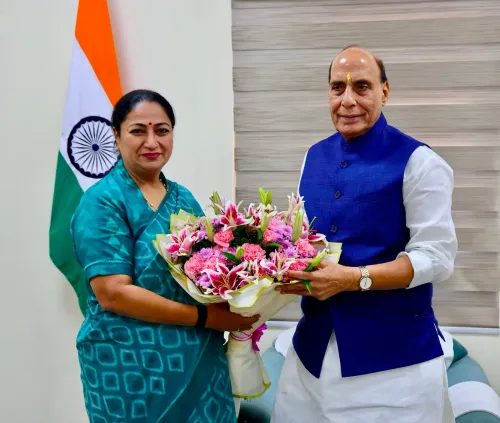
CM Rekha Gupta welcomes AAP defectors, targets Kejriwal
Synopsis
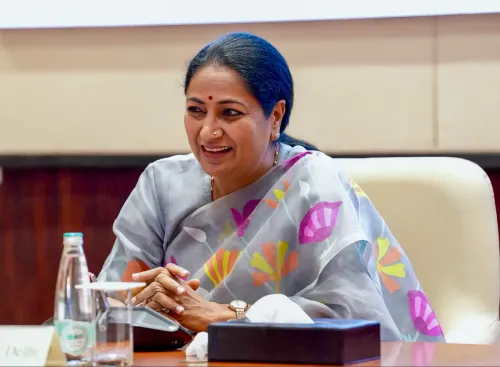
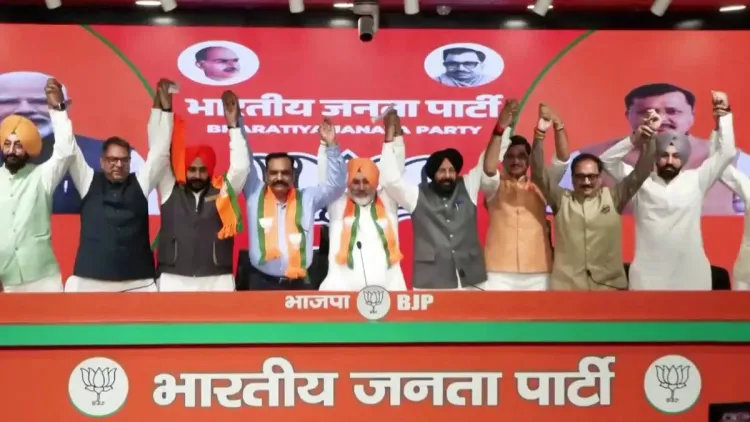
Delhi Chief Minister Rekha Gupta welcomed AAP defectors into the BJP on 2 November 2026, directly targeting Arvind Kejriwal's 'remote-control' leadership and declaring that neither Punjab voters nor AAP's own leaders trust him — framing the defections as the start of a larger shift ahead of the 2027 Punjab assembly elections.
Key Takeaways
Delhi CM Rekha Gupta welcomed AAP members joining the BJP on 2 November 2026 , ahead of Punjab's 2027 assembly elections .
She attacked Arvind Kejriwal over 'false promises, hollow claims, and remote-control politics' in Punjab.
Gupta pledged the new recruits will strengthen BJP's resolve for a drug-free, safe, and prosperous Punjab .
She claimed both Punjab voters and AAP's own leaders have lost faith in Kejriwal's leadership.
Her closing line — 'Abhi toh shuruaat hai' (This is just the beginning) — signals BJP intends to press for further defections and internal pressure on AAP.
AAP won Punjab in 2022 under Chief Minister Bhagwant Mann, partly on a promise to address the state's drug crisis and end perceived remote governance from Delhi.
Weeks before Punjab's political temperature begins its slow climb toward the 2027 assembly elections, a fresh wave of defections from the Aam Aadmi Party to the Bharatiya Janata Party has prompted a sharp, confident response from Delhi Chief Minister Rekha Gupta — one that lands as both a welcome address and an opening salvo.
Posting in Hindi on Monday, 2 November 2026, CM Gupta offered what she called a 'heartfelt welcome' to all those who joined the BJP family — framing their decision as an act of exhaustion. 'Jhoothe vadon, khokle daavon aur Kejriwal ji ki remote control rajneeti se trast hokar' (Weary of false promises, hollow claims, and Arvind Kejriwal's remote-control politics) — her words cut to the chase. She did not name the individuals who switched, but the message was unmistakably directed at AAP national convener Arvind Kejriwal.
The 'remote-control' charge and what it means in Punjab
The phrase 'remote-control politics' is a well-worn but potent weapon in the BJP's playbook against AAP. The allegation — that Kejriwal governs AAP-ruled states from a distance, pulling strings over chief ministers — has been a central BJP attack line since AAP expanded beyond Delhi. In Punjab, where AAP swept to power in 2022 under Chief Minister Bhagwant Mann, the party had explicitly promised to end exactly that perception, stressing Mann's autonomy and on-the-ground leadership.
The fact that BJP leaders are still deploying the charge in 2026 suggests they believe it still resonates with Punjab voters — particularly those who feel the state's long-standing drug crisis, security concerns, and economic stagnation remain unresolved. CM Gupta directly tied the defectors' arrival to those unresolved promises: 'Your clarion call will give new strength to our resolve for a drug-free, safe, and prosperous Punjab,' she wrote.
A two-front attack: Punjab voters and AAP's own leaders
The most pointed line in Gupta's post was not the welcome — it was the verdict she delivered after it. 'Neither does the public of Punjab trust AAP anymore, nor do your own party leaders trust your leadership,' she told Kejriwal directly, before closing with a loaded four-word phrase: 'Abhi toh shuruaat hai' — 'This is just the beginning.'
That closing line does significant political work. It signals that the BJP views these defections not as an isolated event but as the leading edge of a larger unravelling it intends to accelerate. With Punjab elections still months away, the party is clearly trying to build a narrative of AAP's internal collapse before the formal campaign season begins.
Punjab 2027: the stakes behind the symbolism
Punjab sits at the intersection of every pressure point that defines Indian state politics today — cross-border security, an entrenched drug problem, agrarian distress, and a young electorate hungry for visible governance. AAP staked its national credibility on delivering in Punjab after its landslide win four years ago. For BJP, any credible erosion of AAP's standing there would be both a strategic gain and a symbolic one — proof that the Delhi model does not travel.
Whether this round of defections represents genuine mass disillusionment or a pre-election poaching exercise — routine in Indian politics — will likely become clearer as both parties respond publicly in the days ahead.
For now, Rekha Gupta has set the early tempo. The shanknaad, as she put it, has sounded.
Point of View
BJP attempts to build a credibility-erosion narrative around Kejriwal before Punjab 2027 campaigns formally begin. The 'remote-control' attack is a durable BJP frame that has been central to its anti-AAP messaging since 2014, suggesting the party believes it still carries electoral weight in Punjab despite AAP's strong 2022 mandate. The phrase 'this is just the beginning' is a signal to both potential defectors and the electorate that the BJP intends to sustain pressure — implying a coordinated outreach effort, not a one-off event. For AAP, the challenge will be whether it can demonstrate on-ground governance outcomes in Punjab convincingly enough to blunt the defection narrative before it takes hold.
NationPress
2 Nov 2026
Frequently Asked Questions
Why are AAP leaders joining the BJP in Punjab?
Delhi CM Rekha Gupta says the AAP members who joined BJP were 'weary of false promises, hollow claims, and Kejriwal's remote-control politics.' The specific individuals and their stated reasons have not been independently confirmed from available records.
What is the 'remote-control politics' charge against Kejriwal?
The allegation — used frequently by BJP — is that Arvind Kejriwal exercises centralised control over AAP-governed states like Punjab from Delhi, undermining local chief ministers. AAP and Bhagwant Mann have denied this, stressing Mann's independent leadership.
When are the next Punjab assembly elections?
Punjab assembly elections are due in 2027 . The current round of political activity, including defections and public attacks by BJP leaders, is widely seen as early positioning ahead of that poll.
What was AAP's main promise in Punjab when it won in 2022?
AAP won the 2022 Punjab assembly elections on a platform centred on eliminating the drug menace, improving governance, and ending what critics called remote-control governance from Delhi.