CM Hemant Soren Backs Students, Vows Exam Reform
Synopsis
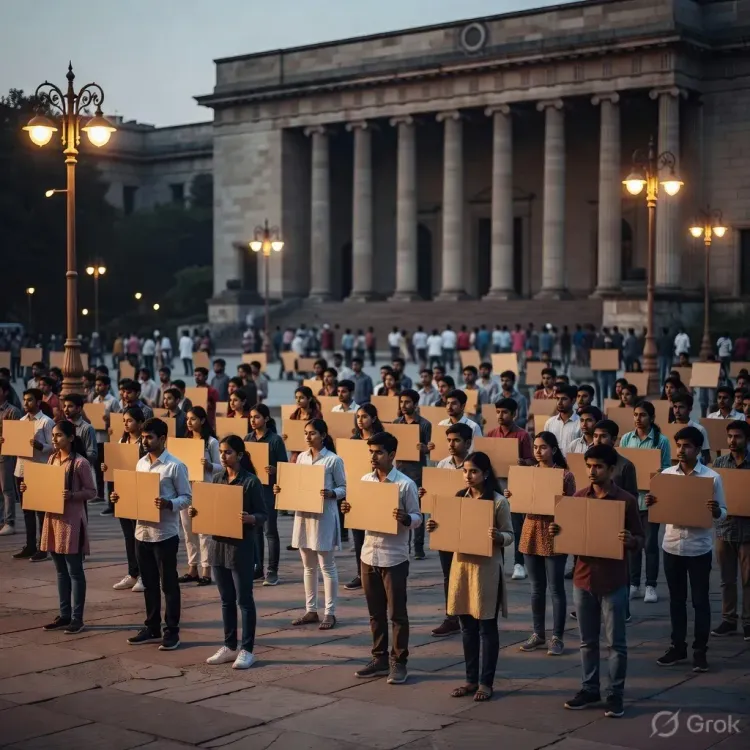
Chief Minister Hemant Soren addressed Jharkhand's student agitation on 10 August 2026, thanking police for restraint, promising accountability for exam irregularities, committing to technology-driven reform, and warning students against opposition attempts to exploit the unrest.
Key Takeaways
CM Hemant Soren publicly acknowledged the student agitation on 10 August 2026 and validated protesters' right to peaceful demonstration.
Soren stated that senior ministers maintained continuous dialogue with student groups throughout the day.
He pledged that those found guilty of examination irregularities have not been spared, regardless of political affiliation.
The government committed to making Jharkhand's examination system more transparent, technology-enabled, secure, and accountable.
Soren accused opposition figures of attempting to exploit the agitation for political gain and urged students to resist such narratives.
He closed with an appeal for resolution through 'dialogue and trust,' framing students as partners in systemic reform.
A student agitation shook Jharkhand on Monday, 10 August 2026 — and by evening, Chief Minister Hemant Soren had stepped in with a direct, public message that balanced gratitude to the police, a promise to protesters, and a pointed warning to the opposition, all in one breath.
Writing in Hindi on X, Soren addressed both the state machinery and the students simultaneously. 'The government has heard you,' he said, assuring protesters that their demands would be acted upon 'with complete seriousness and sensitivity.' He credited senior cabinet ministers for maintaining continuous dialogue with student groups throughout the day.
Soren's pledge: no one will be spared
The Chief Minister's sharpest line was a direct reference to accountability: 'doshi chahe koi bhi ho, sarkar ne kisi ko bhi nahi baksha hai' — 'whoever is guilty, the government has spared no one.' It signals that action has already been initiated against individuals linked to the examination irregularities that appear to have triggered the unrest, though the specific incidents remain unconfirmed from public record.
Soren laid out a clear reform agenda: making Jharkhand's examination system more transparent, technology-enabled, secure, and accountable. He framed students not as adversaries but as partners in that transformation — 'your participation in this change is most important.'
The opposition angle Soren chose to name
Soren did not let the moment pass without a political counterpunch. He alleged that 'some opposition figures tried to vitiate the atmosphere and mislead students for political gain' during the peaceful agitation. He appealed directly to young Jharkhandis to resist what he called political narratives designed to distract them — a familiar accusation in Indian state politics whenever ruling parties face street protests, but one Soren chose to deliver personally and publicly.
The appeal carries weight precisely because it came after, not instead of, the substantive commitments. By first acknowledging the legitimacy of the protest — 'in a democracy, you have the right to raise your voice, and it is the government's responsibility to respect that voice' — Soren insulated his political critique from appearing defensive.
Jharkhand's exam integrity challenge
Student protests over public examination irregularities are a recurring pressure point for state governments across India. Allegations of paper leaks, opaque recruitment processes, and delayed results have fuelled agitations in multiple states in recent years. Jharkhand's government under Soren's Jharkhand Mukti Morcha now faces the same test: whether the commitments made in the heat of protest translate into verifiable structural reform of the state's examination machinery.
The Chief Minister closed with an invitation rather than a decree: 'aiye, samvad aur vishwas ke saath milkar is mudde ka samadhan karen' — 'come, let us resolve this issue together through dialogue and trust.' Jharkhand's students will be watching whether that trust is earned in the days ahead.
Point of View
He attempts to absorb protest energy into a government-managed reform narrative. The accusation against the opposition is standard ruling-party playbook but strategically placed after substantive commitments, making it harder to dismiss as deflection. The deeper test is whether the promised examination overhaul — technology integration, transparency, accountability — produces concrete legislative or administrative action, or remains a pressure-release statement. In a state where tribal and youth demographics are electorally decisive, Soren's JMM cannot afford to let exam integrity become a sustained opposition wedge.
NationPress
10 Aug 2026
Frequently Asked Questions
Why did students protest in Jharkhand on 10 August 2026?
The exact trigger has not been officially confirmed, but Chief Minister Hemant Soren's statement references examination-related grievances and irregularities that prompted students to take to the streets in a peaceful agitation.
What did CM Hemant Soren promise the protesting students?
Soren promised that their demands would be addressed with 'complete seriousness and sensitivity,' that guilty parties have already faced action, and that the government will make Jharkhand's examination system more transparent, technology-enabled, secure, and accountable.
Did the Jharkhand government take action against anyone over the exam irregularities?
Soren stated that the government has 'spared no one,' regardless of who is found guilty, indicating action has been initiated — though specific names or orders were not disclosed in his post.
What did Hemant Soren say about the opposition during the student protest?
Soren alleged that some opposition figures attempted to 'vitiate the atmosphere and mislead students for political gain' during the agitation, and urged students not to be swayed by such political narratives.
How does Jharkhand plan to reform its examination system?
The Chief Minister outlined a goal of making the state examination process more transparent, technology-enabled, secure, and accountable, with students positioned as key participants in that reform — though specific policy orders are yet to be announced.