CM Hemant Soren condoles NTPC Chatra accident deaths
Synopsis
Jharkhand Chief Minister Hemant Soren expressed deep condolences over casualties in an NTPC accident in Chatra, directed officials to provide medical aid and support to affected families, and invoked Marang Buru in prayer for the deceased.
Key Takeaways
An accident at an NTPC facility in Chatra, Jharkhand resulted in fatalities and injuries on 18 November 2026 .
CM Hemant Soren called the incident 'extremely grievous' and extended condolences to affected families.
The district administration has been directed to provide all possible medical facilities to the injured.
Officials have been instructed to ensure proper treatment and extend full support to the families of victims.
Soren invoked Marang Buru , the Adivasi supreme deity, in prayer for the souls of those who died.
Specific casualty figures and the cause of the accident are yet to be officially confirmed.
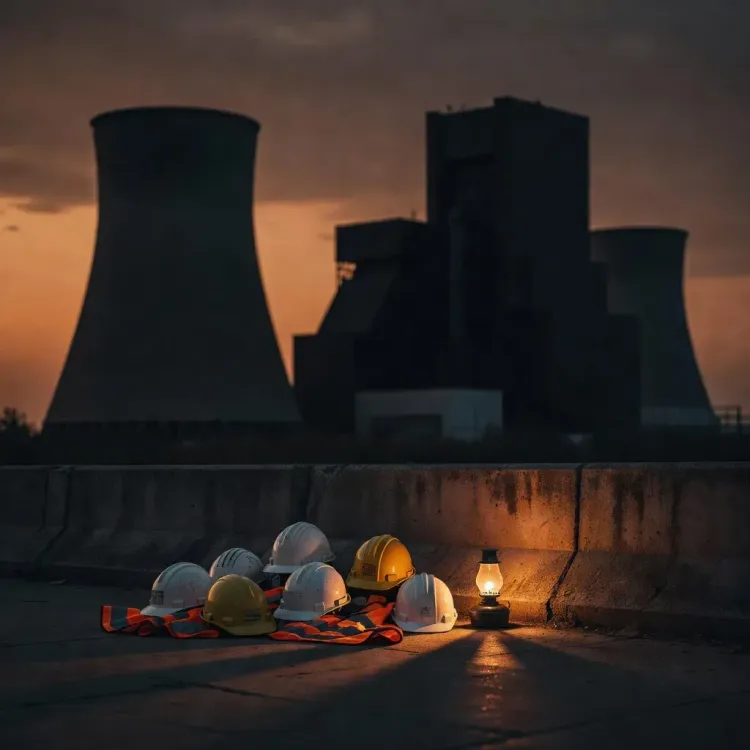
A tragedy at an NTPC installation in Chatra, Jharkhand claimed lives on Wednesday, 18 November 2026, drawing an immediate response from Jharkhand Chief Minister Hemant Soren, who directed district authorities to mobilise all available medical resources for the injured and extend every possible support to affected families.
Posting on X in Hindi, Chief Minister Soren called the news of casualties 'extremely grievous' — 'अत्यंत दुःखद' — and said his deepest condolences were with those affected by the accident. He confirmed that the district administration was already ensuring medical care for the injured, and that concerned officials had been instructed to oversee proper treatment and provide all necessary assistance to the families of victims.
Soren closed his message with a prayer rooted in the tribal spiritual tradition of Jharkhand, invoking Marang Buru — the supreme mountain deity of the Santali and broader Adivasi faith — to grant peace to the souls of those who died and strength to their grieving families. He also expressed his hope for the swift recovery of those injured in the incident.
NTPC's footprint in Chatra and Jharkhand's industrial landscape
NTPC Limited, India's largest power utility and a central public sector enterprise, operates multiple thermal generation and related facilities across the country, with a significant presence in coal-rich Jharkhand. Chatra, a district in northern Jharkhand, hosts industrial installations connected to the state's power and mining economy. Accidents at large-scale power and industrial sites — involving construction, maintenance, or operational work — have periodically prompted official responses of this kind from the state government.
The specific details of the accident — including the number of casualties, the exact cause, and the timing — are yet to be officially confirmed. What to watch: a formal inquiry report from NTPC or the state labour department, and any announcement of compensation packages or safety audit measures for the affected plant.
A chief minister's condolence — and what it sets in motion
When a sitting chief minister issues a directive of this nature, it carries administrative weight beyond the expression of grief. In practice, it typically triggers a chain of official action: the district collector is put on notice, medical facilities are placed on alert, and documentation for compensation claims begins. Soren's instruction to officials to ensure 'proper treatment' and 'all possible assistance' to affected families signals that the state considers this incident serious enough for active government oversight rather than a routine departmental response.
Jharkhand's workforce is deeply tied to its extractive and energy industries, and industrial safety at NTPC and similar facilities is a recurring point of public concern in the state. How the government and NTPC respond in the coming days — and whether a credible safety review follows — will determine whether this tragedy becomes a turning point or a footnote.
Point of View
A perennial friction point that Jharkhand's government has navigated carefully. Whether this incident triggers a formal safety review or compensation framework will test the depth of the state's oversight ambition beyond the condolence statement. The invocation of Marang Buru also carries political resonance in a state where Adivasi identity is both a governance priority and an electoral foundation for the JMM.
NationPress
18 Nov 2026
Frequently Asked Questions
What happened at NTPC Chatra in Jharkhand?
An accident occurred at an NTPC facility in Chatra district, Jharkhand, resulting in casualties and injuries. Specific details including the number of deaths and the cause of the accident are yet to be officially confirmed.
What did CM Hemant Soren say about the NTPC Chatra accident?
Chief Minister Hemant Soren called the news of casualties 'extremely grievous,' extended his condolences to affected families, and directed the district administration and officials to provide all possible medical care to the injured and support to the families of victims.
What is NTPC and why does it operate in Chatra, Jharkhand?
NTPC Limited is India's largest power utility and a central public sector enterprise operating thermal power plants across India. Chatra, a district in northern Jharkhand, hosts industrial installations linked to the state's coal-based power generation economy.
Who or what is Marang Buru, mentioned by Hemant Soren?
Marang Buru is the supreme mountain deity in the Santali and broader Adivasi spiritual tradition of Jharkhand. Chief Minister Soren invoked Marang Buru in prayer, asking for peace for the souls of the deceased and strength for their grieving families.
What action has the Jharkhand government taken after the NTPC Chatra accident?
The district administration has been mobilised to provide medical facilities to the injured. CM Soren has also directed relevant officials to ensure proper treatment for those hurt and all possible assistance for the families affected by the accident.