CM Hemant Soren Unveils Shibu Soren Statue in Ramgarh
Synopsis
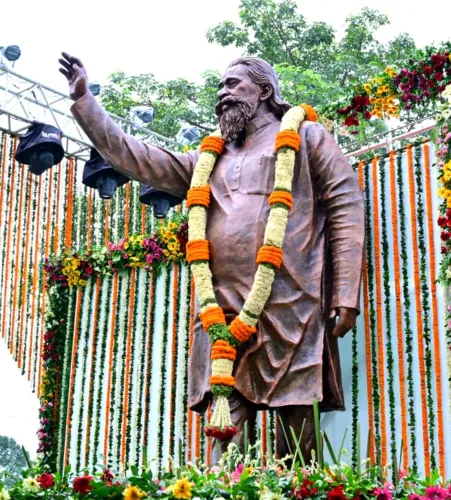
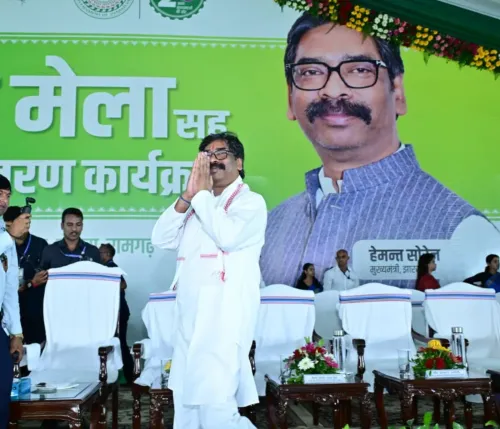
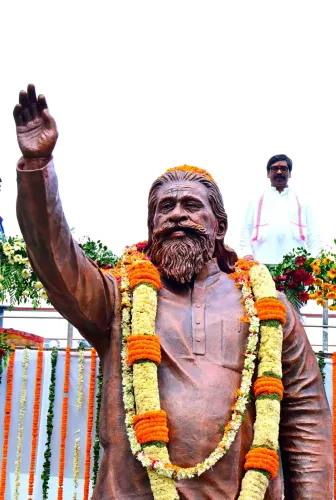
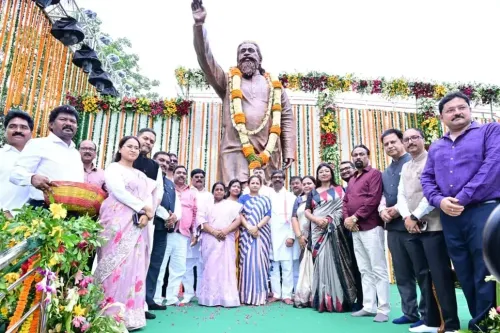
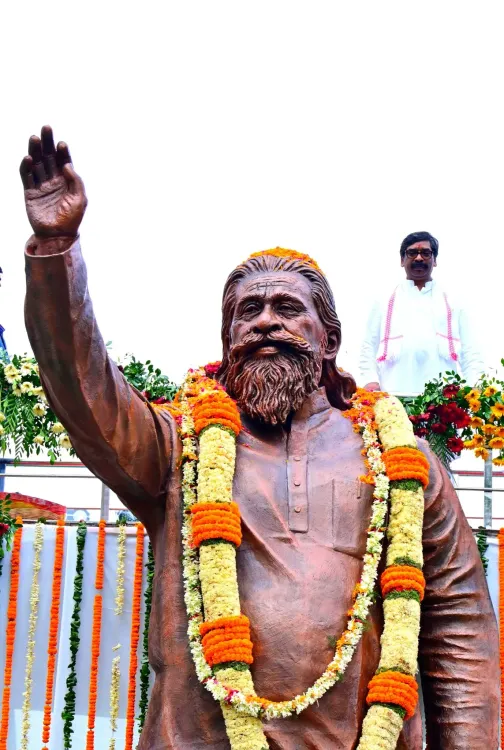
Jharkhand CM Hemant Soren unveiled a grand statue of his late father and JMM patriarch Shibu Soren at the Sona-Sobran Vidyalaya campus in Lukaiyatand, Ramgarh, calling the death anniversary an emotional day for tribal and marginalised communities nationwide.
Key Takeaways
CM Hemant Soren unveiled a grand statue of his late father Shibu Soren at Sona-Sobran Vidyalaya, Lukaiyatand, Ramgarh on 4 August 2026 .
The day marks the death anniversary of Shibu Soren , the founder of the Jharkhand Mukti Morcha and architect of Jharkhand's statehood.
CM Soren described the day as 'extremely emotional and heavy' for his family and for adivasi, Dalit, and marginalised communities across India.
The statue's placement at a school campus is intended to preserve historical memory of tribal struggles for future generations.
Shibu Soren, known as Dishom Guru , is credited with leading the decades-long movement that resulted in the creation of Jharkhand state in November 2000 .
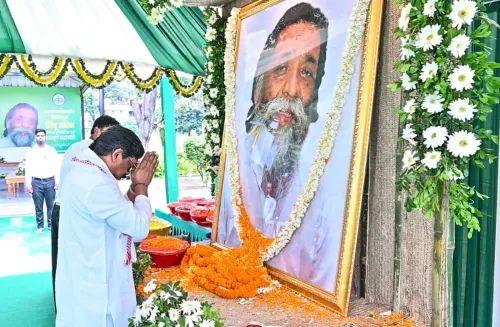
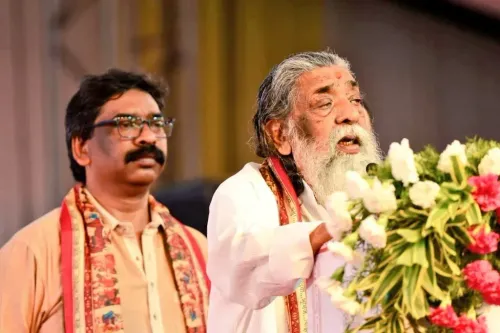
On a day marked by grief and remembrance, Jharkhand Chief Minister Hemant Soren paid tribute to his late father and JMM patriarch Shibu Soren — revered as Dishom Guru (the nation's teacher) — calling it 'an extremely emotional and heavy day' for his family and for tribal and marginalised communities across the country. The occasion was the unveiling of a grand statue of the elder Soren at the Sona-Sobran Vidyalaya campus in Lukaiyatand, Ramgarh, on Tuesday, 4 August 2026.
A Son's Grief, a State's Mourning
In his post, CM Soren wrote that the anguish of this day is not confined to his family alone — that tribals, Dalits, the exploited, the marginalised, and backward communities across Jharkhand and the rest of India share in the sorrow. 'Today is the day our revered Dishom Guru Shibu Soren ji breathed his last and merged with the five elements,' he wrote, invoking the Hindu and adivasi philosophical concept of the body returning to the earth. The phrasing was deliberate — a reminder that Shibu Soren's death is not just a family loss but a civilisational one for those he spent decades championing.
The Statue at Lukaiyatand and What It Stands For
The bronze installation at the Sona-Sobran Vidyalaya campus in Ramgarh is intended, in CM Soren's own words, to ensure that 'we and our coming generations never forget our history and our roots.' He drew a direct line from the pre-independence struggles of adivasi communities to the post-independence exploitation they continued to face — and called learning from that history 'our duty.' Siting the statue at a school campus is pointed: memory, for the Sorens, is an educational project.
Shibu Soren's Legacy in Jharkhand's Story
Shibu Soren, widely known as Guruji, was the founding force behind the Jharkhand Mukti Morcha (JMM) and one of the most consequential adivasi political leaders in independent India. His decades-long campaign for a separate tribal homeland culminated in the creation of Jharkhand state in November 2000. He served multiple terms as Chief Minister and as a Union Cabinet minister. For millions of adivasi, Dalit, and OBC voters across the Chota Nagpur plateau and Santhal Parganas, he was not merely a politician but a symbol of resistance against land alienation and social exploitation — a legacy his son now carries as both Chief Minister and JMM executive president.
The unveiling of a permanent public statue transforms that legacy into stone — a civic declaration that Dishom Guru's place in Jharkhand's official memory is settled and immovable. For the ruling JMM, it is also a moment of political consolidation: anchoring the party's identity to the founder's image ahead of the continuing political cycles in the state.
Point of View
Dalit, and backward communities, CM Soren widens the emotional constituency for the tribute. The choice of a school as the site reinforces the JMM's long-standing narrative that tribal rights are inseparable from education and historical consciousness. In a state where identity politics and land-rights grievances remain electorally decisive, cementing the founder's image in public stone is as much a forward-looking political statement as it is an act of filial devotion.
NationPress
4 Aug 2026
Frequently Asked Questions
Who is Dishom Guru Shibu Soren?
Shibu Soren, known as 'Dishom Guru' or 'Guruji', was the founder of the Jharkhand Mukti Morcha and the driving force behind the creation of Jharkhand state in 2000. He served as Chief Minister of Jharkhand and as a Union Cabinet minister, and is regarded as the foremost adivasi political leader of his era.
Where was the Shibu Soren statue unveiled?
The statue was unveiled at the Sona-Sobran Vidyalaya campus in Lukaiyatand, Ramgarh district, Jharkhand, on 4 August 2026.
Why did Hemant Soren call 4 August an emotional day?
4 August is the death anniversary of his father, Shibu Soren. CM Hemant Soren said it is a deeply painful day for his family and for tribal, Dalit, and marginalised communities across Jharkhand and India who saw Shibu Soren as their champion.
What is the significance of placing the statue at a school?
CM Soren stated that the purpose of the statue is to ensure that future generations never forget their history and roots, particularly the struggles of adivasi communities before and after independence. A school campus underlines the educational intent of the memorial.
What is Hemant Soren's position in the JMM?
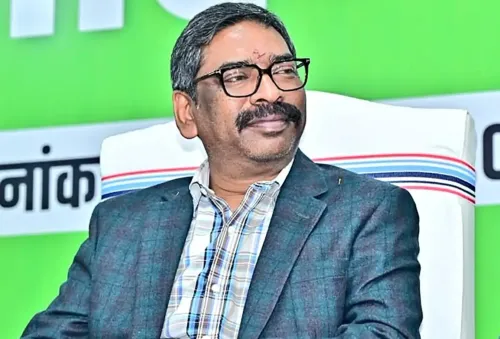
Hemant Soren is both the Chief Minister of Jharkhand and the executive president of the Jharkhand Mukti Morcha, the party founded by his father Shibu Soren.