CM Himanta Accuses Opposition of Eroding Democratic Institutions

Synopsis
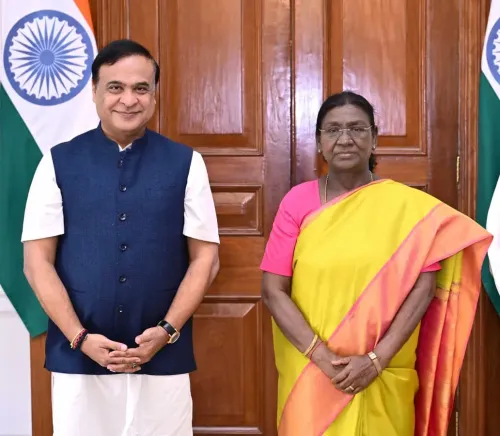
Assam Chief Minister Himanta Biswa Sarma, addressing media in Delhi on September 27, 2026, accused the opposition of deliberately attempting to erode India's democratic institutions — escalating a long-running BJP argument about constitutional subversion into fresh, high-visibility territory.
Key Takeaways
Assam CM Himanta Biswa Sarma addressed media in Delhi on September 27, 2026 .
He accused the opposition of being 'intent on eroding the very institutions that make India's democracy strong.' Sarma is a senior BJP leader and convenor of the North-East Democratic Alliance (NEDA) , giving his remarks national organisational weight.
BJP has consistently used the institutional-erosion argument against opposition parties since 2014 , with particular intensity after the 2024 Lok Sabha elections .
The remarks come ahead of a Winter Session of Parliament and potential state elections in late 2026 , framing the narrative battleground early.
Opposition parties have countered with the mirror accusation — that it is the ruling dispensation that has compromised institutional independence.
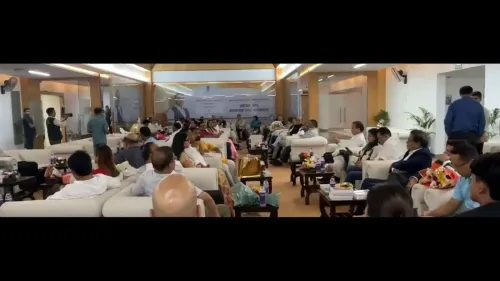
A sharp charge landed in Delhi on Sunday, September 27, 2026 — Assam Chief Minister Himanta Biswa Sarma told assembled media that India's opposition is actively working to hollow out the very institutions that hold the country's democracy together. The accusation was pointed, public, and unambiguous.
The Charge Sarma Put on Record
Speaking directly to the media in the national capital, Sarma stated: 'The Opposition appears intent on eroding the very institutions that make India's democracy strong.' The framing was deliberate — not a critique of policy disagreements, but an allegation of systemic subversion. That is a considerably higher bar of accusation, and it signals the BJP's intent to contest the opposition's legitimacy on constitutional grounds, not merely electoral ones.
As a senior BJP leader and convenor of the North-East Democratic Alliance (NEDA), Sarma commands significant organisational weight beyond Assam. His remarks in Delhi — the seat of national power — carry the register of coordinated party messaging, not a regional aside.
A Familiar Battlefield, Sharpened Over a Decade
This is not a new front. Since 2014, BJP spokespersons have consistently framed opposition criticism of electoral processes, judicial appointments, and parliamentary procedures as attacks on constitutional bodies rather than legitimate democratic dissent. The argument intensified after the 2024 Lok Sabha elections, when several opposition parties publicly questioned the functioning of the Election Commission and the pace of judicial processes.
What shifts over time is the urgency. With state elections and a Winter Session of Parliament on the horizon in late 2026, both ruling party and opposition are staking out the narrative ground early. Whoever successfully frames the other as the threat to institutions tends to hold the moral high ground going into a campaign.
Why the 'Institution Erosion' Argument Cuts Deep
In Indian political discourse, accusations of undermining constitutional bodies carry outsized weight because these bodies — the Election Commission, the judiciary, Parliament itself — are the referees of democracy. To label an opponent as their enemy is to question not just their politics, but their democratic credentials altogether.
The opposition, for its part, has long argued the reverse: that it is the ruling dispensation that has compromised institutional independence through appointments and procedural manoeuvres. That counter-narrative ensures this debate will not resolve quickly — it is the defining argument of the current political era.
Sarma's Delhi address adds another data point to a pattern that will almost certainly intensify as the legislature reconvenes. The institutions themselves, caught between competing claims of guardianship, remain the real story to watch.
Point of View
This is almost certainly coordinated party messaging ahead of the Winter Session of Parliament. The institutional-integrity frame is strategically durable because it shifts the debate from policy outcomes — where the ruling party is more vulnerable — to constitutional loyalty, where it can claim the moral high ground. Whether this salvo triggers a sharpened opposition counter-offensive will be the defining political dynamic of the months ahead.
NationPress
27 Sept 2026
Frequently Asked Questions
What did Himanta Biswa Sarma say about the opposition in Delhi?
Speaking to media in Delhi on September 27, 2026 , Assam CM Himanta Biswa Sarma stated that the opposition 'appears intent on eroding the very institutions that make India's democracy strong.'
Why is Himanta Biswa Sarma speaking in Delhi?
Sarma , a senior BJP leader and convenor of NEDA , addressed a media gathering in the national capital, indicating the remarks were intended for a national audience rather than a purely regional one.
Has BJP made similar accusations against the opposition before?
Yes. Since 2014 , BJP leaders have repeatedly accused opposition parties of attempting to undermine institutions such as the Election Commission and the judiciary, with the argument sharpening after the 2024 Lok Sabha elections .
What is the opposition's counter-argument on institutions?
Opposition parties have argued the reverse — that the ruling dispensation has compromised institutional independence through appointments and procedural decisions. Both sides have deployed this frame for over a decade.
What upcoming political events make Sarma's remarks significant?
With the Winter Session of Parliament and potential state elections expected in late 2026 , both sides are establishing their narrative positions early — making institutional integrity a likely central theme of the political season.