CM Himanta Backs Reading Culture, Cites Assam Library Push

Synopsis
Assam Chief Minister Himanta Biswa Sarma has publicly championed reading habits and confirmed that the state is steadily investing in expanding its district-level library network, aligning with the National Education Policy 2020's push for stronger public library infrastructure.
Key Takeaways
CM Himanta Biswa Sarma on 16 July 2026 endorsed reading as the best path to knowledge, stating there is 'no alternative to books.' Assam maintains a wide network of libraries at the district level and is investing in further expansion.
The National Mission on Libraries (2014) and National Education Policy 2020 provide the central policy framework underpinning state library investments.
Key beneficiaries include students and rural readers in districts with limited digital access.
State budget allocations for 2026-27 and potential integration with the National Digital Library of India are the next indicators to watch.
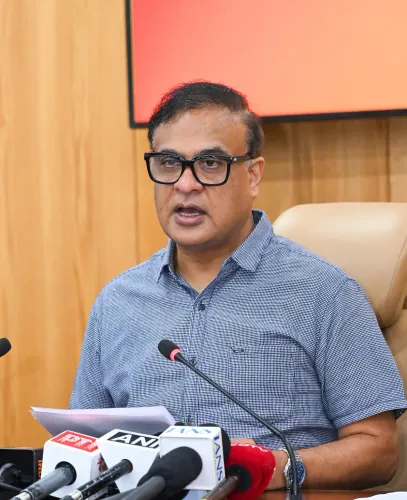
Assam Chief Minister Himanta Biswa Sarma on Thursday, 16 July 2026, publicly endorsed the primacy of books and reading habits, stating that his government is actively expanding the state's district-level library network. The remarks came via a post on X in which he expressed full agreement with a view that there is no substitute for books as a vehicle of knowledge.
Context
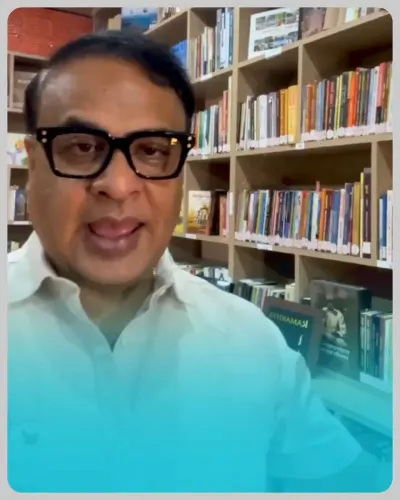
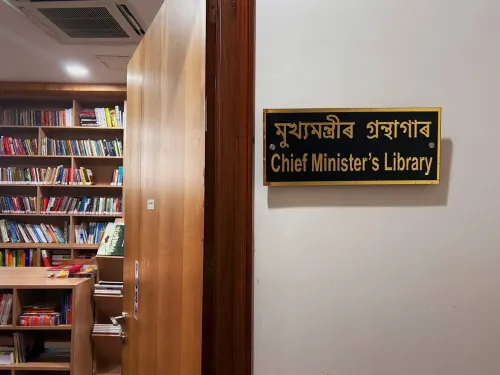
Responding to a conversation on the value of reading, CM Sarma wrote: 'There is no alternative to books and no better way to grasp knowledge than a good old reading habit.' He added that Assam already maintains 'a wide network of libraries in our districts' and that the state is 'steadily investing in expanding this network further.' The statement, while brief, signals a deliberate alignment of the Chief Minister's public voice with education and literacy as governance priorities.
The post arrives at a time when digital distractions and screen-based learning are increasingly debated in Indian education circles. By championing traditional reading, the Chief Minister is weighing in on a broader cultural conversation that resonates across urban and rural constituencies alike.
Policy Backdrop
Assam's library infrastructure has been shaped, in part, by the National Mission on Libraries, launched in 2014, which provided central funding for modernising state and district libraries, including grants for digitisation and physical infrastructure upgrades. Assam has been among the North-Eastern states that leveraged these provisions to improve public reading access.
The National Education Policy 2020 further reinforced this direction by recommending that school and public libraries be treated as core components of lifelong learning and equitable knowledge access — not peripheral amenities. Successive Assam administrations have paired library investments with literacy drives and school-library linkages, reflecting a regional emphasis on human-capital formation alongside physical infrastructure development.
This post-2014 pattern of state governments using central schemes to improve book access in tier-2 and tier-3 districts has been particularly visible in the North-East, where geographic remoteness makes physical library presence more consequential than in well-connected urban centres.
Stakeholders and Impact
The primary beneficiaries of an expanded library network are students and rural readers across Assam's districts — populations for whom public libraries often serve as the only structured access point to books and reference material. In areas with limited internet penetration, physical libraries remain essential rather than supplementary.
Beyond students, the expansion holds significance for competitive-examination aspirants, self-learners, and communities where household book ownership is limited by economic constraints. A well-resourced district library can function as a levelling institution, narrowing the knowledge gap between urban and rural learners.
What's Next
Attention will now turn to Assam's state budget allocations for 2026-27 to see whether the Chief Minister's stated commitment to library expansion is reflected in concrete line-item funding. Observers will also watch for any integration of the district library network with the National Digital Library of India, which would extend access to digital resources alongside physical collections.
If the government follows through with new district-level construction tenders or technology upgrades, CM Sarma's public endorsement of reading culture could translate into a measurable policy push — one that aligns Assam with the broader national agenda of strengthening public knowledge infrastructure ahead of the next academic cycle.
Point of View
High-resonance signal that positions him as an education-forward leader at a time when the NEP 2020 has put library infrastructure firmly on the policy agenda. The statement draws a subtle contrast with screen-centric learning trends, appealing to a broad cross-section of voters — from parents to students to educators — without any partisan friction. As NEDA convenor, Sarma also benefits from projecting a governance identity rooted in human-capital investment, a narrative that travels well across the North-East's aspirational middle class. The real test will be whether this rhetorical commitment is matched by verifiable budget allocations in the coming fiscal cycle.
NationPress
15 Oct 2026
Frequently Asked Questions
How many libraries does Assam have?
Assam maintains a district-level public library network across the state, though the exact current count of operational libraries has not been officially confirmed in the July 2026 statement. CM Sarma has indicated the network is being steadily expanded.
What is the National Mission on Libraries?
The National Mission on Libraries, launched in 2014 , is a central government initiative that funds the modernisation of state and district libraries, covering digitisation, infrastructure grants, and capacity-building for states including Assam .
What does NEP 2020 say about libraries?
The National Education Policy 2020 recommends strengthening school and public libraries as core components of lifelong learning and equitable knowledge access, treating them as essential public infrastructure rather than optional amenities.
Why is CM Himanta Biswa Sarma talking about libraries?
CM Sarma was responding to a conversation on the value of reading and used the opportunity to highlight Assam's existing library network and the state's ongoing investment in expanding it, reinforcing his government's education agenda.
What is the National Digital Library of India?
The National Digital Library of India is a central government platform that aggregates digital learning resources and e-books, and its potential integration with state library networks like Assam's is being watched as a next step in modernising public reading access.